Skip to content
Menu

These bookings run through Viator, who pay us a commission. Your price does not change, and neither does the order they appear in.

Seasonal

Sea Turtle Nesting Season Opens, and the Lights-Out Rules Come With It

Loggerheads come ashore here between May and October, and the Town's lighting ordinance, hole-filling rules and volunteer dawn patrols all key off those dates.

Loggerhead sea turtles come ashore on Hilton Head Island between May and October, and for six months the island rearranges itself around them.

What the ordinance actually requires

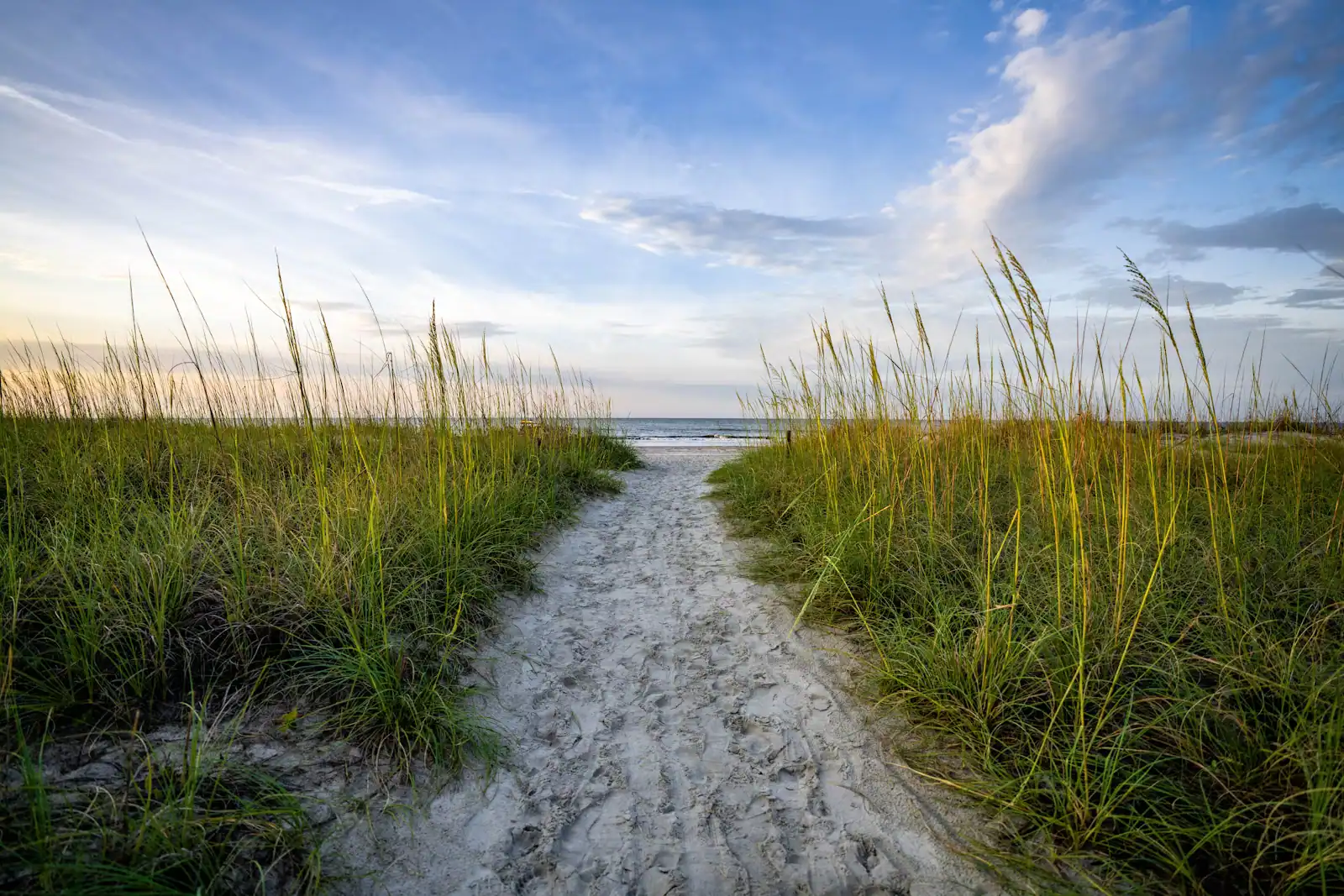
The Town's lighting ordinance runs May 1 to October 31. If a building is visible from the beach, exterior lights have to be off by 10 p.m. or shielded and aimed downward, and interior lights visible from the sand mean closing the blinds at 10 p.m. Rental guests are the usual offenders, mostly because nobody told them. If you are staying oceanfront in Palmetto Dunes, Sea Pines or the Forest Beach area, work out which of your lights throw onto the dune line on your first afternoon rather than on your third night.

Three other rules carry the same weight and apply to day visitors too:

  • Fill in any hole deeper than about a foot before you leave.
  • Take tents, chairs, umbrellas and toys off the beach overnight.
  • Leave nothing behind, including the plastic shovel.

A nesting female that meets a chair leg or a trench often turns around and goes back to the water without laying. A hatchling that drops into an unfilled hole usually does not get out of it.

Who is on the sand at dawn

Sea Turtle Patrol Hilton Head Island walks the beach every morning from May 1 until the last nest finishes hatching, working under a permit from the South Carolina Department of Natural Resources. Volunteers read the previous night's crawls, mark nests with poles and tape, and relocate the ones laid below the high-tide line. The island has averaged somewhere in the region of 250 nests a season; strong years have run well above that.

If you find a marked nest, give it a wide berth. If you find an unmarked crawl — two parallel tractor-tread tracks coming out of the surf and going back in — leave it alone and report it rather than following the tracks up the beach.

Watching without interfering

There is no reliable public schedule of nest excavations, and anyone promising a guaranteed hatchling sighting is selling something. Nests hatch at night, on their own timetable. No white flashlights, no phone torches, no flash photography. A red-filtered light is the accepted compromise for walking the beach after dark in season.

SourcingSummarised from the Town of Hilton Head Island's published sea turtle protection guidance and Sea Turtle Patrol Hilton Head Island's public description of its SCDNR-permitted fieldwork. Ordinance details and nest counts change between seasons; confirm with the Town before relying on specifics.

Plan around it

What this means for visitors

The pages that carry the practical detail behind this story — hours, costs, access and where it sits on Hilton Head.

  • Things to do

    Beaches

    Every beach on Hilton Head Island is public. Which access to use, what parking costs, how far the tide goes out, and the rules the town…

  • Things to do

    Nature & Wildlife

    Where to find wildlife on Hilton Head Island: Pinckney Island, Sea Pines Forest Preserve, alligator rules, shore dolphins, sea turtles and…

  • Things to do

    With Kids

    Family activities on Hilton Head Island sorted by age: beach parks with playgrounds, dolphin and pirate cruises, bike trails, mini golf…

  • Guide

    Hilton Head Beach Parking: A Lot-by-Lot Guide

    Every beach on Hilton Head is public. Parking is the part that is rationed. Here is what each town lot is like, when it fills, and the one…

Related

Explore Nature & Wildlife

This story touches something you can book. These are live listings from our booking partner, not a recommendation attached to the report above.

These bookings run through Viator, who pay us a commission. Your price does not change, and neither does the order they appear in.

Newsroom

More from the newsroom

Who reported this

Outdoors & Water Editor

Tom guided kayak trips on Broad Creek and through the Palmetto Dunes lagoon system for six seasons before he started writing about them, and still picks up the occasional deckhand shift out of Shelter Cove. He covers paddling, fishing, dolphins and the tides that govern all three. If a departure time here looks odd, the water made it that way.

Our newsroom is machine-assisted and human-edited: stories are drafted from verified public sources and checked before they publish. How that works is set out in our editorial standards.

More from Tom Brantley