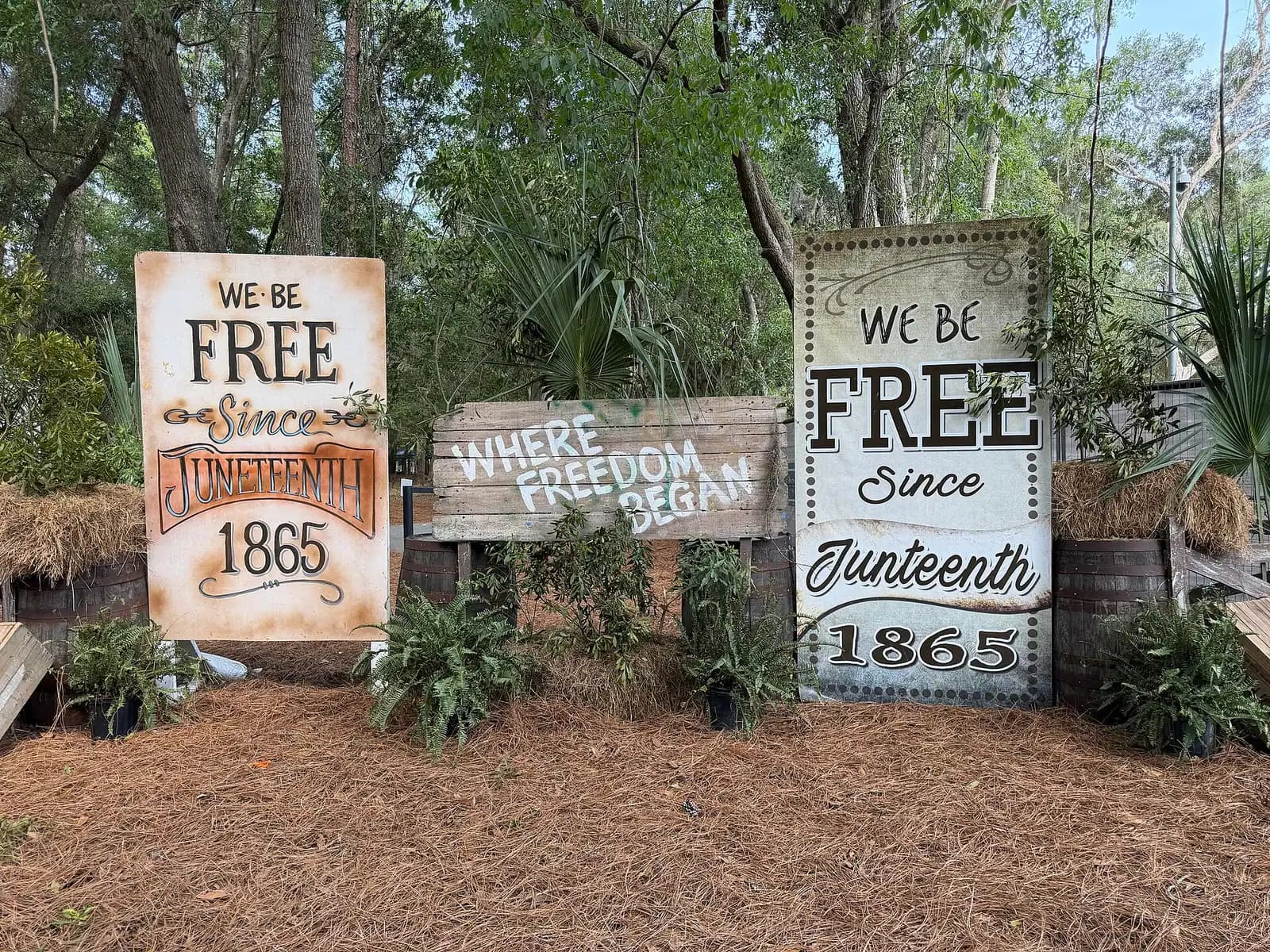
Between emancipation and the opening of the bridge in 1956, Hilton Head was a Black island. Isolated by water, Native Islander families farmed, fished, oystered, built praise houses, ran schools and looked after their own, and in that isolation preserved an African-rooted culture that on the mainland was eroded much faster.
Gullah is the culture and also the language: an English-based creole with West and Central African grammar and vocabulary, still spoken by older Native Islanders and still audible in the cadence of everyday speech here. The food is rice-centred and unmistakable: red rice, okra soup, benne, gumbo, oyster roasts. The federally designated Gullah Geechee Cultural Heritage Corridor, established in 2006, runs from Wilmington, North Carolina to Jacksonville, Florida, and Hilton Head sits squarely inside it.
The island's historic Native Islander neighbourhoods are still on the map, and you drive through them constantly without noticing: Spanish Wells, Squire Pope, Gumtree, Jonesville, Chaplin, Baygall, Stoney, Marshland Road and the area around Mitchelville. Family compounds, small churches and cemeteries sit between commercial development that arrived later.
Land is the live issue. Much Native Islander property is heirs' property, passed down without a will and held in common by dozens of descendants, which leaves it legally fragile and exposed to forced partition sales in one of the most valuable real-estate markets in South Carolina. Community organisations work on clearing titles precisely because of that.
A note on language: the gated communities here were long called "plantations", and many still carry the name. Most are now described as communities or resorts, for reasons that should be obvious on this page.