Bike Tours
Guided Bike Tour of the Sea Pines Forest Preserve (opens in a new tab)
Crushed-shell paths, alligator lagoons and the 4,000-year-old Fish Island shell ring, with a guide.
2–3 hours
Saved listing — live prices unavailablePrices checked
We earn a commission if you book through this link. You pay the same price.
Nature preserve
Last updated
Six hundred and five acres of trails, lagoons and a 4,000-year-old shell ring — free to walk, once you have paid the Sea Pines gate.
Photo: UnsplashUnsplash License
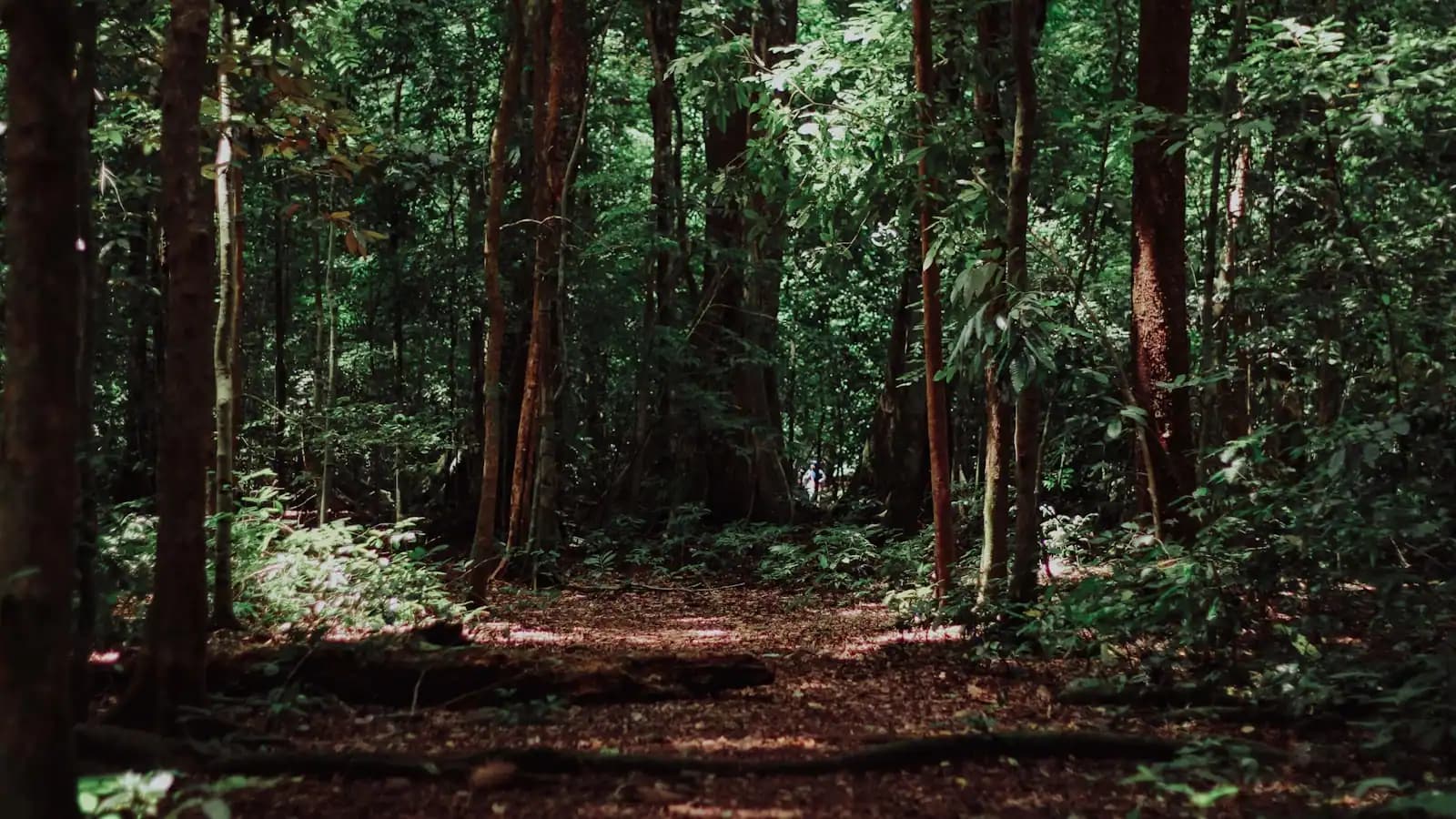
Sea Pines Forest Preserve is the largest undeveloped tract left on Hilton Head Island: 605 acres of loblolly pine, live oak and palmetto with freshwater lagoons threaded through it, sitting inside the island's oldest and most tightly managed community. That combination is the whole story. A resort development begun in the 1950s set aside a large block of its own land as forest and never built on it, which is why you can walk ten minutes from a golf fairway into woods that look much as the island did before anyone drew a plan for it.
The walking is easy and well signed. Two marked loops carry most visitors, known locally by the colour of their arrows: the Blue Arrow route at roughly a mile, and the Orange Arrow route at roughly two. Both are flat, sandy underfoot and shaded for long stretches. Both pass water. Lake Joe and Lake Mary sit at the centre of the preserve, boardwalk sections lift the path over the wetter ground, and the Warner W. Plahs Wildflower Field is worth timing a visit around in late spring. Fish Island, reached on a short causeway, has a covered pavilion with picnic tables and grills plus restrooms, which makes it the natural turnaround point for families.
The Sea Pines Shell Ring is the reason to keep walking. From the Lawton Drive side of the preserve a marked trail leads to a low circular bank of oyster shell, roughly 4,000 years old, built by Late Archaic people and listed on the National Register of Historic Places. It does not announce itself. You arrive at a ring of slightly raised ground in the woods and it takes a beat to register that people shaped it, deliberately, thousands of years before anything else on this island.
Then the part visitors get wrong. The preserve charges nothing. Reaching it is not free. Unless you are staying inside Sea Pines, you buy a daily gate pass on the way in, and day visitors are not permitted to enter the community by bicycle. Pay it once and it covers Harbour Town and the Stoney-Baynard Ruins the same day, so plan the three together.
From Sea Pines Circle, take Greenwood Drive through the Greenwood Gate and continue about a mile; the main preserve entrance and car park are signed on the right. A second entrance sits off Lawton Drive and is the shorter approach to the shell ring.
Non-residents buy a daily gate pass at the Greenwood or Ocean Gate on the way in. Day visitors may not enter Sea Pines by bicycle. Parking at the preserve entrances is free once you are through the gate, and fills first thing on spring mornings.
The two signed loops are described by arrow colour rather than by name, and the trail map at the Greenwood Drive entrance is worth photographing before you set off — phone signal under the canopy is patchy in places.
Everything is flat. There is no elevation on Hilton Head worth the name, and the preserve is no exception, so distance rather than gradient is the only variable. Strollers manage the boardwalk sections and the wider sand paths reasonably well; narrower spurs get root-bound and soft.
Bicycles are not allowed on the walking trails. There are bike racks at the entrances, and the old rice dike on the preserve's edge is the one stretch you can ride. Plan on leaving the bike and walking.
Shell rings are a Late Archaic phenomenon of the South Atlantic coast, and this is one of the more accessible examples anywhere. Estimates of its age cluster around 4,000 years, with some readings running older. What you see is a circular ridge of oyster shell, broken pottery and food debris, a few feet high, enclosing a clean central plaza where almost nothing was deposited.
Archaeologists still disagree about what that plaza means. One reading is domestic: a village built in a ring, with the midden accumulating behind the houses. Another is ceremonial: a place people returned to for feasting, where the empty centre was the point. The honest answer is that both arguments are live, and the ring is not going to settle it for you.
Two things to do when you get there. Walk the outside of the ring rather than across it — it is a protected archaeological site and the shell erodes. And look at the ground, because the composition is the evidence: oyster, clam, whelk, occasional bone, all of it carried up from creeks that still run a few hundred yards away. The people who built it were eating the same estuary the shrimp boats work today.
Assume every lagoon in the preserve holds alligators, because they do. Sea Pines security asks visitors to stay 60 feet back, and that is a sensible floor rather than a formality — a large animal can cover short ground faster than it looks capable of. Never feed one. Feeding or enticing an alligator is a misdemeanour under South Carolina law, and a fed alligator is the one that eventually has to be destroyed.
The specific rules inside the preserve surprise first-timers:
White-tailed deer are common and largely unbothered by people. Ospreys nest over the lagoons, wood storks turn up on the shallows in late summer, and barred owls call through the middle of the afternoon here in a way they rarely do further north.
The preserve has no admission charge. Sea Pines, the gated community it sits inside, does charge non-residents to bring a vehicle through, and there is no way to walk around that.
How it works in practice. You buy a daily pass at either the Greenwood Gate on Greenwood Drive or the Ocean Gate off Cordillo Parkway, both of which sell passes through the day and into the evening. Recent published rates have been in the region of $10 for a standard two-axle vehicle, and rates change, so treat that as a band rather than a promise. Anyone staying inside Sea Pines already has a pass through their rental or hotel, and does not pay again.
Two things worth knowing. Day visitors are not permitted to enter Sea Pines by bicycle, so the plan of parking outside and riding in does not work. And one pass covers the whole community for the day, which changes the economics completely: the same ticket gets you Harbour Town and its lighthouse, the Stoney-Baynard Ruins, Lawton Stables and South Beach. Doing the preserve as a standalone errand is poor value. Doing it as the first stop of a full Sea Pines day is not.
Arrive early if you can. The gate queues on Greenwood Drive build through the middle of the day in summer and on tournament weekends in April.

Operators run these trips past Forest Preserve, or stop there as part of a longer route. We list what the booking data supports — not everything that mentions the name.
Some links below go to Viator, our booking partner. We earn a commission on bookings made through them — at no extra cost to you, and with no influence on what we recommend.
Bike Tours
Crushed-shell paths, alligator lagoons and the 4,000-year-old Fish Island shell ring, with a guide.
2–3 hours
Saved listing — live prices unavailablePrices checked
Straight-line distances, so allow more on the road — the island is long and has one main parkway.

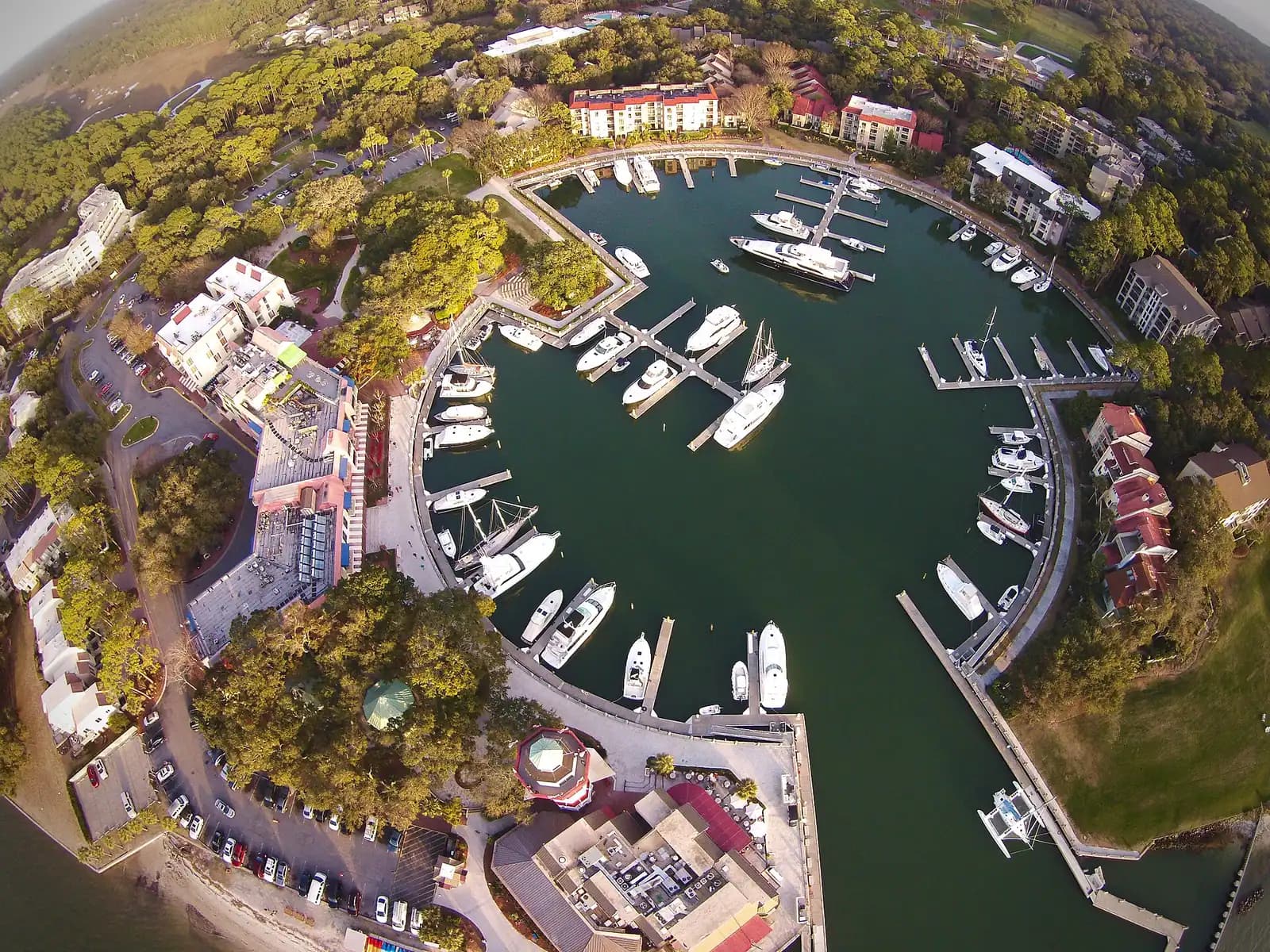
Marina
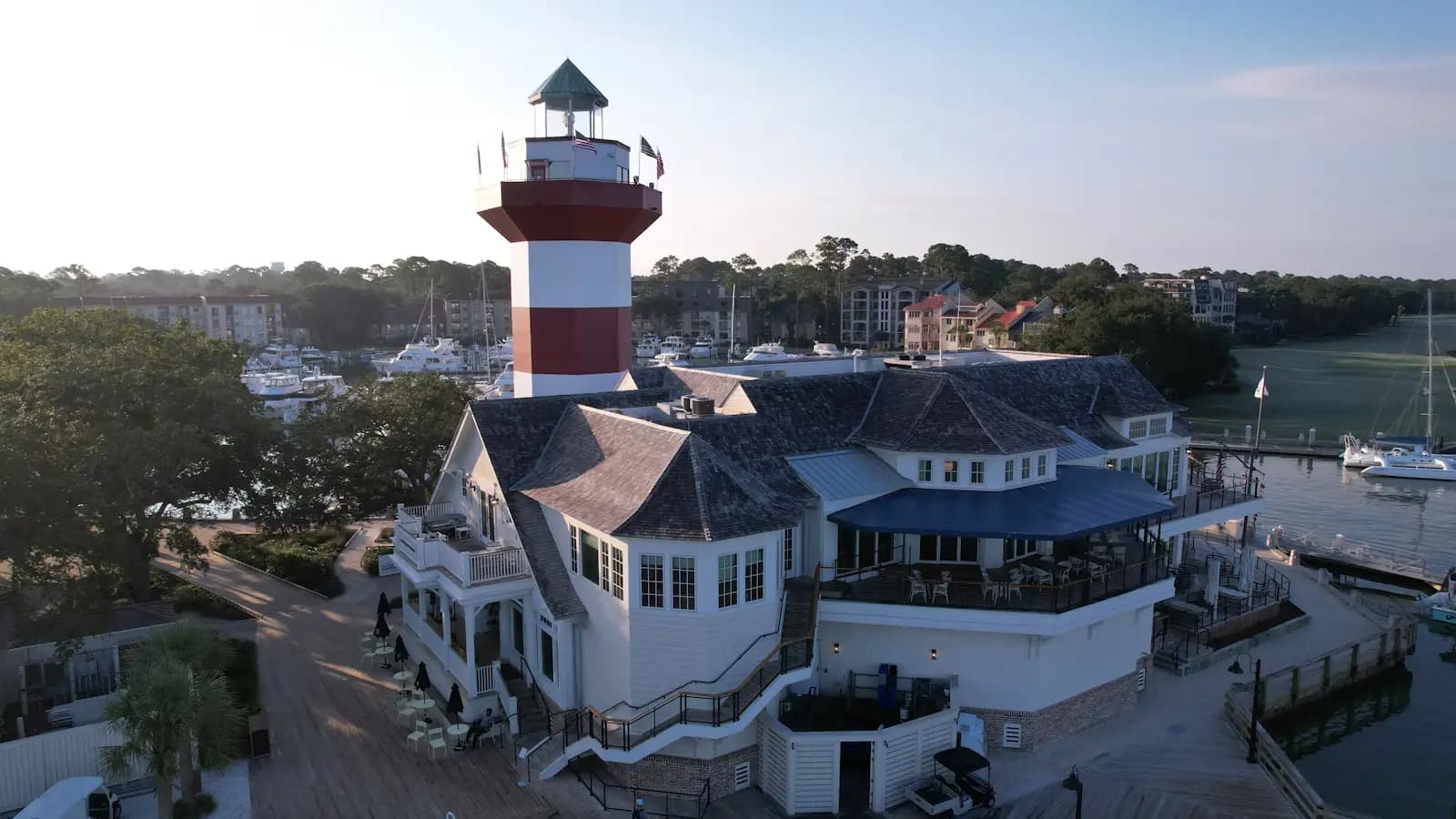
A yacht basin on Calibogue Sound, a three-centuries-old live oak, and the island's most photographed stretch of low wooden shopfronts.
1–3 hoursNo charge to walk the harbour, but Sea Pines charges a daily gate pass per vehicle to enter the community.2.2 mi away

Landmark
114 steps up a red-and-white tower nobody asked the Coast Guard for, with an island history museum stacked on the landings.
0.5–1 hoursA small per-person admission to climb, on top of the Sea Pines gate pass charged per vehicle at the community entrance.2.3 mi away

Historic site
Oyster-shell concrete walls of a cotton planter's house, with the foundations of the quarters that made it possible a few steps away.
20–45 minutesFree at the site. You still pay the Sea Pines gate pass, charged per vehicle, to enter the community.1.9 mi away

Entertainment
Guided trail rides through 605 acres of forest preserve, plus an animal farm that costs nothing to wander round.
0.5–2 hoursTrail rides around $80 per person; pony rides a small per-ride charge; the animal farm is free.0.8 mi away
Where this place fits into a day, and the pages that plan one.

Plan your trip
The short version: May and October are the two best weeks-worth of the year on Hilton Head Island, and if you have a choice, take one of them. Both…

Who it suits
Hilton Head Island was planned around families, which is a different thing from being built for children. There are no waterslide towers on the…

Budget
Hilton Head is an expensive place to stay and a surprisingly cheap place to spend a day, provided you understand one distinction that most lists…

Things to do
Hilton Head is a barrier island that was developed with an unusual instruction: keep the trees. The building-height and sign ordinances that stop…

Who it suits
Most visitors arrive on Hilton Head believing its history begins with golf. It begins with a shell ring in the Sea Pines Forest Preserve that Native…

Guide
Seventy-two miles of paved public path, seventeen more inside Sea Pines, and twelve miles of hard sand that only exists at low tide. Here is how to ride all of it.
8 min readTom Brantley

Guide
Three days is enough for Hilton Head if you plan around the tide instead of the clock. This itinerary does that, and gives you somewhere dry to go when the afternoon storms build.
8 min readMarisa Delgado

Guide
The island is twelve miles long, gated in places, and deliberately hard to read from the road. Here is how it is organised, what you will actually be charged for, and where to base yourself.
10 min readMarisa Delgado
The preserve itself is free — there is no admission booth and no ticket. What costs money is getting to it. Sea Pines is a gated community, and non-residents buy a daily vehicle pass at the Greenwood or Ocean Gate, recently in the region of $10 for a standard car. Anyone staying inside Sea Pines already has a pass. The same pass covers Harbour Town, the lighthouse and the Stoney-Baynard Ruins for the rest of the day, so it is worth planning around rather than treating as a toll on one walk.
The two signed loops run roughly a mile and roughly two miles, marked with blue and orange arrows. Budget about an hour for the short one and closer to two for the longer, allowing for stops. The Shell Ring Trail from the Lawton Drive side is around 20 minutes each way. Everything is flat — there is no meaningful elevation on Hilton Head — so distance is the only thing that decides how long you are out.
Yes, and you should assume every lagoon in the preserve holds them. Stay at least 60 feet back, keep children and dogs well away from the water's edge, and never feed one — feeding an alligator is a misdemeanour in South Carolina and it is what turns a harmless animal into one that has to be removed. Swimming is prohibited in all the preserve's lakes and lagoons. Sightings are common and usually uneventful if you keep your distance.
Not on the walking trails. Bicycles are prohibited on the preserve's nature trails, though there are racks at the entrances and the old rice dike on the edge of the preserve can be ridden. Separately, day visitors are not allowed to enter Sea Pines by bicycle at all — you need a vehicle pass — so parking outside the gate and riding in is not an option.
Fishing is allowed in parts of the preserve but it requires a permit, and permits are issued to Sea Pines property owners, their guests and resort guests rather than to casual day visitors. Minnows are not permitted as bait. Sort the permit before you drive in if fishing is the plan. Catch-and-release fishing open to everyone is easier at Jarvis Creek Park, a town park on the north side of the island with a public fishing dock and free parking.