Skip to content
Menu

We earn a commission if you book through this link. You pay the same price.

Landmark

Harbour Town Lighthouse

Last updated

114 steps up a red-and-white tower nobody asked the Coast Guard for, with an island history museum stacked on the landings.

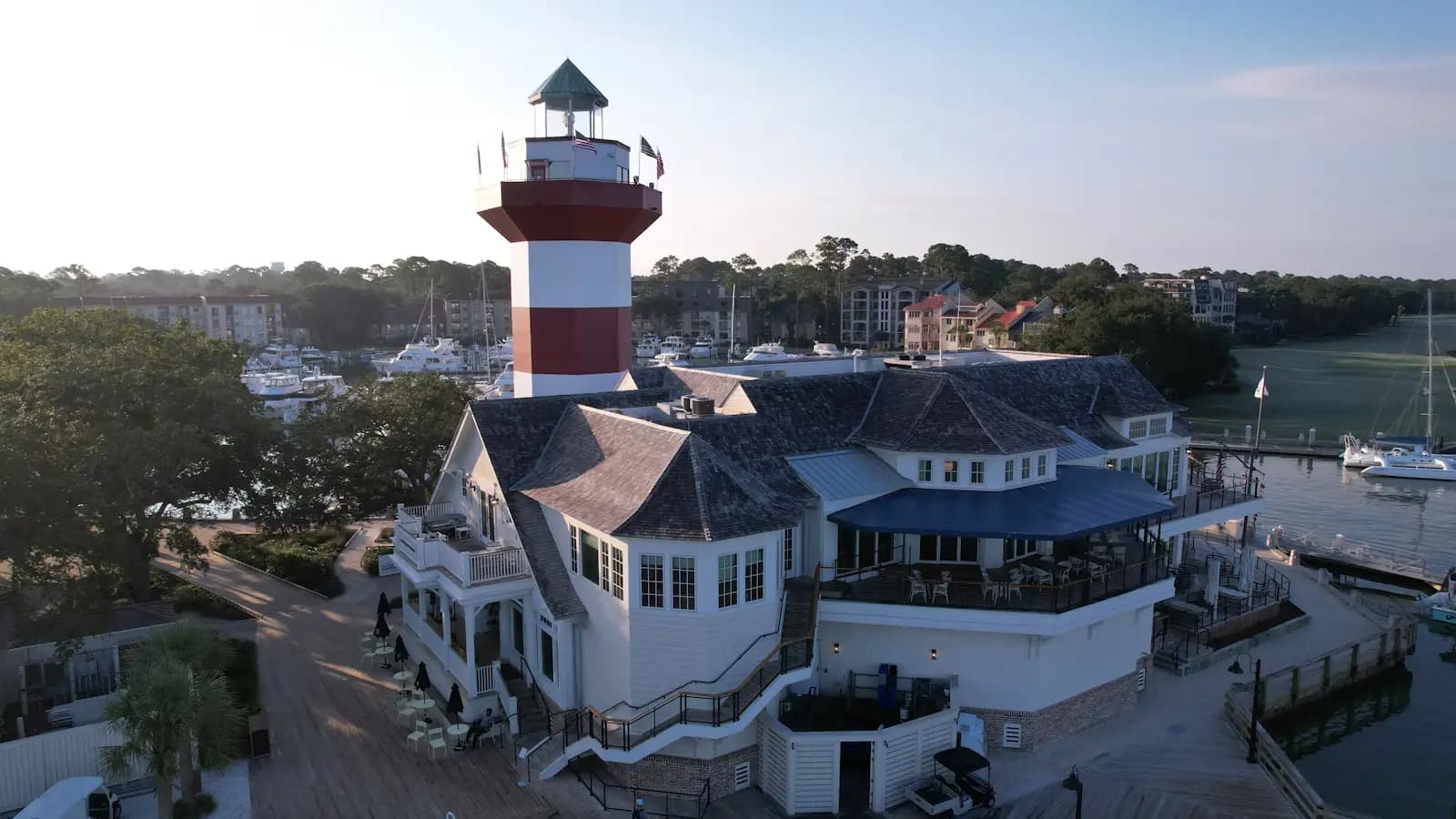
The red-and-white tower at the mouth of the Harbour Town yacht basin is the most reproduced image on Hilton Head Island, and it is not a historic lighthouse. It went up around 1970 as part of Charles Fraser's Sea Pines development — privately built, privately paid for, and put there in large part because a harbour needs a landmark. Local opinion at the time was not universally kind. It has since become the island's logo, printed on everything from golf shirts to town signage.

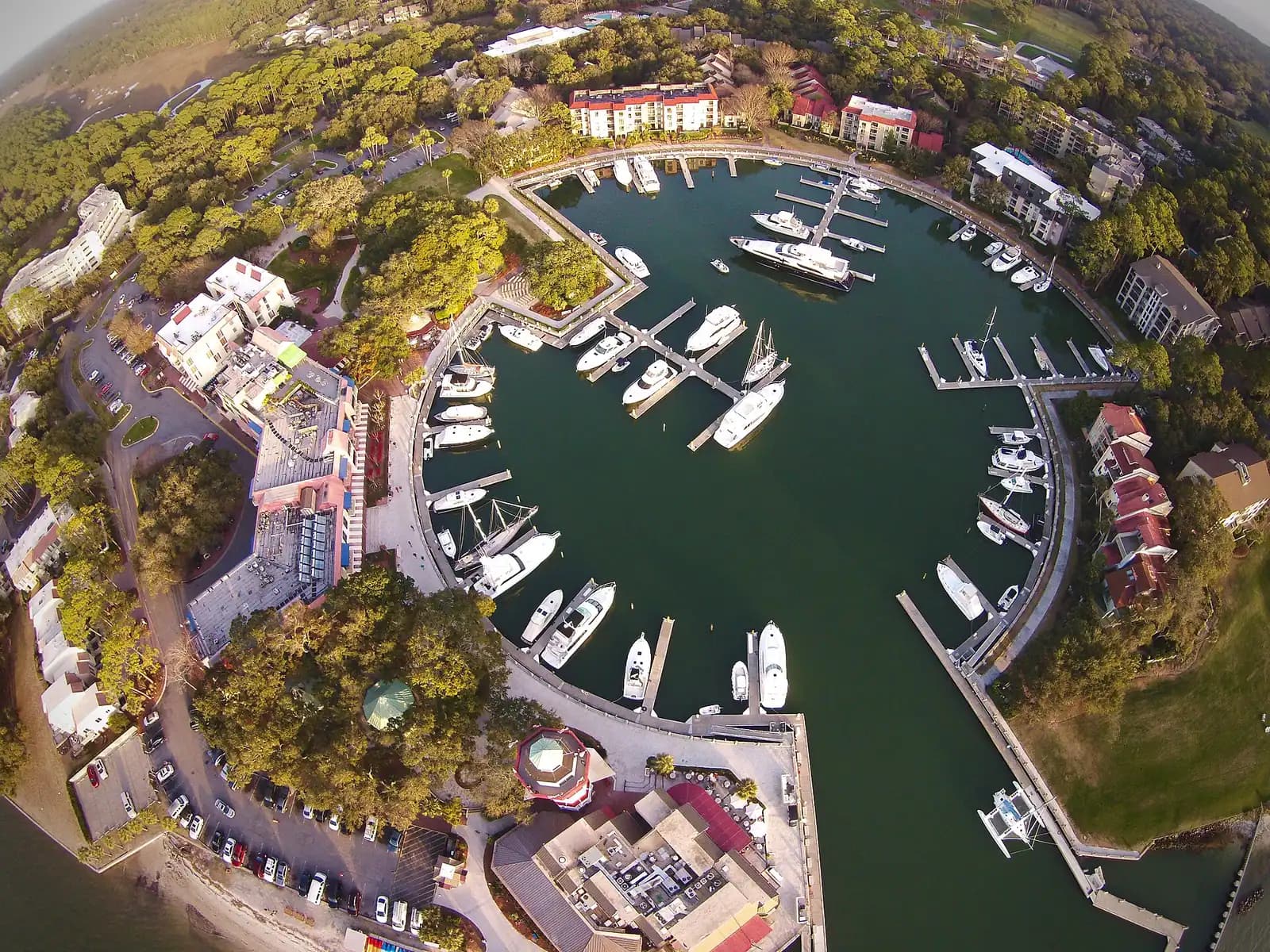
It stands about 90 feet, which is short as lighthouses go and tall enough for what the island has to show: from the observation deck you get Calibogue Sound running south-west, Daufuskie Island across the water, the yacht basin directly below, and the 18th green of Harbour Town Golf Links curving in from the right. On a clear day the Savannah shipping channel traffic is visible in the distance.

The climb is 114 steps, done at your own pace on a single spiralling staircase. What makes it more than a stairwell is that each of the ten landings is fitted out as a museum room. The sequence runs chronologically through the island's story: pre-contact Native settlement and the shell rings, Spanish and English contact, the plantation era and Sea Island cotton, the Union occupation after the Battle of Port Royal in November 1861, Gullah Geechee life in the century when the island had no bridge, and finally Fraser and the arrival of the resort. There is also a Coast Guard display built around a large scale model of the cutter Eagle.

It is a good stop for a family, and one of the few genuinely indoor-ish attractions in Harbour Town when the afternoon thunderstorm arrives. The gift shop at the base is unusually committed to its subject — it carries one of the larger lighthouse-specific collections you will find anywhere.

Two costs apply. The lighthouse charges its own admission, and Sea Pines charges a gate pass per vehicle to get into the community at all.
Getting there and parking

Enter Sea Pines at the Greenwood Gate on Greenwood Drive or the Ocean Gate off Cordillo Parkway, pay the per-vehicle day pass, then follow signs to Harbour Town. Park in the free surface lots behind the shops and walk the last two or three minutes around the basin — the base of the tower is on the water side, next to the gift shop.

There is no drop-off directly at the tower. If someone in the group is not climbing, the harbour boardwalk, the shops and the shaded playground are all within a couple of minutes' walk of the entrance.

Tickets, hours and the second fee people forget

Admission to climb is charged per person and sits in the single-digit dollar range; young children have historically gone free. The ticket covers the climb, the museum landings and the observation deck. Hours are long and daylight-driven rather than fixed — the tower has typically opened around mid-morning and closed at sundown, which means a much shorter day in December than in June.

The fee people forget is the Sea Pines gate pass, charged per two-axle vehicle at the Greenwood Gate or the Ocean Gate. You pay that before you ever reach the lighthouse, and it is not included in the lighthouse ticket. Two households in two cars pay it twice.

Prices and hours both move. Treat any figure you read online, including this one, as an order of magnitude and confirm at the gift shop counter or by phone before you build an afternoon around it.

What the climb is actually like

It is 114 steps on a single staircase, with a landing roughly every eleven or twelve steps, and each landing is a small exhibit room. That structure matters: you are never climbing more than a dozen steps before you get a flat surface, a bit of air conditioning and something to read. Most reasonably mobile adults and children manage it comfortably, and people stop frequently.

There is no lift, and the staircase is too narrow for a stroller or a wheelchair. Leave pushchairs at the bottom. In July and August the stairwell gets warm despite the cooling, so go early or late rather than at two in the afternoon.

Allow around 30 to 45 minutes if you read the exhibits properly, or fifteen if you are only after the view. The observation deck is open air and can be genuinely windy — hold onto hats, and expect the deck to close during thunderstorms, which on this coast are a near-daily summer occurrence in the late afternoon.

What you can see from the top

Facing south-west, you are looking straight down Calibogue Sound, the body of water that separates Hilton Head from Daufuskie. The wooded shoreline across the water is Daufuskie itself, roughly a mile and a half off; on a clear day you can pick out the Bloody Point and Haig Point ends of it. Boat traffic below is a steady mix of charter fishing boats, sailing catamarans and private craft working in and out of the basin.

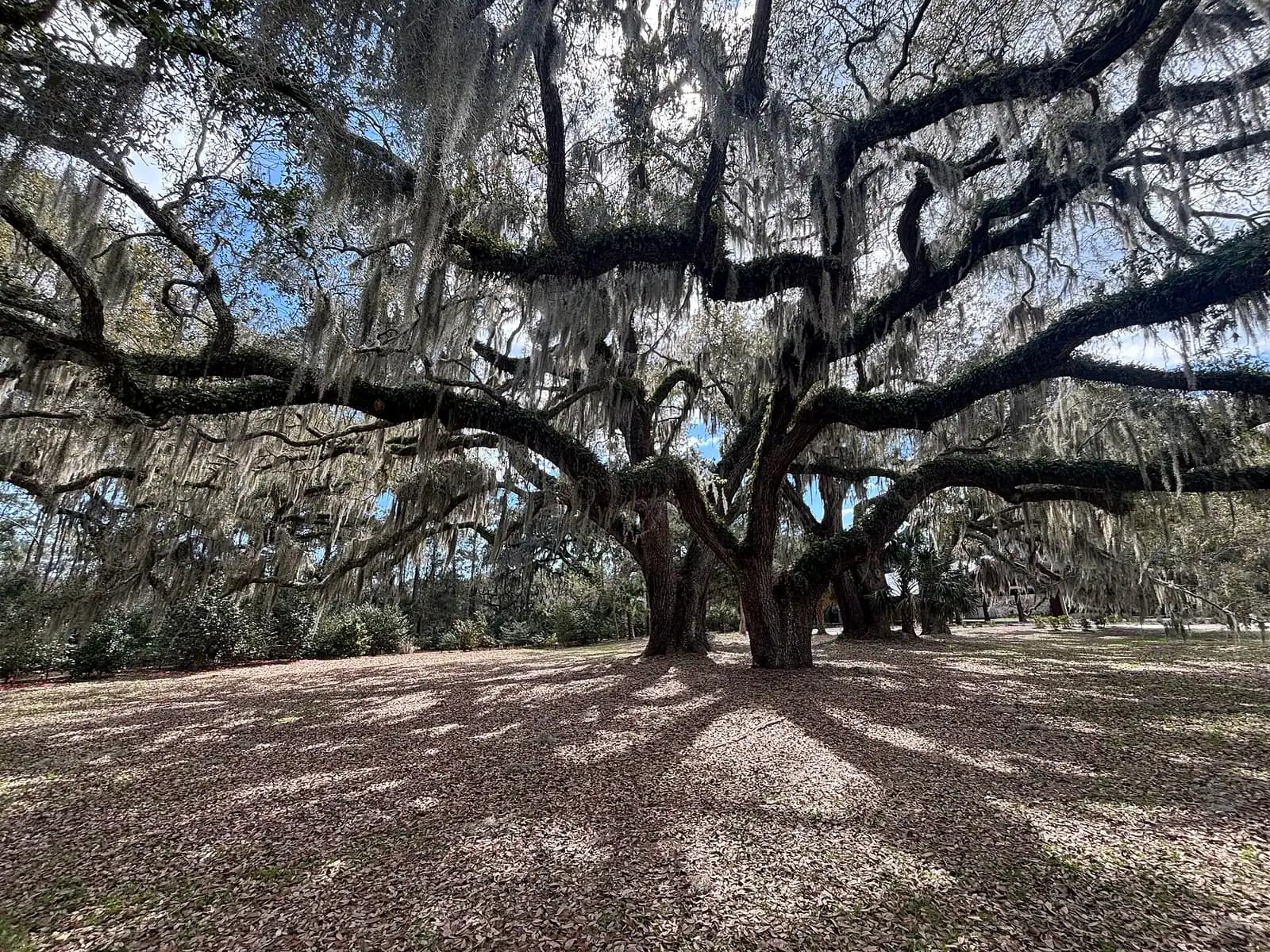
Turn north and you have the yacht basin, the shops in their horseshoe, and the Liberty Oak on the green. Turn inland and the famous closing hole of Harbour Town Golf Links runs along the water, the one televised each April during the RBC Heritage with this tower in the background.

For photographs, the tower itself shoots best from the harbour boardwalk in the morning with the sun behind you. The view from the top is better in the late afternoon, when the light is over the Sound.

Tours that visit The Lighthouse

Operators run these trips past The Lighthouse, or stop there as part of a longer route. We list what the booking data supports — not everything that mentions the name.

Some links below go to Viator, our booking partner. We earn a commission on bookings made through them — at no extra cost to you, and with no influence on what we recommend.

Shared departurespriced per seat, best value for one or two

  • Harbour Town Lighthouse Sightseeing Cruise

    Day Cruises

    Harbour Town Lighthouse Sightseeing Cruise (opens in a new tab)

    Free cancellationInstant confirmation
    765 reviews

    The postcard route: out of Harbour Town past the lighthouse and the Calibogue markers, with live narration.

    1–2 hours

    Saved listing — live prices unavailablePrices checked

    from $46

Private and small-group optionsoften cheaper per head for a family or a group of six

  • Champagne Sunset Sail on a 40-Foot Catamaran

    Sunset Cruises

    Champagne Sunset Sail on a 40-Foot Catamaran (opens in a new tab)

    Free cancellationSmall group
    948 reviews

    Sails up on Calibogue Sound, a glass of something cold in hand, and the Harbour Town lighthouse lighting up behind you.

    2 hours

    Saved listing — live prices unavailablePrices checked

    from $79

Near The Lighthouse

Straight-line distances, so allow more on the road — the island is long and has one main parkway.

  • Small boats moored on clear shallow water beside a sandbank, seen from above

    Marina

    Harbour Town

    A yacht basin on Calibogue Sound, a three-centuries-old live oak, and the island's most photographed stretch of low wooden shopfronts.

    1–3 hoursNo charge to walk the harbour, but Sea Pines charges a daily gate pass per vehicle to enter the community.260 ft away

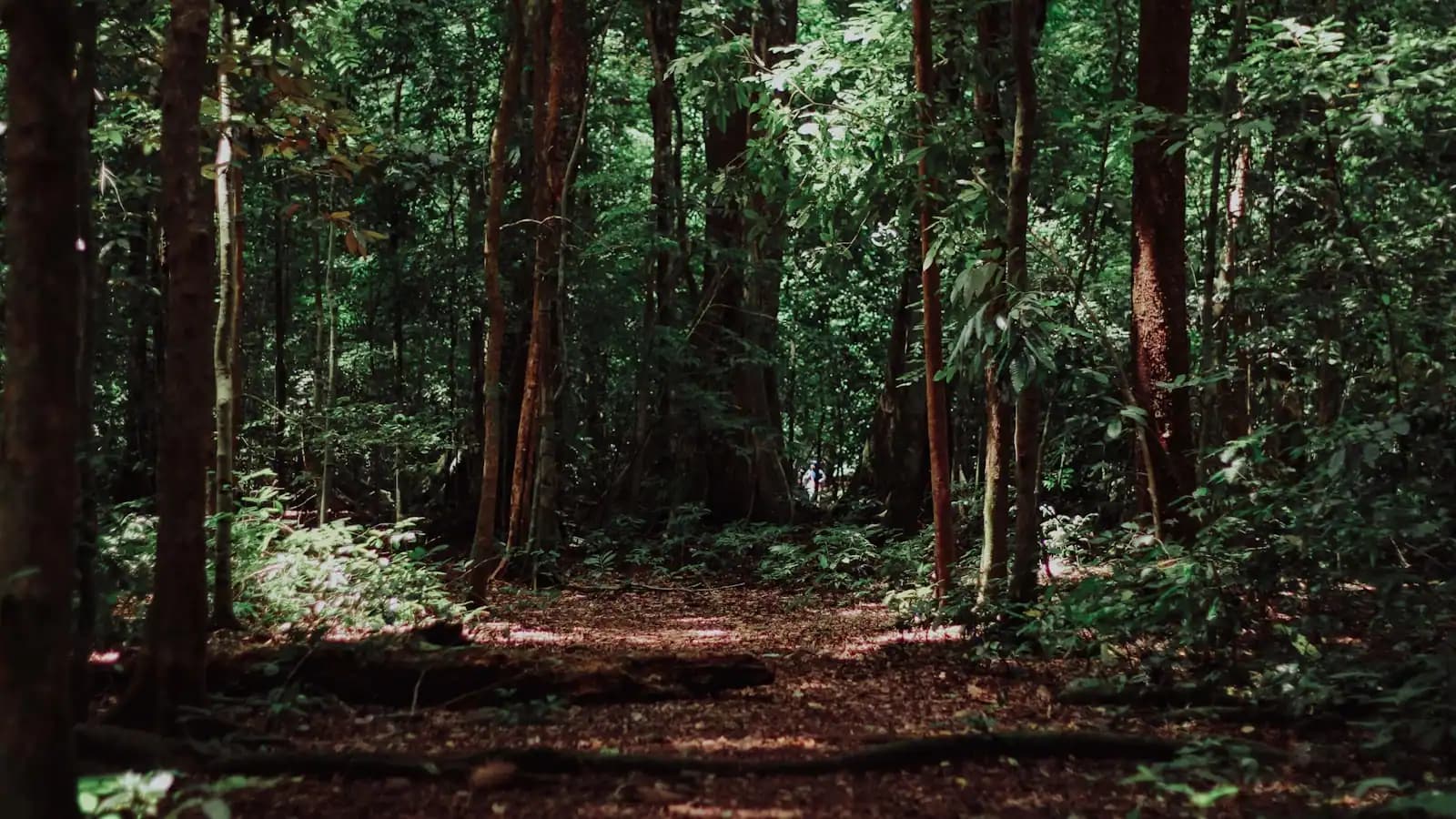
  • Tall pine trunks with sunlight falling across a needle-covered forest floor

    Neighbourhood

    Sea Pines Resort

    Five thousand acres behind a gate: the pass costs one thing and nearly everything good inside costs another. How it works.

    3–8 hoursDaily gate pass charged per two-axle vehicle; activities inside cost extra.1.3 mi away

  • A white-tailed buck standing among trees in low golden light

    Nature preserve

    Sea Pines Forest Preserve

    Free

    Six hundred and five acres of trails, lagoons and a 4,000-year-old shell ring — free to walk, once you have paid the Sea Pines gate.

    1–3 hoursFree to enter — but non-residents pay the Sea Pines daily gate pass to drive in2.3 mi away

  • Green woodland with light falling between close-standing trees

    Historic site

    Stoney-Baynard Ruins

    Free

    Oyster-shell concrete walls of a cotton planter's house, with the foundations of the quarters that made it possible a few steps away.

    20–45 minutesFree at the site. You still pay the Sea Pines gate pass, charged per vehicle, to enter the community.0.8 mi away

The Lighthouse: common questions

How many steps are there in the Harbour Town Lighthouse?

114, on a single spiral staircase with a landing every ten to twelve steps. Each landing is a small exhibit room, so the climb breaks naturally into short sections with somewhere to stop and read. Most children over about four and most reasonably mobile adults do it without difficulty. There is no lift.

How much does it cost to climb the Harbour Town Lighthouse?

Admission is charged per person and has recently sat in the single-digit dollars, with very young children free. Remember the second cost: Sea Pines charges a day pass per vehicle at the gate to enter the community, and that is separate from the lighthouse ticket. Confirm both current rates before you go, as they change.

Is the Harbour Town Lighthouse a real, working lighthouse?

It is a real tower with a light, but it is not a historic federal aid to navigation. It was built privately around 1970 as part of Charles Fraser's Sea Pines development, mainly to give the new harbour a landmark. That is genuinely unusual — most American lighthouses date from the nineteenth century and were built by the government, not by a property developer.

What can you see from the top?

Calibogue Sound running south-west, Daufuskie Island across roughly a mile and a half of water, the yacht basin and shops directly below, and the closing hole of Harbour Town Golf Links, which is the one televised each April during the RBC Heritage. The deck is open air, so it is often windy and closes in thunderstorms.

Is it worth doing in the rain?

Partly. The stairwell and its ten museum landings are enclosed and make a decent forty minutes when a storm rolls through, and the island's history is told properly there rather than as decoration. The observation deck at the top closes in lightning and heavy wind, so you may get the museum without the view.