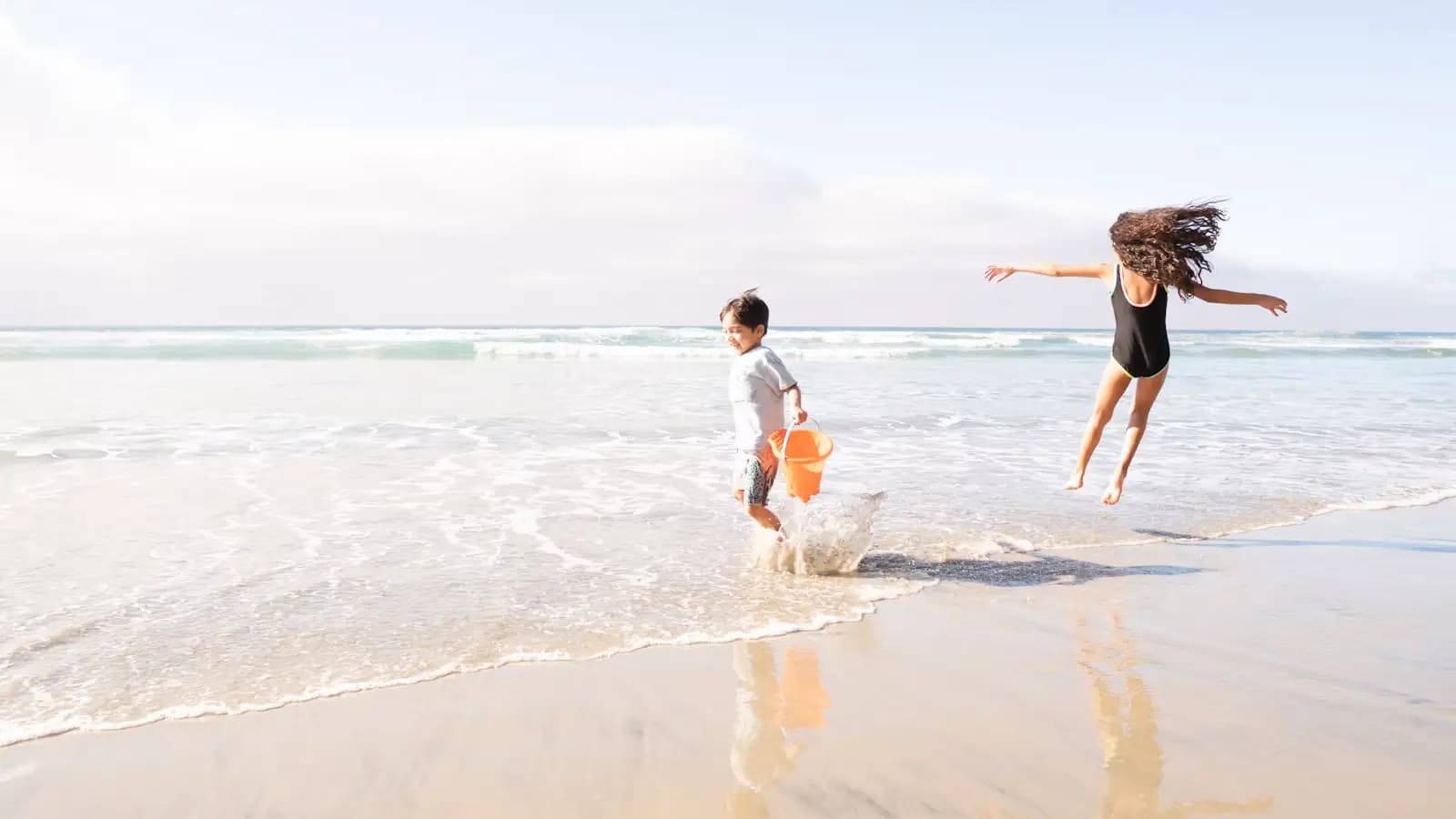
Hilton Head earns its reputation with families for two reasons that have nothing to do with marketing. The first is the pathway network: more than 72 miles of flat, paved, traffic-separated public path, plus another 50-odd miles inside the gated communities, which means a seven-year-old can ride to the beach without ever meeting a car. The second is the sand. At low tide the beach is wide and firm enough to push a stroller across, and the gradient is gentle enough that small children can stand a long way out.
What changes with age here is not the list of attractions. It is the logistics: naps, distances, how long a child will sit on a boat, and which lagoon you are not allowed to walk beside.
By age band
Babies and toddlers, 0 to 2
Rent a villa with a kitchen and a washer. Grocery stores at both ends of the island mean you are not hostage to restaurant hours, and a family with a toddler will take at least half their meals in. Most rental agencies and a handful of local outfitters deliver cribs, high chairs, beach carts and jogging strollers to the door; arrange it with the booking rather than on arrival.
Go to the beach in the two hours around low tide, when the tidal pools left on the flats are ankle-deep, warm and calm. Driessen Beach Park is the pick: a long boardwalk over the dunes, a playground, picnic shelters and restrooms. The boardwalk is long, so bring the cart.
Two hours is the outer limit for a boat trip at this age, which rules a lot of things in rather than out: most dolphin cruises run 90 minutes to two hours.
Preschool, 3 to 5
This is the sweet spot for the island's animal-based days. Lawton Stables inside Sea Pines runs pony rides and keeps a small animal farm that costs nothing to walk through. The Coastal Discovery Museum at Honey Horn has 68 acres of marsh trail, a live oak allée and a seasonal butterfly enclosure, with free grounds and donations encouraged.
Put a child seat or a trailer on the back of a rented bike. Rental shops carry trailers, tag-alongs and seats and deliver them with the bikes, and the trailer is generally the better buy because it doubles as a beach-gear hauler.
Dolphin cruises work well at this age provided you take a morning departure. Bottlenose dolphins live in these waters year-round, so the sighting is close to a given, and boats out of Shelter Cove Harbour are often among them inside ten minutes.
Early school age, 6 to 9
Bikes become the whole holiday. At low tide the beach itself is the best ride on the island, twelve miles of hard-packed sand, and children who would complain about a path will ride the beach for an hour without noticing. Check the tide chart first: the same stretch two hours later is soft sand and hard work.
Add the Sea Pines Forest Preserve, 605 acres of trails and lagoons where alligators are genuinely visible from the boardwalks, which is a better wildlife lesson than any enclosure. Keep to the paths and keep children well back from the water's edge.
Pirate-themed harbour cruises, mini golf and the summer HarbourFest evenings at Shelter Cove are all aimed squarely at this band. HarbourFest runs from early June into mid-August with live family entertainment, and fireworks over the harbour on Tuesday nights plus a July 4 show.
Tweens and teens, 10 to 17
Give them the bikes and a meeting time. This is the age at which the pathway network stops being a nice feature and becomes independence, and the island is about as safe a place to hand that over as exists on this coast.
Beyond that: stand-up paddleboarding and kayaking in the Palmetto Dunes lagoon system, which runs eleven miles and has no boat traffic; surfing lessons in summer when the Atlantic here is gentle to the point of being flat; inshore fishing charters in the creeks for redfish and trout; and the tennis and pickleball centres, which run junior clinics.
The logistics parents actually ask about
| Question | The practical answer |
|---|---|
| Which beach for young children? | Driessen for the playground and boardwalk; Coligny for free parking, showers and being able to walk to lunch; Alder Lane for a quieter stretch with a short walk from the car |
| Where do we park? | Town lots charge $3 an hour weekdays, $5 weekends, 7am to 5pm, 1 March to 7 September, paid by phone app. Coligny Beach Park is free all year |
| Lifeguards? | The town's beach parks have designated swimming areas with seasonal lifeguard coverage. Ask about the flag system on arrival, and swim in front of a stand |
| Strollers on the sand? | Only near low tide, or with a balloon-tyre beach cart. Beach wheelchairs are available at Coligny Beach Park |
| Are there jellyfish? | Sea nettles turn up in late summer. Shuffle your feet in the shallows for rays, and ask a lifeguard what is in the water that week |
| Alligators? | In the lagoons and ponds of every community, not in the ocean. Never feed them, do not let children or dogs near a lagoon edge, and report a bold animal to the community office |
| Naps? | Beach in the morning, back for the middle of the day. It is also when the UV peaks and when summer thunderstorms build |
Rules children need told once
The lights-out ordinance runs May through October: lights visible from the beach must be off or shielded between 10pm and 6am, because loggerhead hatchlings navigate toward the brightest horizon and a deck light sends them inland. Sandcastles get knocked flat and holes filled in before you leave, because a hole is a trap for a hatchling and for a volunteer walking the beach at dawn. Beach furniture and toys come off the sand overnight for the same reason.
No glass on the beach at all. Shells with a living animal in them stay where they are, sand dollars and conch included. Dogs are restricted by season and time of day, and the town does enforce it.
Wet afternoons with children
Summer rain here usually arrives as a thunderstorm that builds over the mainland in the afternoon and clears inside an hour, so the first move is often to wait rather than drive.
When it settles in, the Coastal Discovery Museum at Honey Horn is the best indoor hour on the island for primary-school children, and the grounds are free with donations encouraged. The island also has a small hands-on children's museum near Coligny, an arts centre that programmes family theatre, cinemas, indoor mini golf and the covered shopping at Coligny Plaza and Shelter Cove Towne Centre.
A genuinely good wet-weather option that most visitors miss: the Sandbox-style indoor play spaces and the island's library branches both run drop-in sessions in summer. Check current schedules locally, since they change term by term.
Pack one set of long sleeves and one pair of closed shoes per child even in July. Marsh trails after rain are buggy, and the Forest Preserve boardwalks get slick.
What to bring that you will not think of
A tide chart, or an app with one. Half the decisions on this island are downstream of the tide, and the beach with young children is a different place at high water.
Bike helmets if you have them. Rental shops carry them, but sizing for small heads runs out first in July, and South Carolina requires a white front light and a rear reflector after dark on the paths, which are unlit.
Reef-safe sunscreen and a rash vest each. The UV index on this latitude in summer regularly reaches the top of the scale by late morning and the water is clear enough that shoulders burn while children are in it.
A mesh bag for shells, and the rule that goes with it: anything still living goes back. A red flashlight if you plan to walk the beach after dark in nesting season, because white light disorients hatchlings and is discouraged island-wide from May through October.
Last updated
Opening hours, ordinances and prices move with the season. We re-check this guide rather than rewrite it, and the date above is the last time someone did. How we research and correct.