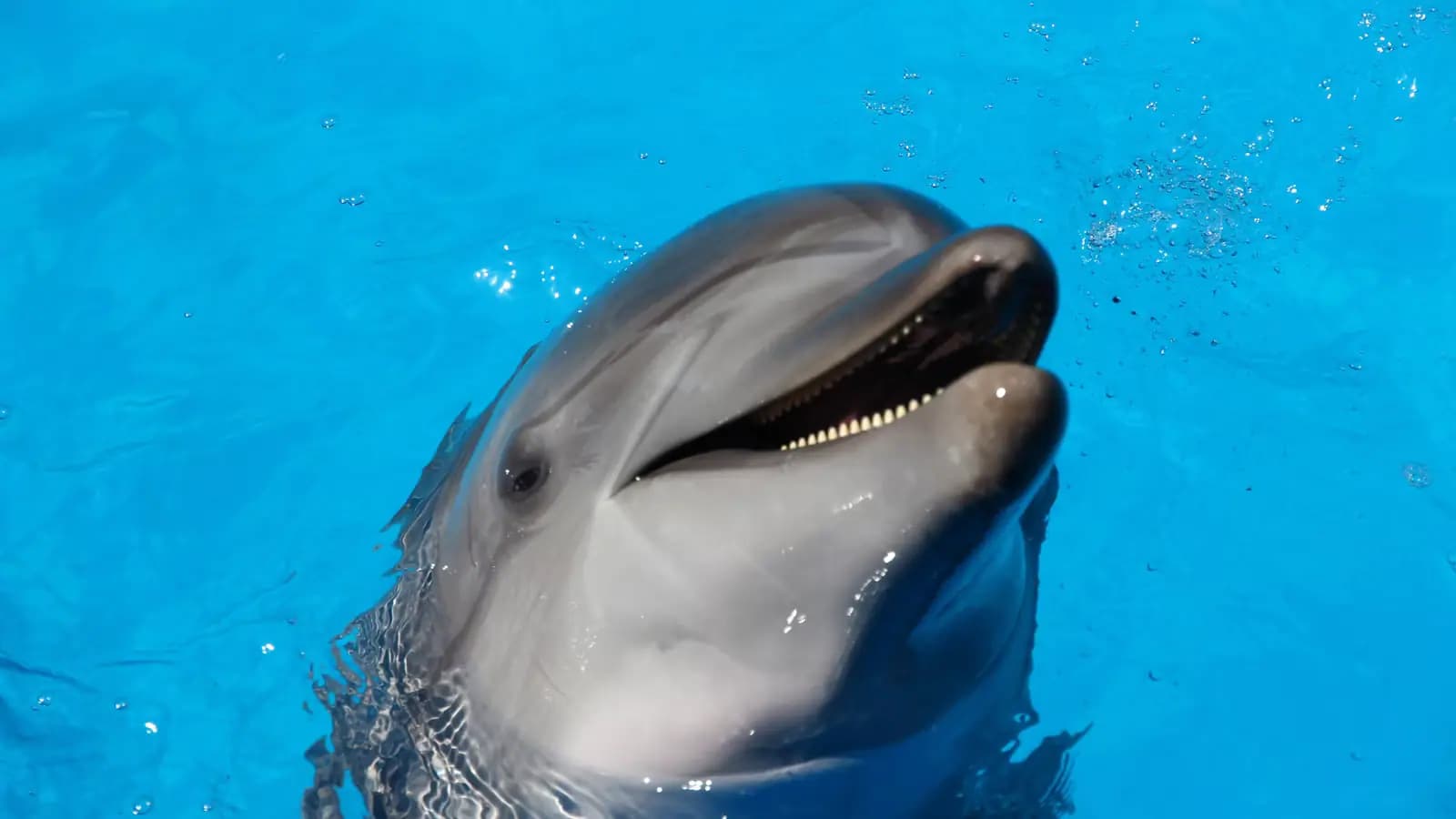
The dolphins around Hilton Head are not passing through. Atlantic bottlenose dolphins live in this estuary year-round, in Calibogue Sound along the southwest shore, in Port Royal Sound to the north, in Skull Creek and the Intracoastal Waterway on the back side, and up Broad Creek into the middle of the island. They feed on mullet, shrimp and menhaden that the tide flushes twice a day out of the spartina marsh, and because the food is on a schedule, so are they.
That residency is the single most useful fact for planning. You are not hoping to intercept a migration. You are choosing a piece of water and an hour.
Individual dolphins here carry nicks and scars on their dorsal fins distinctive enough that researchers identify them the way you would identify a face, and the same animals turn up in the same creeks season after season. Captains who have worked one waterway for years often recognise particular animals. Ask. It is the difference between a boat ride and a wildlife trip.
Which water, and why it matters
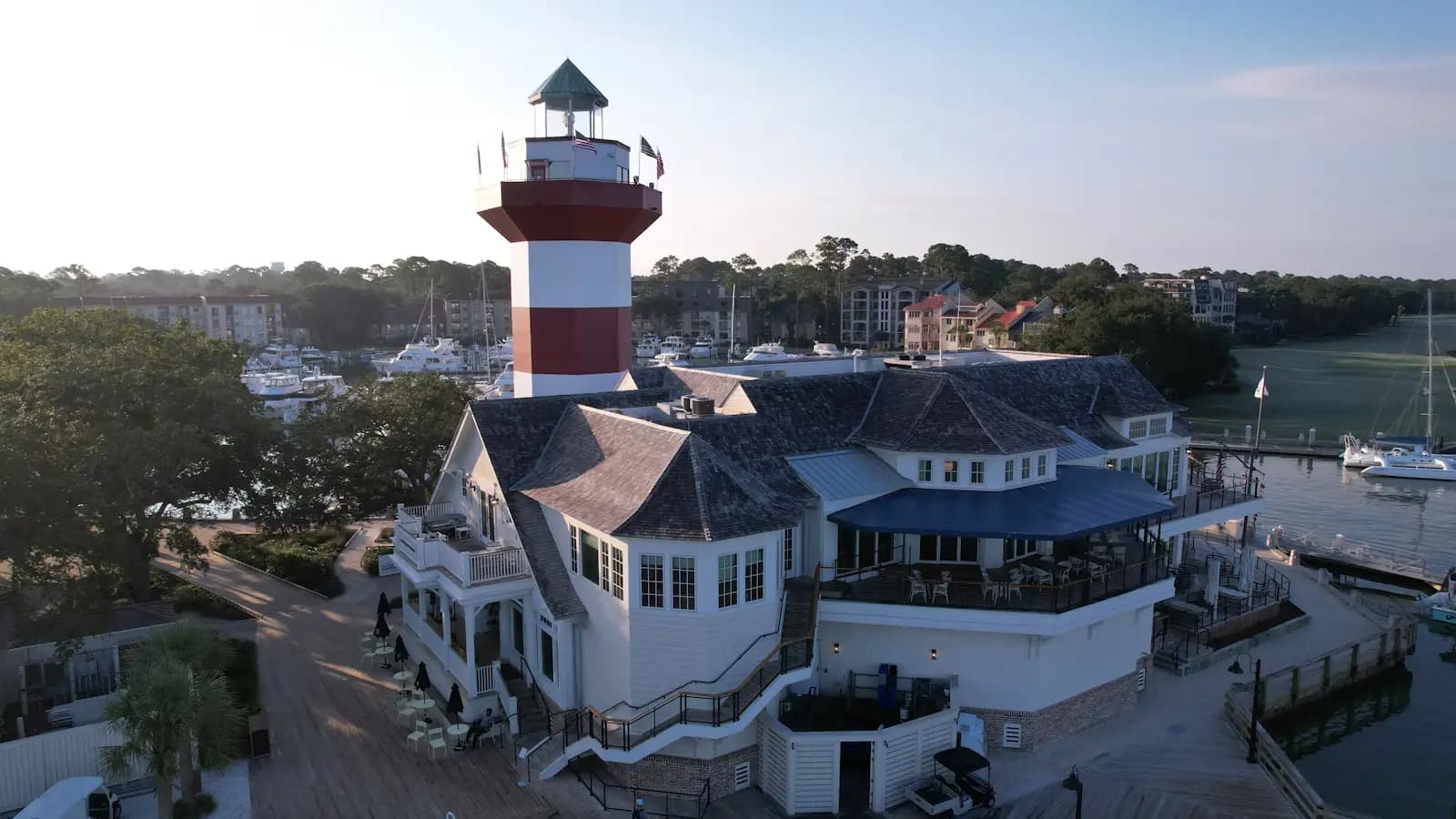
Broad Creek cuts into the island's middle almost far enough to split it, and it is the most sheltered option. Dolphins work the oyster rakes and the channel edges here. A boat leaving Shelter Cove Harbour can be among them inside ten minutes, which matters enormously if you have a four-year-old aboard.
Calibogue Sound, between the island and Daufuskie, is bigger water with more of it. This is where the Harbour Town and South Beach departures work, and where a sunset trip earns its name as the sun goes down behind Daufuskie.
Skull Creek and the Intracoastal on the island's back side is the quiet option, with shrimp trawlers working through in season and a trailing net that acts as a reliable dolphin magnet.
Port Royal Sound in the north is the largest and least sheltered body of water, and the one most associated with strand feeding. Trips that push up here run longer, typically two and a half hours, and are less suitable for small children in a chop.
Morning or sunset
| Morning, roughly 9am | Late day and sunset | |
|---|---|---|
| Water | Flattest, before the sea breeze fills in | Often glassy on a still evening, choppier on a windy one |
| Light | Good and even for photographs | Beautiful, but backlit and hard to shoot |
| Heat | Manageable, even in July | Warm until late in summer |
| Reliability | High. Afternoon thunderstorms have not built yet | Summer storms can cancel at short notice |
| Seasickness | Much better | Worse if the wind has been up all day |
| Crowds | Fewer boats out | The busiest departure slot on the island |
If it is your only trip, take the morning. Take the sunset trip if you have already been out once, or if the point of the evening is the marsh turning gold rather than the dolphins.
Sunset moves about three hours across the year here, from near 8.30pm at the end of June to around 5.20pm near the winter solstice, so check what time a sunset cruise actually departs. In October it boards in broad daylight.
Strand feeding: what it is and where it is realistic
Strand feeding is a learned hunting behaviour in which dolphins work as a group to drive a school of fish up onto a mud bank, then half-beach themselves to take them, and slide back on the wash. It is passed from mother to calf, it is restricted to a handful of places worldwide, and the Lowcountry is one of them.
Two honest things about it. First, it is opportunistic. It happens on a falling tide, at specific banks, and no operator can schedule it. Second, it is more reliably seen around Port Royal Sound and the mudbanks on the Bluffton side than in Broad Creek. If strand feeding is your goal, book a trip that explicitly goes looking for it, take a falling tide, and treat a sighting as a bonus rather than a purchase.
If you do see it, the boat should be well off and stationary. Wake washing over a feeding bank ruins the hunt and erodes the bank.
The law, and why it is worth caring about
Under the Marine Mammal Protection Act it is illegal to feed wild dolphins or to attempt to feed them, and illegal to harass them. NOAA Fisheries asks people to stay at least 50 yards away, which is half a football field, and not to swim with, chase or corner wild dolphins.
The reasoning is practical rather than sentimental. Dolphins that learn to associate boats with food lose their wariness, start begging, take hooks and propellers, and teach the behaviour to their calves. A begging dolphin usually has a short life.
Dolphins riding a boat's wake are a different matter: the animal chose it, and a good captain will drop to neutral and let them decide. Chasing a group to produce that moment is harassment, and a captain who does it is telling you something about the operation.
What a fair price looks like
- A shared 90-minute to two-hour cruise on a catamaran or pontoon runs roughly $35 to $50 an adult, with children usually discounted to something like $20 to $30 and toddlers often free or close to it.
- A six-passenger skiff or small-group nature trip commonly runs $65 to $95 a person, because you are paying for the boat rather than the seat.
- A two-hour private charter typically lands between $400 and $700 depending on the boat, which stops looking expensive at six people.
Treat those as bands and verify current pricing, because fuel and season move them. Two costs catch visitors out: crew tips are customary here at roughly 15 to 20 percent and are not in the ticket, and if your boat leaves from Harbour Town and you are not staying in Sea Pines, you pay the community's vehicle pass at the gate, published at $10 for a standard car.
Parking at Shelter Cove, Broad Creek Marina and Palmetto Bay Marina is normally free, which is worth knowing when the beach lots are charging $5 an hour.
Watching from shore, for nothing
You do not have to buy a ticket to see dolphins here, and in the right place at the right stage of tide you will.
- Shelter Cove Harbour boardwalk. Dolphins come into the marina basin and work the creek mouth. Early morning, before the boat traffic.
- Harbour Town's waterfront in Sea Pines, looking out over Calibogue Sound. Requires the gate pass unless you are staying inside.
- Fish Haul Creek Park on the north end at low tide, where the flats run a long way out and the water is quiet.
- The Skull Creek side, along the Intracoastal, particularly on a falling tide in the evening.
- The beach itself, at either end of the island, where dolphins hunt the surf line closer in than people expect. Scan the water rather than the horizon.
Bring binoculars, go at a changing tide rather than slack water, and give it twenty minutes. Movement in the water here is usually not a wave.
Choosing the boat, not the tour name
Most dolphin trips on this island are sold on the destination and won on the vessel. Four types cover nearly everything on offer.
Large catamarans carry forty or more, have restrooms and shade, and stay steady in a chop. They are the right answer for a multi-generational group and the wrong answer if you want to get up the skinny creeks.
Pontoons take twenty to thirty and sit low, so the water is at eye level. That is a genuine advantage with children, who see a dolphin surface eight feet away rather than looking down at it.
Six-passenger skiffs can enter creeks the bigger boats cannot, spend longer with a single group of animals, and cost more per head. Best for photographers and anyone who has done the standard cruise before.
Private charters let you set the departure time, which in practice means you can take the best stage of tide instead of the best slot in a schedule.
One more option, often overlooked: a guided kayak trip in Broad Creek puts you on the water at dolphin height with no engine noise. It is not a dolphin tour and does not promise a sighting, but the encounters when they happen are the quietest you will get.
Last updated
Opening hours, ordinances and prices move with the season. We re-check this guide rather than rewrite it, and the date above is the last time someone did. How we research and correct.