Skip to content
Menu

We earn a commission if you book through this link. You pay the same price.

Historic site

Stoney-Baynard Ruins

Last updated

Oyster-shell concrete walls of a cotton planter's house, with the foundations of the quarters that made it possible a few steps away.

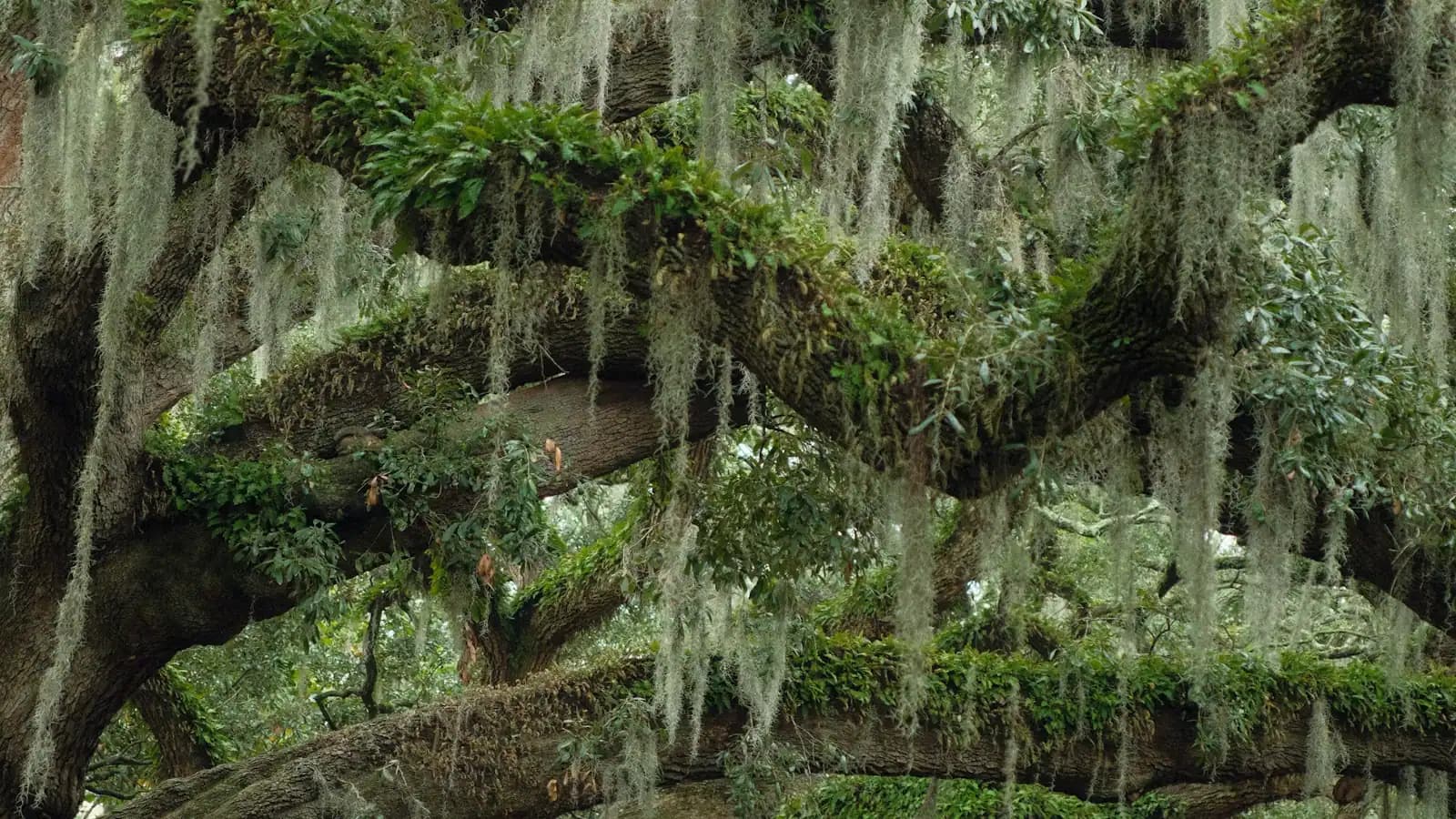
Off a quiet residential road in Sea Pines, behind a screen of live oaks, stand the broken walls of a house built between about 1790 and 1810. They are made of tabby — a Lowcountry concrete of burnt oyster shell for lime, whole shell for aggregate, sand and water, poured in courses between boards. Nowhere else on Hilton Head Island can you stand inside the tabby walls of a plantation main house. This is the only one left.

The land was Braddock's Point Plantation, at the island's south-western corner. It was bought by John "Captain Jack" Stoney and the house built by his sons. In 1840 it passed to William Edings Baynard, a successful Sea Island cotton planter, who lived here until his death in 1849; the site has carried both families' names ever since. Sea Island cotton — long-staple, grown on these barrier islands and nowhere else in North America — was the crop that made this coast rich, and it was grown and picked by enslaved people.

When the Union took the island in November 1861, the house was raided and then used by Union forces as a headquarters. It burned not long after the war. What survives is the tabby skeleton: the main house walls to varying heights, a chimney footing thought to belong to an overseer's house, and — the part most visitors walk past without registering — the foundation of a slave dwelling.

That last feature is why this site is worth thirty minutes rather than five. The main house ruin is picturesque in the way ruins are. The quarters foundation is the plainer and more important structure on the ground, and reading the two together is the visit.

The site is free and open. The cost is the Sea Pines gate pass, charged per vehicle, because the ruins sit inside the gated community.
Getting there and parking

Enter Sea Pines at the Greenwood Gate on Greenwood Drive or the Ocean Gate off Cordillo Parkway, and pay the per-vehicle day pass. The ruins are in the residential south-west of the community, off Plantation Drive near Baynard Park Road.

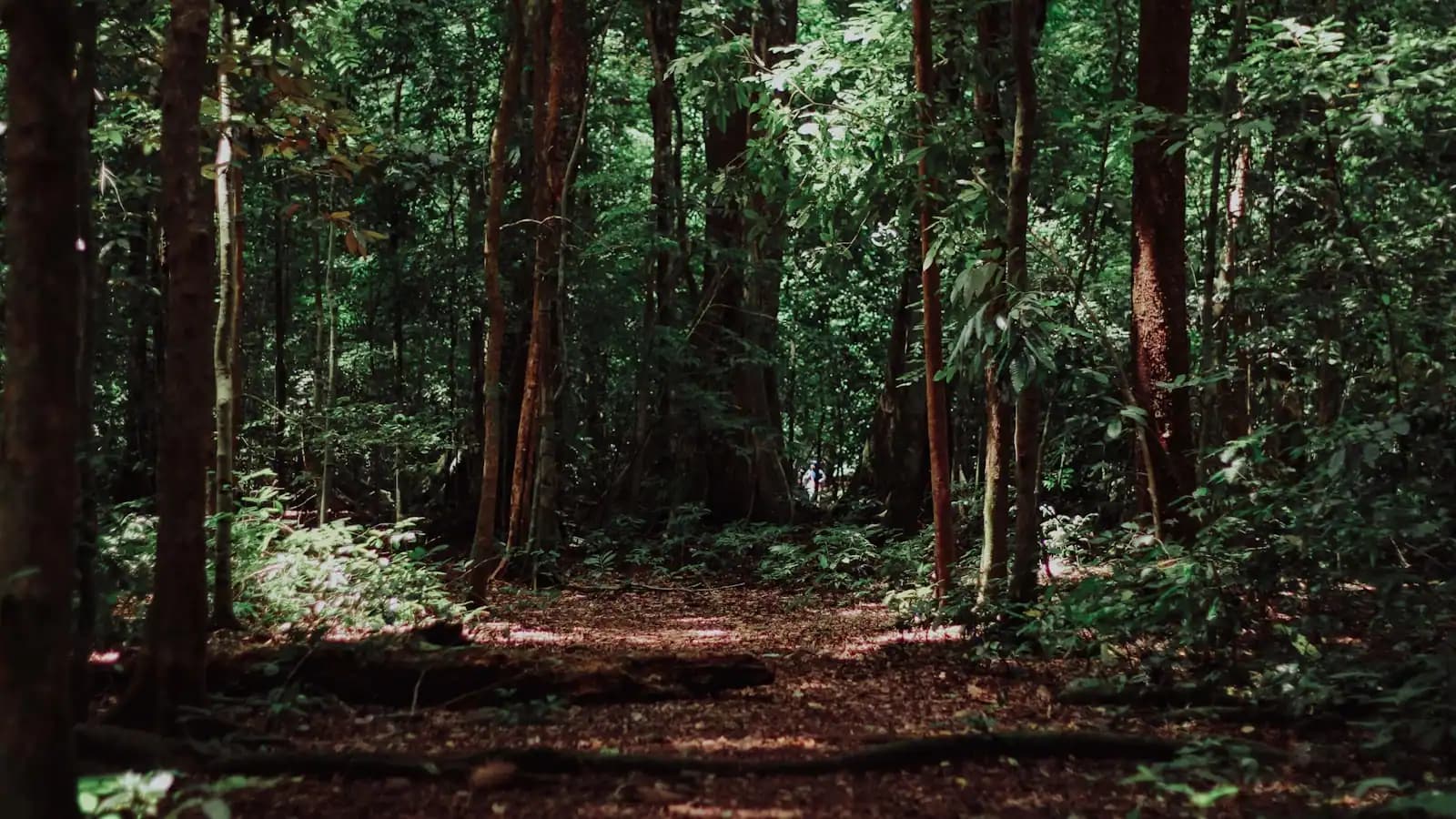
There is a small parking pull-in rather than a proper car park, and the turning is easy to miss under the tree canopy — load the location before you set off. It is an easy addition by bike if you are staying inside Sea Pines, since the leisure trails run close by. Harbour Town is about five minutes away by car.

Tabby: why the walls look like that

Tabby is what you build with when you have no stone and no clay for brick, but you have enormous quantities of oyster shell. Shell was burned in ricks to produce lime, then mixed with sand, water and more whole shell, and poured into wooden forms in horizontal lifts about a foot deep. When one course had cured, the forms were raised and the next was poured.

You can read that process directly in the walls here. The horizontal seams between pours are visible, as are the square putlog holes left by the scaffolding, and the surfaces are studded with whole oyster shell where weathering has exposed the aggregate. It is a construction technique used along the Georgia and South Carolina coast from the Spanish colonial period onward, and it takes a great deal of labour — the shell gathering, the burning, the mixing — all of which was enslaved labour.

Tabby weathers unevenly, which is why the walls stand at different heights and why the site is fenced and braced in places. Do not climb on the walls or lean on them.

The foundation people walk past

Beyond the main house and the chimney footing is a low rectangular tabby foundation. It is the remains of a slave dwelling, and it is unmarked in the way that such structures usually are — smaller, plainer, lower, easier to mistake for rubble.

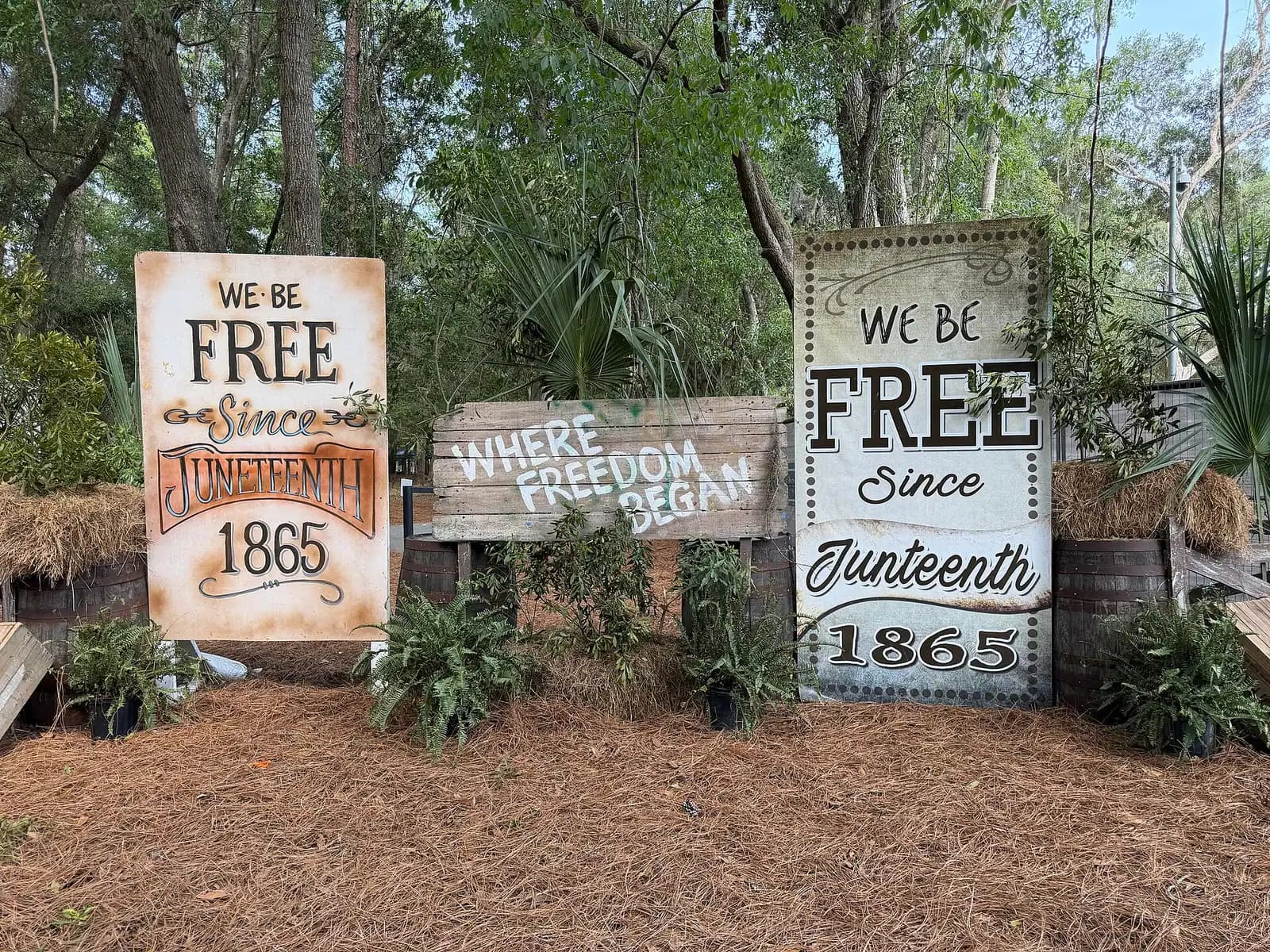
Braddock's Point was a working Sea Island cotton plantation, and the people held in bondage here planted, tended, picked, ginned and packed a crop whose long fibres commanded the highest prices in the Atlantic world. The house you are standing in was paid for by that. When Union forces arrived in November 1861, the white households on Hilton Head evacuated within days; the enslaved people did not, and many of them walked to the Union lines and, from September 1862, to the self-governing town of Mitchelville on the far side of the island. The Gullah Native Islander families still holding land here are their descendants.

Stand at the quarters foundation and look back at the main house. The distance between the two is small, and it is the most informative thing on the site.

Finding it and visiting well

The ruins are in the residential part of Sea Pines, between Baynard Park Road and Plantation Drive, in an area of large lots and heavy tree cover. Signage is modest by design. Load the location before you drive, go slowly, and expect a small pull-in rather than a car park.

  • Cost: free at the site; you pay the Sea Pines gate pass per vehicle to be inside the community at all.
  • Time: 20 to 40 minutes. Longer if you read the panels properly.
  • Surface: earth and grass paths, uneven, with exposed roots.
  • Insects: shaded and close to water — repellent from May to October.
  • Do not climb the walls, move tabby fragments or metal detect. The site is on the National Register of Historic Places.

Pair it with the Sea Pines Forest Preserve, five minutes away, which holds an Archaic shell ring roughly four thousand years old, and with Harbour Town. That gives you four thousand years, an antebellum plantation and a 1960s resort in a single gate pass.

Tours that visit Stoney-Baynard

Operators run these trips past Stoney-Baynard, or stop there as part of a longer route. We list what the booking data supports — not everything that mentions the name.

Some links below go to Viator, our booking partner. We earn a commission on bookings made through them — at no extra cost to you, and with no influence on what we recommend.

Shared departurespriced per seat, best value for one or two

  • Parasailing Flight over Hilton Head Island

    Parasailing

    Parasailing Flight over Hilton Head Island (opens in a new tab)

    Free cancellationLikely to sell out
    1.6K reviews

    Four hundred feet up, dry feet the whole way, and the entire boot-shaped island laid out beneath you.

    1 hour

    Saved listing — live prices unavailablePrices checked

    from $89

Private and small-group optionsoften cheaper per head for a family or a group of six

Near Stoney-Baynard

Straight-line distances, so allow more on the road — the island is long and has one main parkway.

  • A white-tailed buck standing among trees in low golden light

    Nature preserve

    Sea Pines Forest Preserve

    Free

    Six hundred and five acres of trails, lagoons and a 4,000-year-old shell ring — free to walk, once you have paid the Sea Pines gate.

    1–3 hoursFree to enter — but non-residents pay the Sea Pines daily gate pass to drive in1.9 mi away

  • Small boats moored on clear shallow water beside a sandbank, seen from above

    Marina

    Harbour Town

    A yacht basin on Calibogue Sound, a three-centuries-old live oak, and the island's most photographed stretch of low wooden shopfronts.

    1–3 hoursNo charge to walk the harbour, but Sea Pines charges a daily gate pass per vehicle to enter the community.0.8 mi away

  • Calm coastal water under a low sun with seabirds crossing the sky

    Landmark

    Harbour Town Lighthouse

    114 steps up a red-and-white tower nobody asked the Coast Guard for, with an island history museum stacked on the landings.

    0.5–1 hoursA small per-person admission to climb, on top of the Sea Pines gate pass charged per vehicle at the community entrance.0.8 mi away

  • Tall pine trunks with sunlight falling across a needle-covered forest floor

    Neighbourhood

    Sea Pines Resort

    Five thousand acres behind a gate: the pass costs one thing and nearly everything good inside costs another. How it works.

    3–8 hoursDaily gate pass charged per two-axle vehicle; activities inside cost extra.1.2 mi away

Stoney-Baynard: common questions

What is tabby?

A Lowcountry building material made by burning oyster shell to produce lime, then mixing it with sand, water and whole shell and pouring it into wooden forms in horizontal courses. You can see the seams between pours and the square scaffolding holes in the walls here, with whole oyster shell exposed across the surfaces. It was used along the Georgia and South Carolina coast because there is no local stone and little good brick clay.

Are the Stoney-Baynard Ruins free?

The site itself charges nothing, but it sits inside Sea Pines, so you pay the community's daily gate pass to get there — charged per two-axle vehicle, recently around ten dollars, and valid for the whole day. Once inside, parking at the ruins is free. If you are already visiting Harbour Town or the Forest Preserve, the ruins cost you nothing extra.

What happened to the house?

It was built between roughly 1790 and 1810 by the Stoney family at Braddock's Point Plantation, passed to the Sea Island cotton planter William Edings Baynard in 1840, and was raided and then used as a headquarters by Union forces after they took the island in November 1861. It burned shortly after the Civil War. Only the tabby survived, which is why the walls stand and nothing else does.

What else is on the site besides the main house?

A chimney footing thought to belong to an overseer's house, and the tabby foundation of a slave dwelling. The last of those is the most important structure on the site and the easiest to walk past — it is low, plain and unmarked in the way such buildings usually are. Read it together with the main house rather than separately.

How long should you allow?

Twenty to forty minutes. The paths are short but uneven, and the interpretive panels reward being read rather than skimmed. It pairs naturally with the Sea Pines Forest Preserve five minutes away, which holds an Archaic shell ring around four thousand years old, and with Harbour Town — all three on one gate pass.