Skip to content
Menu

We earn a commission if you book through this link. You pay the same price.

Neighbourhood

Daufuskie Island

Last updated

No bridge, no traffic lights, golf carts on sand roads, and a Gullah history that Pat Conroy made famous. Ferry only.

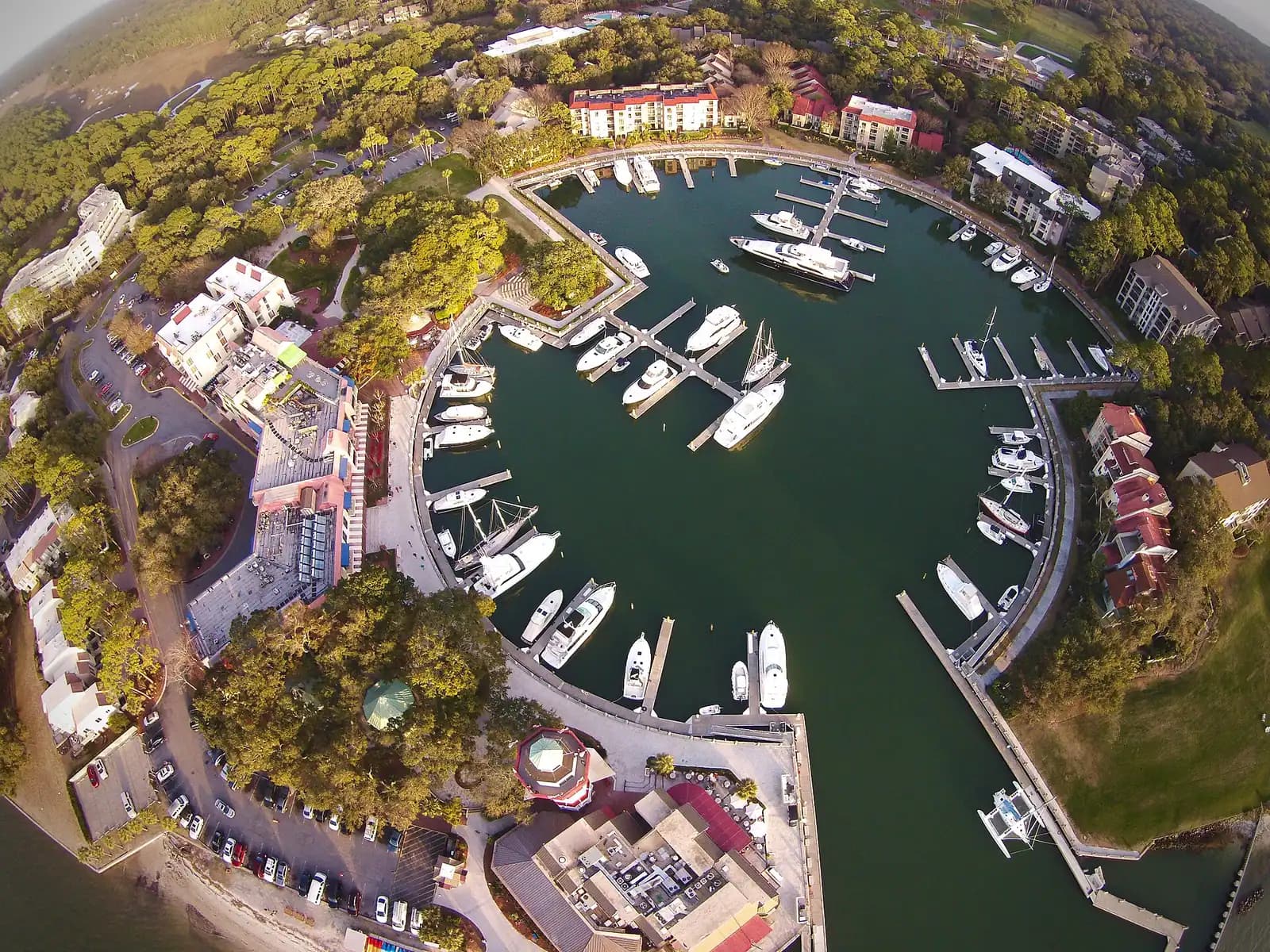
Daufuskie sits across Calibogue Sound from Hilton Head, about a mile and a half of water away and visible from the Harbour Town boardwalk. There has never been a bridge, and there is no plan for one. That single fact has preserved something that the rest of this coast lost: a barrier island of around five square miles with a few hundred residents, unpaved roads, no chain anything, and a pace set by golf carts.

The ferry is the only way over for a visitor. The main public service crosses from Broad Creek Marina on Hilton Head to Freeport Marina on Daufuskie, a run of about 45 minutes, with departure times built around a day trip: over in the morning, back in the afternoon or early evening. Other operators run seasonal day-trip boats, and the island's private communities operate their own ferries for members and guests. Schedules change seasonally and sell out in summer, so book the crossing before anything else.

Once you land, you need a golf cart. The island is too big to walk and the roads are sand and shell; carts are rented at the marina and should be reserved with your ferry. Driving is at fifteen miles an hour past horses, dogs, oyster middens and other people's front yards. That is the experience, and treating it like a theme park road is the fastest way to be resented.

What you have come for is the history. Daufuskie was one of the great Gullah strongholds — after emancipation, formerly enslaved families stayed, bought land, farmed, fished and oystered, and ran their own churches and schools with almost no outside contact. The First Union African Baptist Church, founded in 1881, was the centre of that community and still stands. The Mary Field School is where a young Pat Conroy taught the island's children in 1969 and then wrote The Water Is Wide, filmed as Conrack.

The island's oyster industry, which had sustained it for generations, collapsed mid-century when pollution from upriver closed the beds. Most of the population left. What is here now is a small resident community, a few artisan businesses, a history museum, two private resort communities, and some of the emptiest beach on the Atlantic coast of South Carolina.

Getting there and parking

There is no bridge to Daufuskie and no way to take a car across on the passenger ferry. The main public crossing runs from Broad Creek Marina on Hilton Head Island to Freeport Marina on Daufuskie, taking about 45 minutes across Calibogue Sound, with sailings timed for a day trip. Other operators run seasonal day-trip boats from elsewhere on Hilton Head, and the island's private communities operate their own ferries for members and guests.

Park at the departure marina, arrive at least 30 minutes early, and reserve a golf cart at the same time as the ferry — the island's roads are sand and shell and it is too big to walk. Confirm your return departure time when you board, and set an alarm.

Getting there and getting around

Book in this order: ferry, then cart, then anything else. Both sell out in season, and missing the last boat back is a genuinely expensive mistake — there is no bridge, and the accommodation options are limited.

  • Ferry: the main public crossing runs from Broad Creek Marina on Hilton Head to Freeport Marina on Daufuskie, taking roughly 45 minutes. Arrive at least 30 minutes before departure. Schedules are seasonal, with more sailings and later returns in summer.
  • Other departures: seasonal day-trip boats operate from elsewhere on Hilton Head, and the Haig Point and Melrose communities run private ferries for members and their guests. Confirm which dock your booking uses — they are not the same place.
  • Golf carts: rented at Freeport Marina and the standard way to get around. Reserve with the ferry. You will need a valid driving licence.
  • No cars: you cannot take a rental car over on the passenger ferry.
  • Cash and signal: bring some cash. Phone signal is patchy and card systems on a small island are not always up.
  • Bring: water, sunscreen, repellent, a hat and lunch or a plan for lunch. There are a small number of places to eat and they keep their own hours.

Write down your return departure time and set an alarm for an hour before it.

The Gullah island

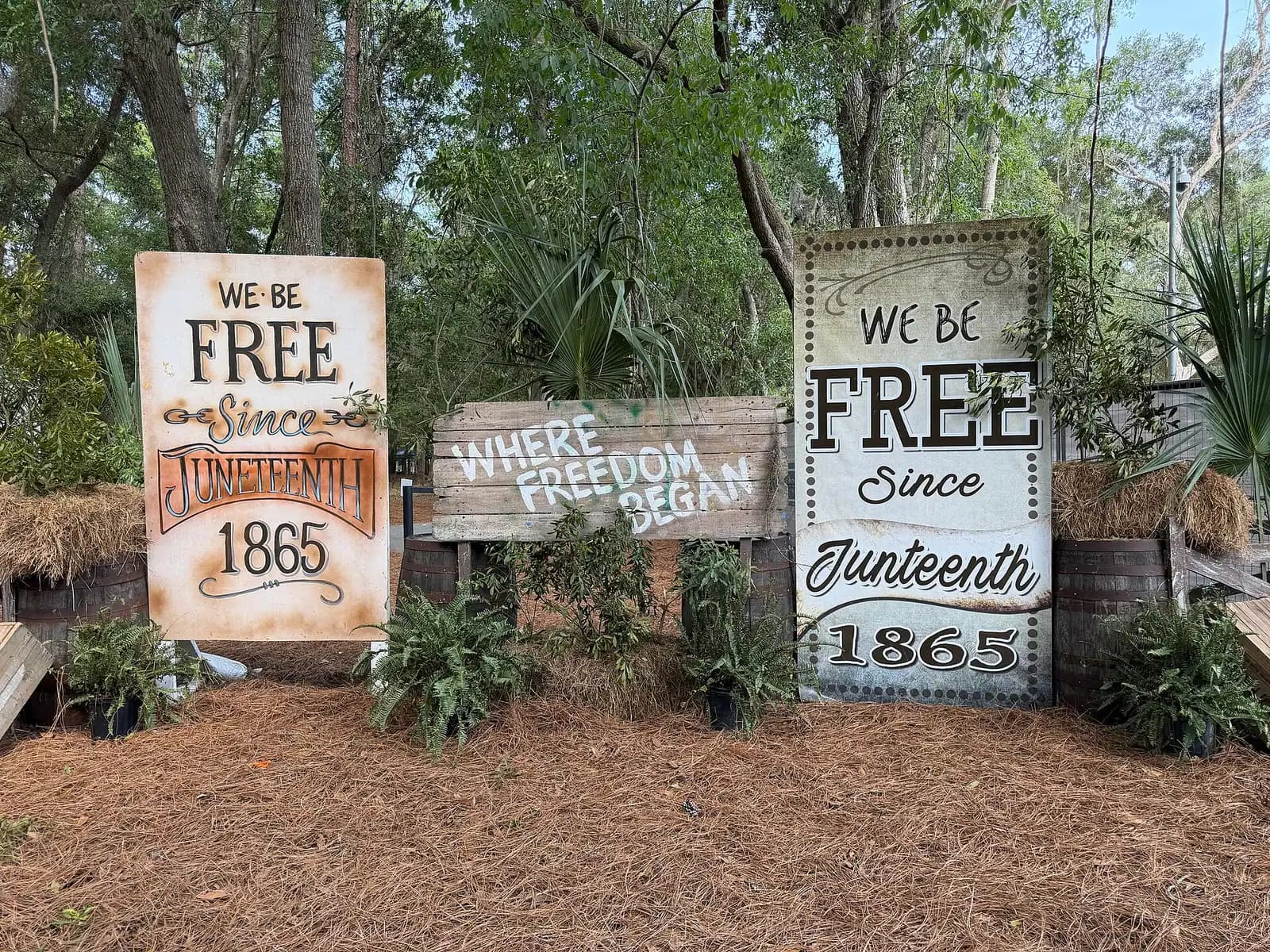
Daufuskie's Gullah community descends from the people enslaved on its cotton plantations who stayed after the Civil War, bought land, and for the better part of a century ran the island themselves. There was no bridge, no ferry timetable to speak of, and very little reason for anyone else to come. That isolation is precisely why the culture, the language and the land tenure survived here as strongly as they did.

Landmarks that carry the story:

  • First Union African Baptist Church (1881), a small white clapboard building that was the centre of community life for well over a century.
  • The Mary Field School, the two-room schoolhouse where Pat Conroy taught in 1969. His account of that year, The Water Is Wide, made the island briefly famous and was filmed as Conrack — the name his students called him.
  • Cemeteries and praise house sites, which are working sacred ground, not photo opportunities.
  • The island history museum and its heritage trail, which is the right first stop and the right way to hear this from people who live here.

One of Conroy's students, Sallie Ann Robinson, later wrote Gullah cookbooks and has guided visitors on the island. Book a guided tour with a Gullah-connected operator rather than driving a cart past people's houses forming your own impressions. The heirs' property pressures that affect Hilton Head's Native Islander families apply here too, and more sharply.

What to actually do in a day

A day trip is roughly six to eight hours on the island. A workable shape:

  1. Land and collect the cart. Get your bearings at the marina, confirm your return time.
  2. The history museum and heritage trail first, while you have energy and before the heat.
  3. The historic sites — the church, the school, the lighthouse at the north end if it is accessible, the old winery building.
  4. Lunch near the marina, where most of the food is.
  5. The beach. Daufuskie's Atlantic-facing beach is wide, hard-packed and frequently empty, which after a week on Hilton Head's sand is a striking contrast. Bloody Point at the south end carries a name from colonial-era fighting with the Yemassee.
  6. Artisan stops — the island has had a rum distillery, a blacksmith and metal-art studio, a coffee shop and pottery studios, and they come and go. Ask at the marina what is open today rather than planning around a business you read about.
  7. Back to the dock early.

What Daufuskie is not: a resort with facilities. There are no lifeguards, very few restrooms, limited shade and no supermarket. Plan like you are going somewhere remote, because you are.

Visiting well

This is a small residential island where roughly a few hundred people live full time, and visitors arrive by the boatload in season. A few things make the difference between being welcome and being tolerated.

  • Drive slowly. The roads are sand, the dust is somebody's washing, and there are children, dogs and horses.
  • Cemeteries and churches are in use. Do not walk into a graveyard to take photographs.
  • Do not photograph people or private homes without asking. Yards are not exhibits.
  • Buy things. The artisan businesses, the restaurants and the guides are the island's economy. A day trip that spends nothing contributes nothing.
  • Take your litter back. Waste disposal on an island with no bridge is a real cost.
  • Do not collect live shells — sand dollars and conch included — under South Carolina rules.

Go with a guide if you can. The island reads completely differently when somebody who grew up here is telling you what you are looking at.

Tours that visit Daufuskie

Operators run these trips past Daufuskie, or stop there as part of a longer route. We list what the booking data supports — not everything that mentions the name.

Some links below go to Viator, our booking partner. We earn a commission on bookings made through them — at no extra cost to you, and with no influence on what we recommend.

Near Daufuskie

Straight-line distances, so allow more on the road — the island is long and has one main parkway.

  • Small boats moored on clear shallow water beside a sandbank, seen from above

    Marina

    Harbour Town

    A yacht basin on Calibogue Sound, a three-centuries-old live oak, and the island's most photographed stretch of low wooden shopfronts.

    1–3 hoursNo charge to walk the harbour, but Sea Pines charges a daily gate pass per vehicle to enter the community.2 mi away

  • Calm coastal water under a low sun with seabirds crossing the sky

    Landmark

    Harbour Town Lighthouse

    114 steps up a red-and-white tower nobody asked the Coast Guard for, with an island history museum stacked on the landings.

    0.5–1 hoursA small per-person admission to climb, on top of the Sea Pines gate pass charged per vehicle at the community entrance.1.9 mi away

  • Tall pine trunks with sunlight falling across a needle-covered forest floor

    Neighbourhood

    Sea Pines Resort

    Five thousand acres behind a gate: the pass costs one thing and nearly everything good inside costs another. How it works.

    3–8 hoursDaily gate pass charged per two-axle vehicle; activities inside cost extra.3.2 mi away

  • A wide-crowned oak with low limbs and sunlight through the leaves

    Neighbourhood

    Old Town Bluffton

    Free

    Twenty minutes off the island: art galleries on a one-street town, an 1857 church on a bluff, and oysters shucked by hand.

    2.5–5 hoursFree to visit and free to park. You pay only for food, art and anything you buy.7.2 mi away

Daufuskie: common questions

How do you get to Daufuskie Island from Hilton Head?

By ferry only — there is no bridge and never has been. The main public crossing runs from Broad Creek Marina on Hilton Head to Freeport Marina on Daufuskie and takes about 45 minutes across Calibogue Sound, with sailings timed for a day trip. Other operators run seasonal day boats, and the private communities have their own member ferries. Book ahead and confirm which dock your crossing uses.

Do you need a golf cart on Daufuskie?

Effectively yes. The island is around five square miles with unpaved sand and shell roads, and the sites you have come to see are spread across it. Carts are rented at Freeport Marina and should be reserved at the same time as the ferry, since they sell out in season. You will need a valid driving licence, and the speed limit is low for good reason.

Can you take a car to Daufuskie Island?

Not on the passenger ferry. Residents and construction move vehicles by barge, but visitors cannot bring a rental car over. Park at the departure marina on Hilton Head, take the passenger ferry, and hire a golf cart on arrival. This is part of why the island still feels the way it does.

What is there to see on Daufuskie?

The Gullah history above all: the First Union African Baptist Church of 1881, the Mary Field School where Pat Conroy taught in 1969 before writing The Water Is Wide, the island history museum and its heritage trail, and the old cemeteries and praise house sites. Beyond that, a wide and often empty Atlantic beach, Bloody Point at the south end, and a handful of artisan businesses that change from year to year.

How long do you need on Daufuskie?

A standard day trip gives you six to eight hours, which is enough for the history museum, the main historic sites, lunch near the marina and an hour on the beach. Doing it properly with a guide takes most of that. Whatever you plan, work backwards from your return sailing and be at the dock early — missing the last boat is not a small problem on an island with no bridge.