Parasailing
Parasailing Flight over Hilton Head Island (opens in a new tab)
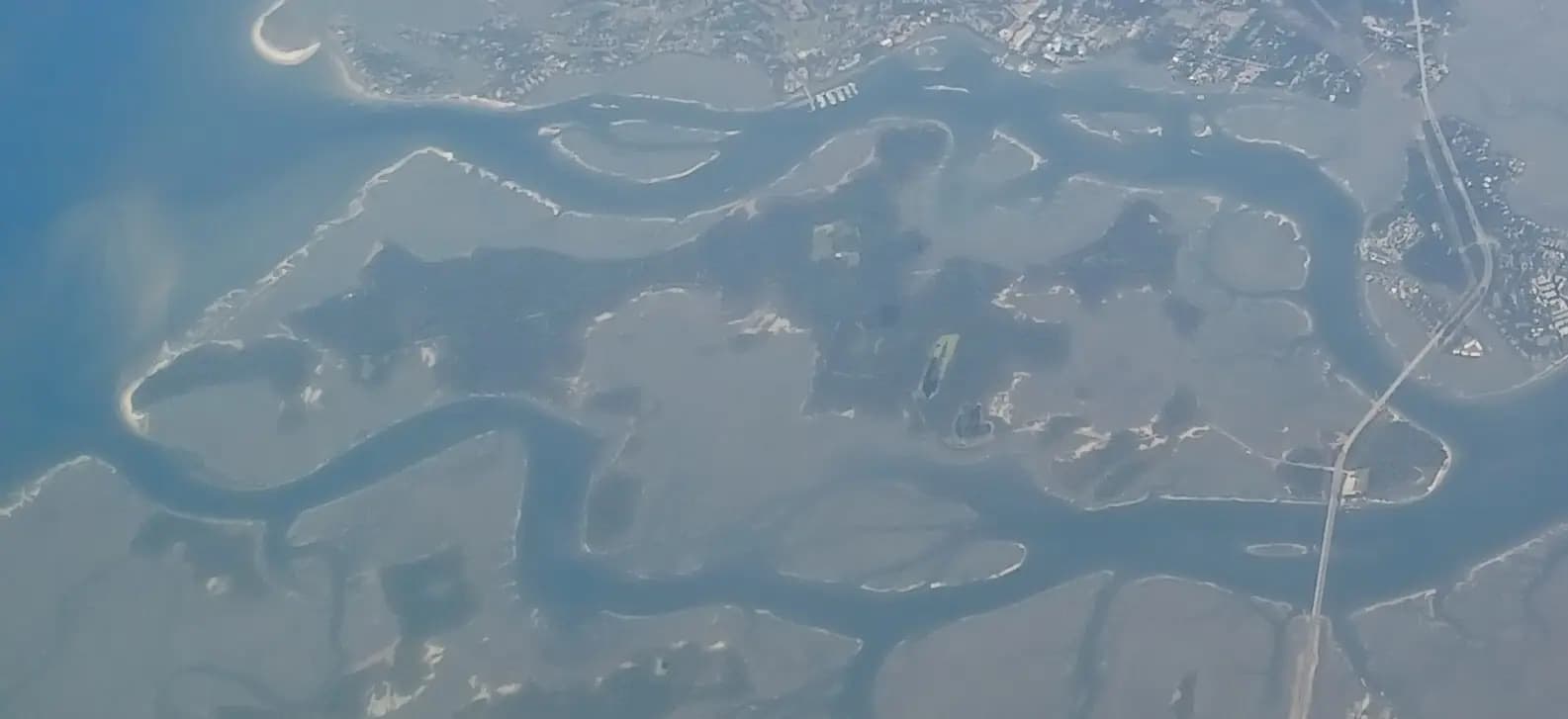
Four hundred feet up, dry feet the whole way, and the entire boot-shaped island laid out beneath you.
1 hour
Saved listing — live prices unavailablePrices checked
We earn a commission if you book through this link. You pay the same price.
Neighbourhood
Last updated
Twenty minutes off the island: art galleries on a one-street town, an 1857 church on a bluff, and oysters shucked by hand.
Photo: Lewis HinePublic domain
Old Town Bluffton is on the mainland, about twenty minutes from the Hilton Head bridges, and it is the answer to the complaint that the island has no old buildings. Bluffton has them because it is older than the resort by more than a century, and it survived by a margin: in June 1863, Union forces burned most of the town, and only a small number of structures came through. Several of them still stand on Calhoun Street.
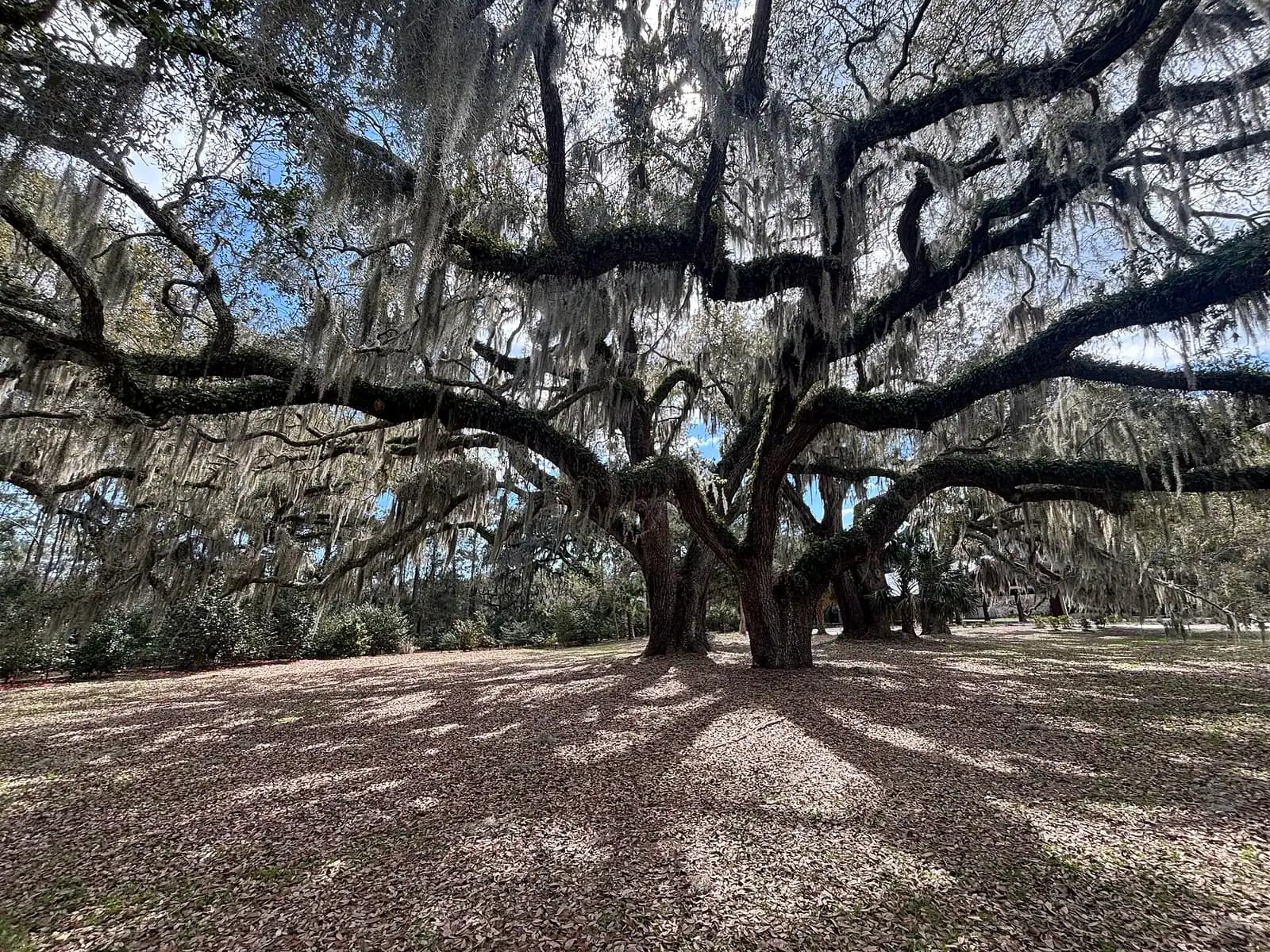
The town sits on a bluff above the May River, and that river is the reason for everything here — the oysters, the shrimp, the summer houses that Lowcountry planters built to escape mosquitoes and fever, and the bluff itself. Calhoun Street runs a few hundred yards from the highway down to the water, and it is the whole of Old Town in practical terms: cottages under live oaks, most of them now galleries, studios, restaurants and small shops.
At the foot of the street, on the grass above the water, stands the Church of the Cross, consecrated in 1857. It is a cruciform Gothic building of heart pine with fanned window arches, latticed shutters and rose-tinted glass ordered from England, and it survived the burning. It is still an active parish, and it is the single best-looking building in the Lowcountry outside Charleston and Beaufort.
The other reason to come is food. The Bluffton Oyster Company on Wharf Street is the last hand-shucking oyster house in South Carolina, harvesting from beds in the May River, with shucking rooms built on a mound of shell two centuries deep. You can buy oysters, shrimp, crab and fish over the counter to cook, or eat at the seafood restaurant beside it. Local oysters run roughly mid-September to mid-May; shrimp from around mid-June into winter.
Bluffton is not a theme-park historic district. It is a working small town with an art scene, and it takes a half day at a stroll.
Old Town Bluffton is on the mainland, not on Hilton Head Island. From the island, cross the bridges on US-278 and follow signs for Bluffton, then Old Town and Calhoun Street. Allow 20 to 30 minutes from most of Hilton Head, and add a good deal more for the return trip on a summer Saturday afternoon, when eastbound traffic to the island backs up at the bridges on rental turnover day.
Parking is free on the street and in small lots around Calhoun Street, and Old Town is compact enough to park once and walk everything. It gets tight on market days and during October's arts and seafood festival. Set your navigation to Bluffton rather than to a Hilton Head Island address.
Park once and walk. Calhoun Street runs downhill to the May River, and the whole of Old Town is within a few blocks of it.
The galleries are the main event, and there are a lot of them for a town this size — painting, photography, pottery, printmaking, furniture and framing, most in converted cottages with the artist frequently on the premises. This is where to buy Lowcountry work if you want something better than a lighthouse print: marsh at low light, tidal creeks, oyster shell, egrets, shrimp boats, painted by people who see it in February as well as July.
The Church of the Cross at the bottom of the street, on the bluff. Go inside if it is open, look up at the heart pine, and then go round to the river side and look at the view the congregation has had since 1857.
Eating: Calhoun Street and its immediate surroundings carry a disproportionate number of good restaurants for a town of this size, from casual seafood to proper dinner. Book in season.
The weekly farmers market takes over part of Calhoun Street in season, with produce, seafood, prepared food and music. The day it runs has moved over the years, so check before planning around it.
The May River is a short, clean tidal river, and its oyster beds have supported Bluffton since before the Civil War. The Bluffton Oyster Company on Wharf Street still works them, and it is the last place in South Carolina where oysters are shucked by hand rather than machine-processed — mostly by women who have been doing it for decades, in cold concrete rooms, standing on a foundation of discarded shell built up over two hundred years.
Buy over the counter and cook them yourself, or eat next door. Lowcountry oysters are clustered rather than single, small, intensely salty, and traditionally roasted over a fire under wet sacking rather than served on ice — an oyster roast is a social event here, not a menu item.
Seasons matter. Local oysters, clams and mussels run roughly mid-September to mid-May; local shrimp from around mid-June into January. Outside those windows what you are eating came from somewhere else, and any honest place will tell you so.
Water quality in the May River is a live local issue, and the reason development pressure around Bluffton is fought over so hard. The oyster beds are the tell.
Bluffton was a summer town for Lowcountry planters, built on a bluff to catch the river breeze, and it was also politically incandescent. In 1844 a meeting held here launched what became known as the Bluffton Movement, an early push for South Carolina to act alone against federal tariffs — a precursor to secession that is a real part of why the town is in the history books at all.
In June 1863, Union troops came up the May River and burned it. Most of Bluffton went. A small number of buildings survived, the Church of the Cross and a handful of houses among them, and the town rebuilt slowly and stayed small for the next century.
That is why Old Town is a few streets of modest wooden cottages rather than a grand antebellum district: what you are looking at is mostly the rebuilding, around a few survivors. Oyster Factory Park, a small waterfront park on the river, holds the Garvin-Garvey Freedman's Cottage, a restored house built by a formerly enslaved man after the war — the freedmen's side of the same story, and the one usually left out.
Operators run these trips past Old Town Bluffton, or stop there as part of a longer route. We list what the booking data supports — not everything that mentions the name.
Some links below go to Viator, our booking partner. We earn a commission on bookings made through them — at no extra cost to you, and with no influence on what we recommend.
Parasailing
Four hundred feet up, dry feet the whole way, and the entire boot-shaped island laid out beneath you.
1 hour
Saved listing — live prices unavailablePrices checked
Dolphin & Whale Watching
The whole boat, your own schedule: two hours with a private captain working Skull Creek and Port Royal Sound.
2 hours
Saved listing — live prices unavailablePrices checked
Sunset Cruises
Just the two of you and a captain who knows exactly where to be when the light goes gold.
2 hours
Saved listing — live prices unavailablePrices checked
Day Trips & Excursions
Up to six guests, your own driver-guide, and an itinerary you can rewrite at lunchtime.
Full day
Saved listing — live prices unavailablePrices checked
Straight-line distances, so allow more on the road — the island is long and has one main parkway.

Neighbourhood
No bridge, no traffic lights, golf carts on sand roads, and a Gullah history that Pat Conroy made famous. Ferry only.
6–9 hoursRound-trip ferry fare per person, plus golf cart hire. The island itself is free.7.2 mi away

Wildlife
Four thousand free acres on the causeway, wading birds by the hundred at Ibis Pond, and not a restroom or water tap anywhere.
1–4 hoursFree — no entry fee and no parking charge5.6 mi away

Museum
Sixty-eight acres of marsh boardwalk, live oak allee and camellia garden, free to walk, with the island's best interpretation indoors.
1–2.5 hoursFree entry to the museum and the 68-acre grounds. Donations encouraged.6.5 mi away

Historic site
A shell embankment thrown up around a fortified village six centuries ago, three acres off Squire Pope Road. Nearly always empty.
20–45 minutesFree. A state heritage preserve with no ticketing and no staff on site.6.1 mi away
Where this place fits into a day, and the pages that plan one.

Guide hub
Hilton Head's attractions are not scattered at random, and the single most useful thing you can learn before arriving is where they sit. The island…

Plan your trip
The short version: May and October are the two best weeks-worth of the year on Hilton Head Island, and if you have a choice, take one of them. Both…

Plan your trip
Yes, you almost certainly need a car on Hilton Head Island — and once you have one, the island rewards leaving it parked for most of the week. That…

Who it suits
Start with the geography, because it decides almost everything about a couple's weekend here. Hilton Head's twelve miles of developed beach face…

Who it suits
Most visitors arrive on Hilton Head believing its history begins with golf. It begins with a shell ring in the Sea Pines Forest Preserve that Native…

Things to do
Hilton Head sits in an unusually rich corner of the map. Within an hour of the bridges you have one of America's most photographed historic cities…

Guide
Three days is enough for Hilton Head if you plan around the tide instead of the clock. This itinerary does that, and gives you somewhere dry to go when the afternoon storms build.
8 min readMarisa Delgado

Guide
Most people need one. A few genuinely do not, and which group you are in is decided almost entirely by where you have booked to sleep.
9 min readMarisa Delgado

Guide
The island is twelve miles long, gated in places, and deliberately hard to read from the road. Here is how it is organised, what you will actually be charged for, and where to base yourself.
10 min readMarisa Delgado
About 20 to 30 minutes by car. Cross the bridges on US-278 onto the mainland and follow signs for Bluffton and Old Town. Coming back to the island on a summer Saturday afternoon takes considerably longer, because that is rental turnover day and the bridges are the island's main traffic bottleneck. Bluffton is a separate town with its own address system — set navigation accordingly.
Walk Calhoun Street for the art galleries and studios, see the Church of the Cross of 1857 on the bluff above the May River, visit Oyster Factory Park and the Garvin-Garvey Freedman's Cottage, and eat. The Bluffton Oyster Company on Wharf Street is the last hand-shucking oyster house in South Carolina and sells over the counter as well as serving next door. Three hours at a browse; a half day with lunch.
Local oysters, clams and mussels run roughly from mid-September to mid-May, and local shrimp from around mid-June into January. Outside those windows, seafood on a menu came from elsewhere. Lowcountry oysters grow in clusters rather than singly, are small and very salty, and are traditionally roasted over fire under wet sacking rather than served raw on ice.
Because Union forces burned most of the town in June 1863. Only a small number of structures survived, the Church of the Cross among them, and Bluffton rebuilt slowly and stayed small for the next century. What you see on Calhoun Street is mostly that rebuilding around a handful of survivors, which is why the town is modest wooden cottages rather than grand antebellum houses.
Yes, particularly if the weather is not beach weather or you want something the island cannot offer: genuine old buildings, an art scene concentrated in a few blocks, and the best seafood counter in the area. It is free to visit and free to park. Avoid making the trip in the middle of a summer Saturday, when the return journey over the bridges is at its worst.