Parasailing
Parasailing Flight over Hilton Head Island (opens in a new tab)
Four hundred feet up, dry feet the whole way, and the entire boot-shaped island laid out beneath you.
1 hour
Saved listing — live prices unavailablePrices checked
We earn a commission if you book through this link. You pay the same price.
Wildlife
Last updated
Four thousand free acres on the causeway, wading birds by the hundred at Ibis Pond, and not a restroom or water tap anywhere.
Photo: Mx. GrangerCC0
Most visitors drive past Pinckney Island half a dozen times before anyone tells them it is there. The refuge sits on the US-278 causeway between Bluffton and Hilton Head, a short distance before the bridges, and the entrance is an unremarkable left turn with a small brown sign. Behind it are 4,053 acres of maritime forest, salt marsh, old field and freshwater pond spread across Pinckney, Corn, Big Harry, Little Harry and Buzzard islands, held by the US Fish and Wildlife Service and open to anyone, free, from sunrise to sunset every day of the year.
Understand what this place is not before you commit to it. There is no visitor centre. There are no restrooms, no drinking water, no shade structures, no rangers on site and no shop. Beyond the small gravel car park, vehicles go no further: everything moves on foot or by bicycle along flat gravel and grass roads. Dogs are prohibited on refuge land, service animals excepted, which is a federal rule rather than a local preference and is enforced. Bring water you actually intend to drink, insect repellent, a hat, and more water.
What you get in return is the best free wildlife walking within an hour of the island. Ibis Pond, the first of the ponds on the main road, becomes a colonial wading bird rookery in spring and early summer — white ibis, snowy and great egrets, herons stacked in the low trees over the water, wood storks working the shallows, and alligators cruising underneath in an arrangement that is more mutual than it looks. The nesting birds tolerate the alligators because the alligators deter raccoons.
More than 14 miles of trail run through the refuge, with published routes from a little over a mile to nearly eight. Starr Pond and Osprey Pond are the middle-distance options. White Point, at the far northern end, is a round trip of close to eight miles and ends at a small quiet beach with long views over Port Royal Sound. A bicycle changes the refuge completely, turning a half-day slog into an easy morning.
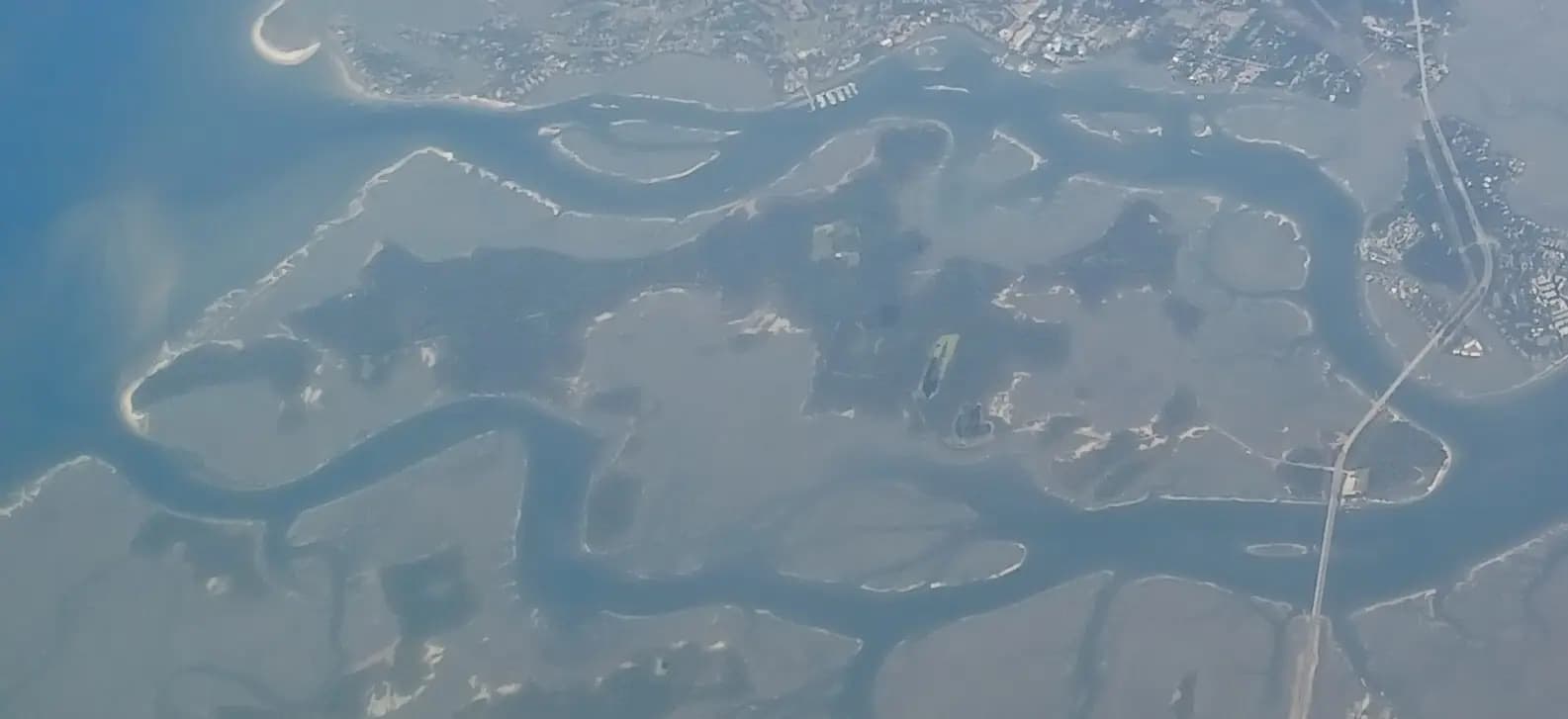
The entrance is on the north side of US-278, on the causeway between Bluffton and the bridges onto Hilton Head — roughly half a mile before you cross onto the island. Coming from Hilton Head you turn across oncoming traffic, so approach slowly and expect to wait at busy times.
A small free gravel car park sits just inside the entrance. Vehicles go no further. Everything beyond is on foot or by bicycle. There are no bike rentals at the refuge; hire on the island and drive them over.
Everything starts from the one car park. The main gravel road runs north through the middle of the refuge and the named ponds hang off it, so the decision is simply how far up the road you go.
| Destination | Round trip | Rough time on foot |
|---|---|---|
| Ibis Pond | about a mile | 30–45 minutes |
| Starr Pond | about 2 miles | 1 hour |
| Osprey Pond | about 3 miles | 1.5 hours |
| White Point | close to 8 miles | 3–4 hours |
The Fish and Wildlife Service publishes nine suggested hikes on these trails, and the surface throughout is flat gravel or mown grass. There is no climbing and no scrambling. What there is, in July and August, is very little shade on the open stretches and an unexpected amount of it in the maritime forest sections — the contrast between the two is the thing that catches people out.
Bicycles are permitted and are genuinely the right call for anything beyond Osprey Pond. Watch for loose gravel, potholes and standing water after rain. There are no rentals at the refuge, so hire on the island and carry the bikes over, or ride the causeway with real caution: US-278 is fast and busy.
Pinckney sits on the Atlantic Flyway, which gives it three distinct seasons for a birder rather than one.
Spring and early summer is the rookery. Ibis Pond fills with nesting white ibis, great and snowy egrets, little blue herons, tricolored herons and black-crowned night herons, all packed into low trees over the water. It is loud, close and easy to photograph from the trail without disturbing anything. Wood storks, which breed in the region, turn up to feed.
Autumn brings migration through the old fields and marsh edges: warblers, painted buntings on their way out, raptors overhead, and shorebirds on the mudflats at the far end. Numbers on the open water climb through October.
Winter is the quietest and, for some, the best walking — cool, bug-free, and full of ducks, wading birds that stayed, and bald eagles that nest in the area.
Year round: white-tailed deer everywhere, alligators in and around the freshwater ponds, otters if you are lucky, and enough egrets that you eventually stop counting. Marsh rabbits and raccoons work the trail edges at either end of the day. Keep to the trails, stay well back from the ponds' banks, and never feed anything.
This is the section to read twice, because Pinckney is the place visitors most often get wrong on this side of the island.
Mobile signal is patchy once you are a mile in. Tell someone where you are going if you are walking to White Point alone.
The entrance is on the north side of US-278 on the causeway, between the Bluffton mainland and the bridges onto Hilton Head. Coming from the island you have to cross the traffic, which is the single most awkward part of the whole visit — on a summer Saturday, when weekly rentals turn over and US-278 backs up at the bridges, consider going early or leaving it for a weekday.
Go at first light. Everything about this refuge is better before nine in the morning: the birds are active, the light over the ponds is low and clean, the heat has not arrived, and the car park is nearly empty. Sunset is the second-best option but walks you back in the dark if you misjudge the distance, and the refuge closes at sunset.
Bring, in order of how much you will regret leaving it behind: water, insect repellent, binoculars, a hat, and shoes you do not mind getting muddy after rain. Leave behind: the dog, and any expectation of buying a coffee.
Operators run these trips past Pinckney Island, or stop there as part of a longer route. We list what the booking data supports — not everything that mentions the name.
Some links below go to Viator, our booking partner. We earn a commission on bookings made through them — at no extra cost to you, and with no influence on what we recommend.
Parasailing
Four hundred feet up, dry feet the whole way, and the entire boot-shaped island laid out beneath you.
1 hour
Saved listing — live prices unavailablePrices checked
Dolphin & Whale Watching
The whole boat, your own schedule: two hours with a private captain working Skull Creek and Port Royal Sound.
2 hours
Saved listing — live prices unavailablePrices checked
Sunset Cruises
Just the two of you and a captain who knows exactly where to be when the light goes gold.
2 hours
Saved listing — live prices unavailablePrices checked
Day Trips & Excursions
Up to six guests, your own driver-guide, and an itinerary you can rewrite at lunchtime.
Full day
Saved listing — live prices unavailablePrices checked
Straight-line distances, so allow more on the road — the island is long and has one main parkway.

Beach
North-end park on Port Royal Sound: marsh boardwalk, huge low-tide flats, the island's best shorebirds and almost no swimming.
1.5–3.5 hoursBeach and park access are free; the main lot is charged by the hour in season.4.9 mi away

Beach
North-end sand on Port Royal Sound, thick with shells and driftwood, behind the first self-governed town of freed people in America.
1.5–4 hoursFree. Parking is free at Historic Mitchelville Freedom Park and paid seasonally at Fish Haul Beach Park.4.9 mi away

Historic site
In 1862, formerly enslaved people founded a town here and governed it themselves. Free to enter, and the most important hour on the island.
1–2 hoursFree. Donations support preservation, interpretation and the ongoing archaeology.4.2 mi away

Museum
Sixty-eight acres of marsh boardwalk, live oak allee and camellia garden, free to walk, with the island's best interpretation indoors.
1–2.5 hoursFree entry to the museum and the 68-acre grounds. Donations encouraged.1.2 mi away
Where this place fits into a day, and the pages that plan one.

Plan your trip
The short version: May and October are the two best weeks-worth of the year on Hilton Head Island, and if you have a choice, take one of them. Both…

Plan your trip
Yes, you almost certainly need a car on Hilton Head Island — and once you have one, the island rewards leaving it parked for most of the week. That…

Budget
Hilton Head is an expensive place to stay and a surprisingly cheap place to spend a day, provided you understand one distinction that most lists…

Things to do
Hilton Head is a barrier island that was developed with an unusual instruction: keep the trees. The building-height and sign ordinances that stop…

Who it suits
Hilton Head is not a party island and never set out to be. The town's sign and building-height ordinances killed neon and high-rises decades ago…

Things to do
Kayaking here is not really about the boat. It is about the tide, and once you understand that, every other decision gets easier. Hilton Head sits…

Guide
Three days is enough for Hilton Head if you plan around the tide instead of the clock. This itinerary does that, and gives you somewhere dry to go when the afternoon storms build.
8 min readMarisa Delgado
Yes. There is no entry fee and no parking charge, seven days a week, sunrise to sunset. It is also a refuge rather than a park, which means the absence of a fee comes with the absence of everything else: no restrooms, no drinking water, no visitor centre, no staff on site. Bring water and repellent, use a restroom before you turn off US-278, and treat the free 4,053 acres as the trade you are making.
No. Dogs and other pets are prohibited on all refuge land and trails, and this is a federal wildlife refuge rule rather than a local bylaw. Certified service animals are exempt. The restriction exists because the refuge protects ground-nesting and colonial nesting birds that react badly to dogs. If you are travelling with a dog, Jarvis Creek Park and Chaplin Community Park on Hilton Head both allow leashed dogs, and Chaplin has the island's only fenced dog park.
Ibis Pond is the closest of the ponds, reached on a flat gravel road from the car park — a round trip of roughly a mile that most people walk in 30 to 45 minutes with stops. It is the single best-value walk on the refuge, especially between April and June when the rookery is active and the low trees over the water fill with nesting ibis, egrets and herons. Longer routes to Starr Pond, Osprey Pond and White Point all branch off the same main road.
Yes, particularly in and around the freshwater ponds, and they are frequently visible from the trail. Keep at least 60 feet back, stay on the road rather than walking down to the water's edge, and never feed one. The alligators at Ibis Pond are part of why the rookery works — their presence discourages raccoons from raiding the nests — so watching them from a distance is part of the visit rather than a problem with it.
Yes, and for anything beyond the first two ponds it is the better way to do it. Bicycles are allowed on the refuge's gravel and grass roads, which are flat throughout. There are no rentals at the refuge, so hire on Hilton Head and carry the bikes over by car — riding the US-278 causeway is possible but the traffic is fast. Watch for loose gravel and puddles, and remember there is nowhere to buy water once you are in.