Bike Rentals
Electric Bike Rental for Two (Full Day) (opens in a new tab)
Pedal assist makes the ride from Coligny to Mitchelville a non-event, even in August.
1 day
Saved listing — live prices unavailablePrices checked
We earn a commission if you book through this link. You pay the same price.
Historic site
Last updated
In 1862, formerly enslaved people founded a town here and governed it themselves. Free to enter, and the most important hour on the island.
Photo: Town of Hilton Head IslandPublic domain
On 7 November 1861, a Union fleet forced the entrance to Port Royal Sound and took Hilton Head Island. The white planters left within days. The roughly 1,000 enslaved people on the island did not, and over the following months thousands more crossed from the mainland and the other Sea Islands toward Union lines. In September 1862, General Ormsby M. Mitchel set aside around 300 acres on the island's north-eastern shore to be laid out as a village of quarter-acre lots. Mitchel died of yellow fever within weeks of arriving. The town took his name.
What happened next is why this ground matters beyond South Carolina. Mitchelville was not a camp administered for its residents. It was a town governed by them: the residents elected a supervisor, councilmen and a marshal, levied their own taxes, ran their own courts for minor matters, built churches and schools, and passed a compulsory education law requiring schooling for every child between six and fifteen — the first such law in South Carolina and among the first anywhere in the South. At its height Mitchelville held something like 500 houses and a population that moved between roughly 1,500 and 3,000 people. It was the first self-governed town of formerly enslaved people in the United States, and it was founded months before the Emancipation Proclamation took effect.
It did not survive Reconstruction. As land titles were restored and the enormous Union base on the island wound down, the town dispersed. Many families stayed on Hilton Head, and their descendants are still here — the Native Islander Gullah community is the direct continuation of this story, not a separate one.
The park today is a town park: free, open long daily hours, with interpretive panels, walking paths, a pavilion and its own beach access onto Port Royal Sound. Life-size metal frames — the "ghosted structures" — stand on the footprints of houses along the original street grid, which is the thing that makes the scale of the place land. Archaeological work continues on the site. There is no ticket office and no gift shop, and it is easy to underestimate for exactly that reason.
From US-278 on the north end of the island, turn onto Beach City Road and follow it north-east past the airport; the park entrance is signposted onto Harriet Tubman Way. From Coligny or Sea Pines allow around 25 to 30 minutes, longer on a summer Saturday when the bridge traffic backs up.
There is a free on-site car park. The site is also reachable by bike on the island's leisure trail network, though the Beach City Road stretch is a proper ride from mid-island rather than a short hop. Fish Haul Creek Park and Mitchelville Beach are on the same shoreline within a few minutes' drive.
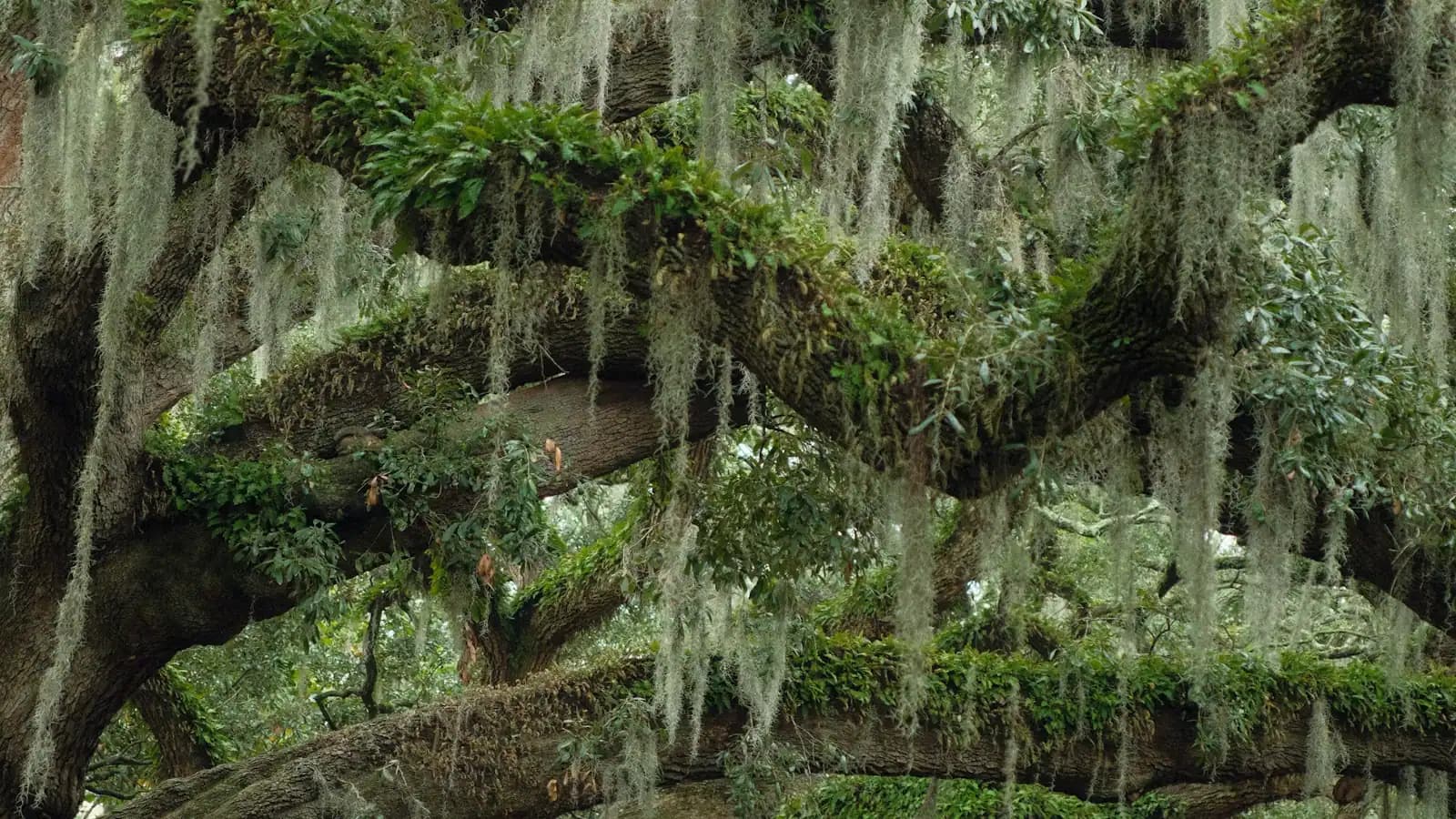
The park reads as open ground under live oaks rather than as a reconstructed village, and that is deliberate — most of what remains is below the surface and under active archaeological study.
The ghosted structures are the centrepiece: life-size open steel frames in the outline of the houses that stood here, positioned to follow the original town layout. Walking between them gives you the street grid and the density in a way that a text panel cannot. Interpretive panels along the paths carry the history in sequence; read them in order rather than grazing, because the argument they build is cumulative.
Paths run through the site to a pavilion and down to the water, where the park has its own beach access onto Port Royal Sound — shell-rich, shallow, quiet, and a very different beach from the Atlantic side. The entrance road is Harriet Tubman Way, named in 2022 for the bicentenary of her birth. Tubman spent much of the war in this part of the Lowcountry, working as a nurse, cook and scout for the Union army, and helped plan the Combahee River raid of June 1863 that freed more than seven hundred people.
Ongoing excavation on the site runs under the park's own archaeology programme. What is visible varies by season and by dig schedule.
Entry is free. The park is run by the Town of Hilton Head Island in partnership with the Historic Mitchelville Freedom Park organisation, and it keeps long daily hours in the manner of a town park rather than museum hours — it has generally been open from early morning to mid-evening. Donations support preservation, interpretation and the archaeology.
Give it an hour at minimum. Forty-five minutes covers the panels and the ghosted structures; another twenty gets you down to the water and back. Come in the morning if you want it quiet, and understand there is very little shade in the open part of the site — a hat and water in July are not optional.
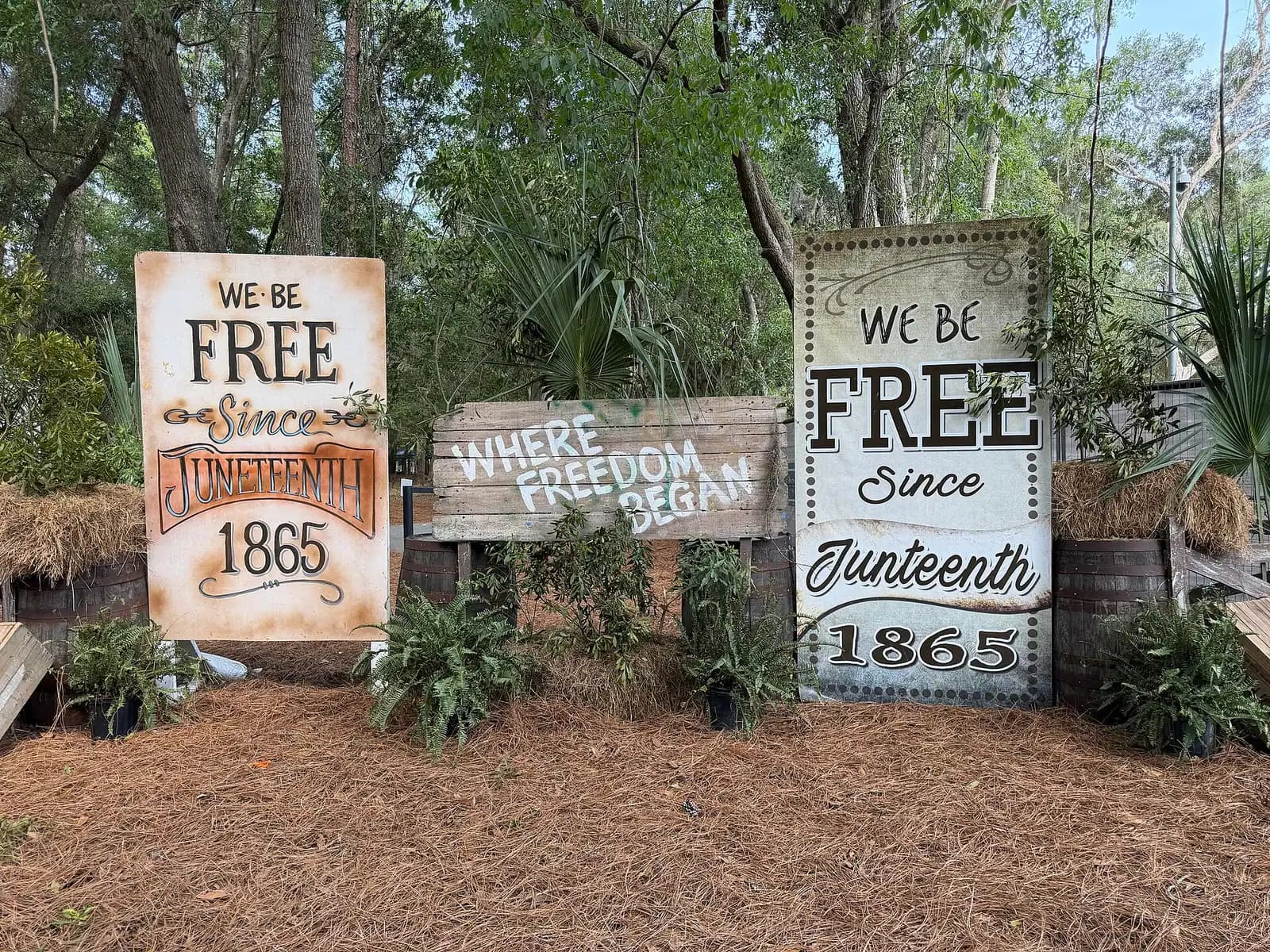
Guided tours, school programmes and events are booked separately through the park organisation, and the calendar is real rather than decorative: an annual Juneteenth celebration that has now run for more than a decade, commemorative events through the year, guided history walks and an ongoing archaeological research programme. Book ahead for anything guided, and check the park's own listings rather than a third-party calendar, because dates move.
Mitchelville was part of the Port Royal Experiment, the effort that began in the Sea Islands after November 1861 to establish what freedom would actually consist of — land, wages, schooling, self-government — while the war was still being fought. The Sea Islands were the first large area of the Confederacy under Union control with a population that was overwhelmingly Black, and what was tried here was watched closely and argued about in Washington.
Most of the Port Royal Experiment's answers were contested and many were reversed. Mitchelville's answer was the most complete one attempted anywhere: a self-governing municipality with elected officers, its own taxation and compulsory schooling, established by people who had been legally property months earlier.
That is why it should not be visited as a curiosity in a golf destination. It is a place where a question central to American history was answered practically, briefly, and by the people it concerned. The honest way to visit is to give it the time you would give a national historic site elsewhere, read the panels properly, and then notice on your drive back that the mid-island neighbourhoods you pass through — Spanish Wells, Squire Pope, Gumtree, Jonesville, Chaplin, Stoney — are where the descendants live.
Mitchelville sits in the densest concentration of the island's history, and half a day covers it.
If you only have one morning for the island's history, spend it on Mitchelville and Fort Howell together. They are the same story told from two directions.
Operators run these trips past Mitchelville, or stop there as part of a longer route. We list what the booking data supports — not everything that mentions the name.
Some links below go to Viator, our booking partner. We earn a commission on bookings made through them — at no extra cost to you, and with no influence on what we recommend.
Bike Rentals
Pedal assist makes the ride from Coligny to Mitchelville a non-event, even in August.
1 day
Saved listing — live prices unavailablePrices checked
Cultural Tours
The site of the first self-governed town of formerly enslaved people in the United States, walked with a historian.
1–2 hours
Saved listing — live prices unavailablePrices checked
Straight-line distances, so allow more on the road — the island is long and has one main parkway.

Historic site
A five-sided earth fort raised in 1864 by Black Union soldiers to protect the freedmen's town up the road. Free, and usually empty.
20–40 minutesFree. No ticket, no staff, no gate.0.9 mi away

Beach
North-end sand on Port Royal Sound, thick with shells and driftwood, behind the first self-governed town of freed people in America.
1.5–4 hoursFree. Parking is free at Historic Mitchelville Freedom Park and paid seasonally at Fish Haul Beach Park.0.9 mi away

Beach
North-end park on Port Royal Sound: marsh boardwalk, huge low-tide flats, the island's best shorebirds and almost no swimming.
1.5–3.5 hoursBeach and park access are free; the main lot is charged by the hour in season.0.9 mi away

Museum
A Native Islander family's museum off Gumtree Road, visited by appointment rather than by turning up. Book well ahead.
1–1.5 hoursCharged per person, by appointment. Recently listed at around $25 per adult.2.9 mi away
Where this place fits into a day, and the pages that plan one.

Guide hub
Hilton Head does not look like a beach town, and that is the first thing to plan around. The island's building and sign ordinances hold rooflines…

Guide hub
Hilton Head's attractions are not scattered at random, and the single most useful thing you can learn before arriving is where they sit. The island…

Plan your trip
The short version: May and October are the two best weeks-worth of the year on Hilton Head Island, and if you have a choice, take one of them. Both…

Who it suits
Hilton Head Island was planned around families, which is a different thing from being built for children. There are no waterslide towers on the…

Budget
Hilton Head is an expensive place to stay and a surprisingly cheap place to spend a day, provided you understand one distinction that most lists…

Who it suits
Most visitors arrive on Hilton Head believing its history begins with golf. It begins with a shell ring in the Sea Pines Forest Preserve that Native…

Guide
Three days is enough for Hilton Head if you plan around the tide instead of the clock. This itinerary does that, and gives you somewhere dry to go when the afternoon storms build.
8 min readMarisa Delgado

Guide
Hilton Head has one of the most significant Gullah Geechee communities in the United States, and it is a living one. Where its history happened, who to learn it from, and how to be a decent guest.
10 min readRenée Osei
Mitchelville was the first self-governed town of formerly enslaved people in the United States, established on Hilton Head Island in September 1862 after Union forces took the island. Residents elected a supervisor, councilmen and a marshal, levied their own taxes, built churches and schools, and passed a compulsory education law covering every child from six to fifteen — the first in South Carolina. At its peak it had around 500 houses and a population of roughly 1,500 to 3,000.
Yes. General admission is free and the park keeps long daily hours as a town park. Donations support preservation, interpretation and the archaeological work on site. Guided tours, school programmes and special events are ticketed separately and booked through the park organisation, so check their listings if you want a guided visit.
Allow an hour at minimum. Forty-five minutes covers the interpretive panels and the ghosted structures — the life-size steel frames standing on the original house footprints — and another twenty gets you down to the Port Royal Sound beach access and back. If you take a guided tour, budget closer to ninety minutes.
They are life-size open metal frames built on the footprints of the town's original houses and aligned with its street grid. Because so little of Mitchelville survives above ground, the frames are what makes the scale readable: walking between them, you can see how close together the quarter-acre lots sat and how the streets ran. They are the most photographed thing on the site and the most useful.
Fort Howell, a few minutes south-west on Beach City Road, is the large 1864 earthwork built by the 32nd United States Colored Infantry to defend Mitchelville — it is free and closely connected to this story. Fish Haul Creek Park and Mitchelville Beach are on the same Port Royal Sound shoreline and are the island's best shelling at low tide. For living Gullah culture, arrange a visit to the Gullah Museum of Hilton Head or book a Gullah-owned tour.