Skip to content
Menu

We earn a commission if you book through this link. You pay the same price.

Historic site

Fort Howell

Last updated

A five-sided earth fort raised in 1864 by Black Union soldiers to protect the freedmen's town up the road. Free, and usually empty.

Fort Howell is a low, grassy, five-sided rampart in the woods off Beach City Road, and from the car park it looks like nothing much. Walk up onto the parapet and the scale corrects itself: a pentagonal enclosed earthwork with walls that still stand something over twenty feet above the ditch after a century and a half of Lowcountry rain, with emplacements cut for a couple of dozen guns.

It was thrown up between August and November 1864 by soldiers of the 32nd United States Colored Infantry and the 144th New York Infantry, under the direction of the Union engineer Captain Charles R. Suter. The 32nd USCI was a roughly 500-strong regiment raised at Camp William Penn outside Philadelphia earlier that year, made up of volunteers from Pennsylvania, Maryland and Delaware. The fort is named for Brigadier General Joshua Blackwood Howell, who died in 1864.

What it was built to protect is the reason to come. Two miles or so to the north-east lay Mitchelville, the town founded in 1862 by formerly enslaved people who governed it themselves. Fort Howell covered the approaches to it and to the Union base on the island. Black soldiers, most of them free men from the north, built an earthwork to defend a town of people who had been enslaved in South Carolina until three years earlier. It is difficult to think of a more direct piece of ground anywhere in the state.

The fort never fired a shot in anger. Shortly after finishing it, the 32nd USCI marched to the Battle of Honey Hill on 30 November 1864, about thirty miles inland, and took more than fifty casualties in a Union defeat.

The site is free, open in daylight hours, and cared for by the island's land trust. It was added to the National Register of Historic Places in 2011. Interpretive panels at the entrance carry the history; a short path runs to and around the earthworks. Twenty minutes is enough, and they are twenty good minutes.

Getting there and parking

From US-278 on the north end, turn onto Beach City Road and follow it north-east past the airport. The fort is on the left with a small gravel pull-in and a sign; it is easy to overshoot, so watch the odometer rather than the scenery.

Allow around 20 to 25 minutes from Coligny and closer to 30 from Sea Pines. Parking is free and holds only a handful of cars, which is rarely a problem because the site is usually empty. The island's leisure trail runs along Beach City Road, so it is straightforward to reach by bike from the north end.

What is actually left

More than you expect. The earthwork is an enclosed pentagon rather than an open battery, and its outline is still legible all the way round: parapet, ditch, and the shaped gun emplacements along the faces. Live oaks and palmettos have grown across and into it, and the whole thing is carpeted in leaf litter, which means the light is good and the mosquitoes are enthusiastic.

The engineering is the surprise. Sand-based Lowcountry earthworks generally slump; this one has held its geometry for more than 160 years, which says something about how it was built and revetted. Interpretive panels near the entrance explain the plan and name the regiments.

There is no visitor centre, no staff and no restrooms. There is a small car park, a mown path, and a set of panels. Stay off the parapet crest where erosion is signposted, and do not dig, probe or metal-detect anywhere on the site — it is a protected archaeological resource and a war grave landscape in all but name.

Getting the attribution right

Fort Howell is regularly described in passing as "a Civil War fort", which flattens the only thing about it that is unusual. It was built by United States Colored Troops.

The 32nd United States Colored Infantry was organised at Camp William Penn in Pennsylvania in the spring of 1864 — one of the largest training camps for Black regiments in the Union — and its men were volunteers from Pennsylvania, Maryland and Delaware. They were paid less than white soldiers for much of the war, and roughly 180,000 Black men served in the Union army in total. The 144th New York Infantry worked alongside them here.

Standing on the parapet, the geography does the argument for you. Mitchelville is a short drive north-east on the same road. Fort Howell exists because that town existed and needed defending. If you visit only one of the two, visit Mitchelville — but visiting both in a morning is the way to understand either.

Practical notes

  • Free, open daylight hours, small gravel car park directly on Beach City Road.
  • Allow 20 to 30 minutes. It is not a long visit and does not pretend to be.
  • Wear closed shoes. The ground is uneven, root-crossed and often damp.
  • Insects: this is shaded woodland close to marsh. Between May and October, apply repellent in the car park, not after you have been bitten. Chiggers are a real feature of Lowcountry leaf litter.
  • Ticks: check afterwards, particularly in spring.
  • Best light is morning. Midsummer afternoons are humid and still under the canopy.
  • Pair it with Historic Mitchelville Freedom Park, which is a few minutes further along Beach City Road, and with Fish Haul Creek Park on the same shoreline.

Tours that visit Fort Howell

Operators run these trips past Fort Howell, or stop there as part of a longer route. We list what the booking data supports — not everything that mentions the name.

Some links below go to Viator, our booking partner. We earn a commission on bookings made through them — at no extra cost to you, and with no influence on what we recommend.

Shared departurespriced per seat, best value for one or two

  • Parasailing Flight over Hilton Head Island

    Parasailing

    Parasailing Flight over Hilton Head Island (opens in a new tab)

    Free cancellationLikely to sell out
    1.6K reviews

    Four hundred feet up, dry feet the whole way, and the entire boot-shaped island laid out beneath you.

    1 hour

    Saved listing — live prices unavailablePrices checked

    from $89

Private and small-group optionsoften cheaper per head for a family or a group of six

Near Fort Howell

Straight-line distances, so allow more on the road — the island is long and has one main parkway.

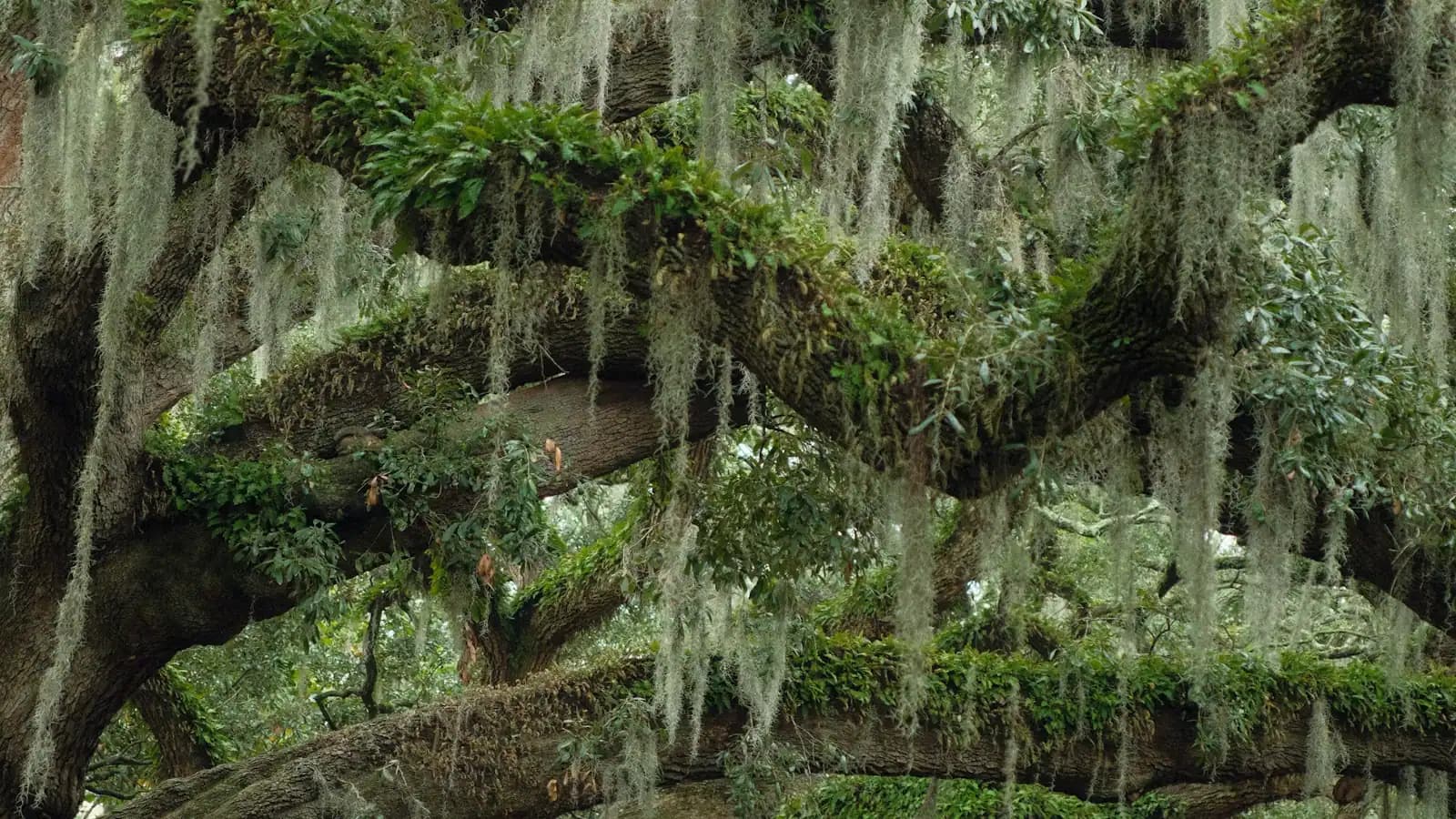
  • A broad live-oak canopy with sunlight coming through the branches

    Historic site

    Historic Mitchelville Freedom Park

    Free

    In 1862, formerly enslaved people founded a town here and governed it themselves. Free to enter, and the most important hour on the island.

    1–2 hoursFree. Donations support preservation, interpretation and the ongoing archaeology.0.9 mi away

  • A dense scatter of whelk, scallop and clam shells collected on pale sand

    Beach

    Mitchelville Beach

    Free

    North-end sand on Port Royal Sound, thick with shells and driftwood, behind the first self-governed town of freed people in America.

    1.5–4 hoursFree. Parking is free at Historic Mitchelville Freedom Park and paid seasonally at Fish Haul Beach Park.1.8 mi away

  • A broad wet tidal flat exposed at low tide with gulls on the sand and a distant line of surf

    Beach

    Fish Haul Creek Park

    Free

    North-end park on Port Royal Sound: marsh boardwalk, huge low-tide flats, the island's best shorebirds and almost no swimming.

    1.5–3.5 hoursBeach and park access are free; the main lot is charged by the hour in season.1.9 mi away

  • A wide-crowned oak with long horizontal limbs and light through the canopy

    Museum

    Gullah Museum of Hilton Head Island

    A Native Islander family's museum off Gumtree Road, visited by appointment rather than by turning up. Book well ahead.

    1–1.5 hoursCharged per person, by appointment. Recently listed at around $25 per adult.2.2 mi away

Fort Howell: common questions

Who built Fort Howell?

Soldiers of the 32nd United States Colored Infantry and the 144th New York Infantry built it between August and November 1864, under the Union engineer Captain Charles R. Suter. The 32nd USCI was raised at Camp William Penn outside Philadelphia and was made up of Black volunteers from Pennsylvania, Maryland and Delaware. The fort is named for Brigadier General Joshua Blackwood Howell.

What was Fort Howell built to protect?

Mitchelville — the town founded on the island's north-east shore in 1862 by formerly enslaved people who elected their own officials and ran their own schools — along with the large Union base on Hilton Head. The fort covered the landward approaches. It never saw action; shortly after completing it the 32nd USCI fought at the Battle of Honey Hill on 30 November 1864 and took more than fifty casualties.

Is Fort Howell free to visit?

Yes. It is free, open during daylight hours, and unstaffed. There is a small gravel car park on Beach City Road, interpretive panels at the entrance and a short mown path around the earthworks. No restrooms, no visitor centre and no shop, so combine it with Mitchelville a few minutes further along the same road.

How long does a visit to Fort Howell take?

Twenty to thirty minutes covers it properly: read the panels, walk the perimeter of the pentagon, climb up onto the parapet at a signposted point and look at the gun emplacements. It is a short stop with a lot in it, not an afternoon.

What should you bring?

Closed shoes and insect repellent. The site is shaded woodland close to marsh, and mosquitoes, chiggers and ticks are all present from roughly May to October. The ground is uneven, root-crossed and soft after rain. There is no water, shade structure or restroom on site.