Most visitors to Hilton Head Island should have a car, but you will use it far less than you expect, and a meaningful minority of visitors genuinely do not need one. Which group you fall into is decided almost entirely by where you have booked to sleep, and that decision is made months before anyone thinks about transport.
Where you are staying decides it
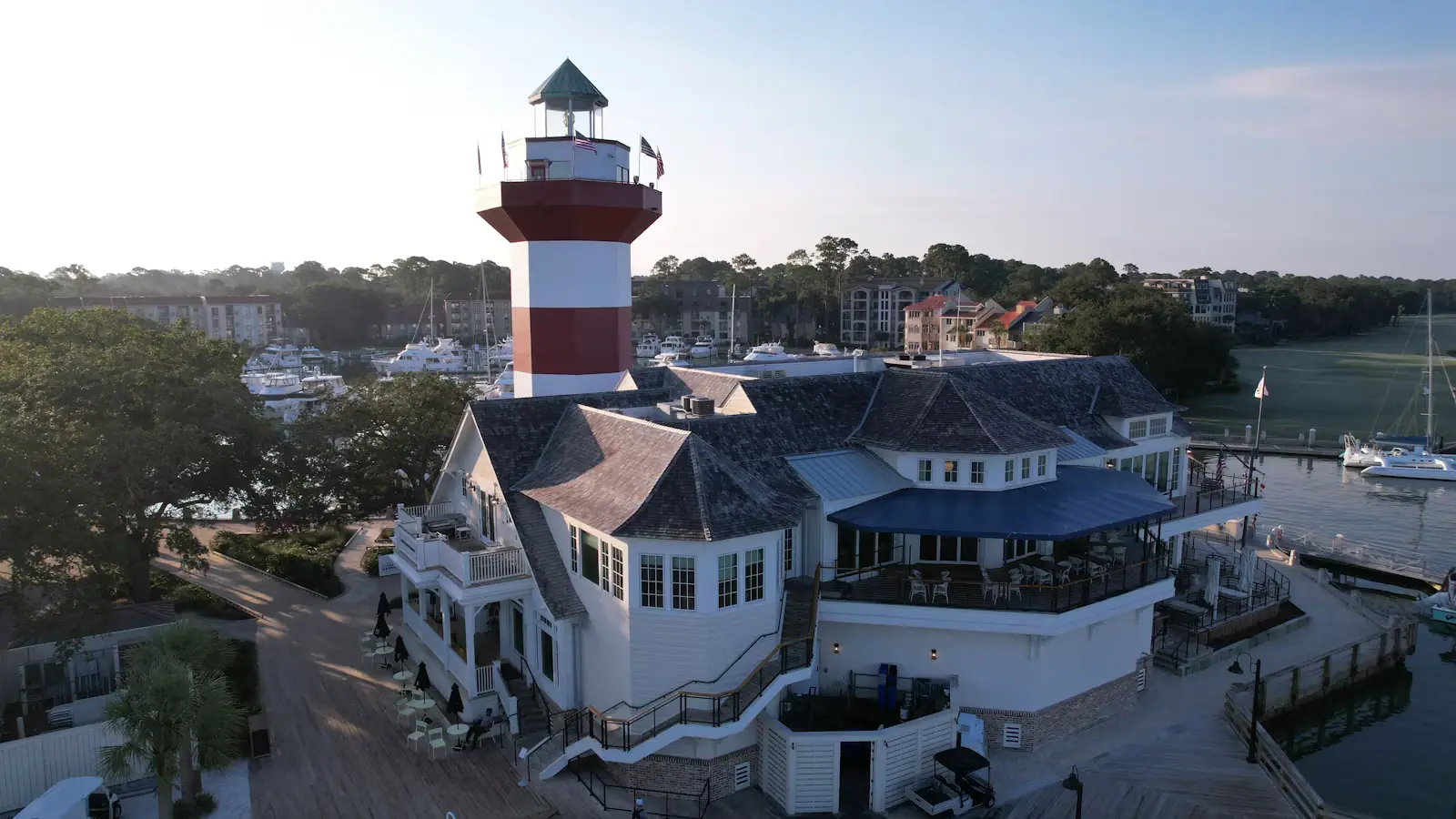
You can skip the car if you are staying on the south end within walking distance of Coligny Plaza, or inside Sea Pines near Harbour Town or South Beach. Both are small, self-contained neighbourhoods with beach, restaurants, shops and a grocery option within a walk or a short ride, and both have rental bikes delivered to the door. Sea Pines has roughly seventeen miles of its own leisure trail, which is enough to keep a week busy without leaving the gate.
You can probably skip it if you are in Palmetto Dunes or Shipyard, both laid out with interior paths, on-site restaurants and rental desks, and both a short ride from a public path that will take you the length of the island. You will still want a taxi or a delivery service for the grocery shop.
You need a car if you are staying on the north end, in Hilton Head Plantation, Port Royal or anywhere off Squire Pope Road, or if you are in a house rather than a resort villa, or if you are here for golf at more than one club, or if the plan includes Savannah, Beaufort, Bluffton or the Daufuskie ferry. The island is twelve miles long with two main roads, and nothing resembling a visitor bus network. Palmetto Breeze, the regional service, is built for commuters rather than holidaymakers.
Getting here without one
Hilton Head Island Airport, code HHH, is on the island itself and takes regional flights. It is small, the schedule is thin, and fares reflect both. Savannah/Hilton Head International, code SAV, is the main gateway at roughly 45 to 55 minutes away, longer in summer traffic.
If you land at SAV without a rental car, you are looking at a pre-booked car service or a rideshare for the transfer. Both work, and a private transfer is the more reliable of the two for a late arrival with luggage and child seats, because rideshare supply at SAV thins out after the last evening bank of flights. Budget for a three-figure one-way fare for a car service and confirm the price when you book; rideshare will usually undercut it, but surge pricing on a Saturday evening in July can close that gap entirely.
Rideshare on the island, honestly
Uber and Lyft both operate on Hilton Head and work fine in daylight, in season, on the south end. The problems are predictable and worth planning around.
Supply thins late at night. After about 10pm, and particularly in the shoulder and winter months, waits get long and cancellations get common, especially for pickups on the north end or inside a gated community where the driver has to clear a gate. If you are out for dinner and the return trip has to happen at 10.30pm on a Tuesday in November, have a local taxi number saved. If you are a group of six, note that most island rideshare inventory is standard cars.
Fares for a short in-island hop are modest. Fares across the island, Coligny to the north end, add up quickly once you do it twice a day for a week, which is the calculation below.
Golf carts, and the rule most visitors get wrong
South Carolina treats golf carts and low-speed vehicles as two different things, and the difference matters if you are thinking of renting one for the week.
A permitted golf cart carries an SCDMV permit decal tied to an address, requires liability insurance, may be driven only on roads with a speed limit of 35mph or less, only within a four-mile radius of the address on the permit or the gate of the community it is registered to, and by default in daylight only, unless a local ordinance and proper lighting allow otherwise.
A low-speed vehicle, or LSV, is a different animal: a four-wheeled vehicle with a top speed between 20 and 25mph that meets federal safety standards, titled, registered and insured like a car. LSVs are not limited to a four-mile radius, can be driven after dark, and need a licensed driver. Almost every cart you see legally moving around Hilton Head outside a community is an LSV.
Practical upshot: if you rent something cart-shaped, confirm in writing whether it is a permitted golf cart or a registered LSV, because that determines where you may legally take it. Rental rates for LSVs are not a bargain. Expect a week in an LSV to cost more than a week in a compact rental car, with none of the air conditioning and none of the range.
Bikes carry more than people expect
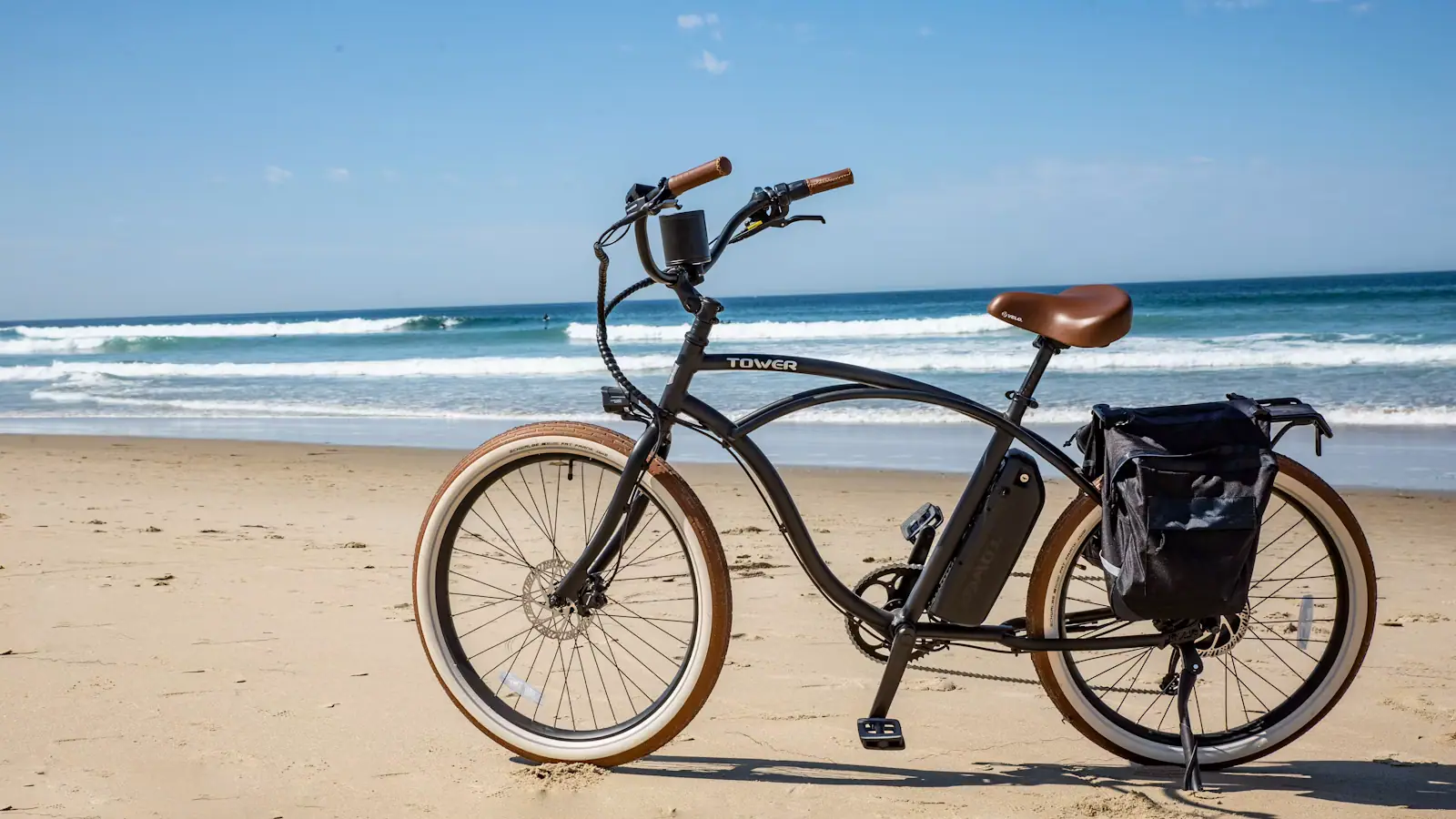
Rental shops here deliver to the villa, collect at the end, and stock trailers, child seats, tag-alongs and baskets as a matter of course. A trailer will take two small children or a week's worth of beach gear, and a rear basket will take a grocery run for two. Cruisers start around $20 a day, hybrids nearer $40 and e-bikes around $60, with weekly rates dropping the daily cost substantially and free delivery common on rentals of three days or more.
The network is the reason this works: more than 72 miles of public pathway, flat, paved and separated from traffic, plus another 50-odd miles inside the private communities. At low tide you can add roughly twelve miles of hard beach sand to that. The paths are unlit, and South Carolina requires a white front light and a rear reflector after dark.
The cost comparison
| Approach, one week, two adults | Roughly what it costs | What it buys |
|---|---|---|
| Rental car from SAV, plus fuel and beach parking | The largest single line, but the most flexible | Savannah, Bluffton, Beaufort, groceries, golf at two clubs, an early flight |
| No car: bikes for the week plus occasional rideshare | Usually the cheapest if you stay south end or Sea Pines | Everything within about four miles, and no parking charges |
| No car: LSV rental for the week | Typically more than a compact car hire | Novelty, shade, 25mph, and a legal radius you must check |
| Car for part of the week only | Underrated | Airport transfer by car service, then hire a car for the two days you go off-island |
If you are staying near Coligny or in Sea Pines and have no plans off the island, skip the car and put the money into bikes and one boat trip. Everyone else: take the car, then leave it parked and ride.
If you do bring a car, where it goes
Villa and hotel parking is included almost everywhere on the island, which is not the constraint. Beach parking is.
Town beach park lots charge $3 an hour on weekdays and $5 an hour at weekends, enforced 7am to 5pm from 1 March to 7 September, paid through a phone app rather than a meter or an attendant. Coligny Beach Park is the exception and is free year-round, with close to 400 spaces. Lots are open 6am to 10pm. Citations run from $50 to $500, so it is not a charge worth chancing.
The other parking cost is the Sea Pines gate: a published $10 a day for a standard two-axle car, weekly passes from around $30. If your week includes more than two trips to Harbour Town, buy the week.
Free parking is easier to find than visitors assume. Shelter Cove, Broad Creek Marina and Palmetto Bay Marina normally charge nothing, which means the marina where most boat tours depart is a cheaper place to leave a car than the beach is.
Last updated
Opening hours, ordinances and prices move with the season. We re-check this guide rather than rewrite it, and the date above is the last time someone did. How we research and correct.