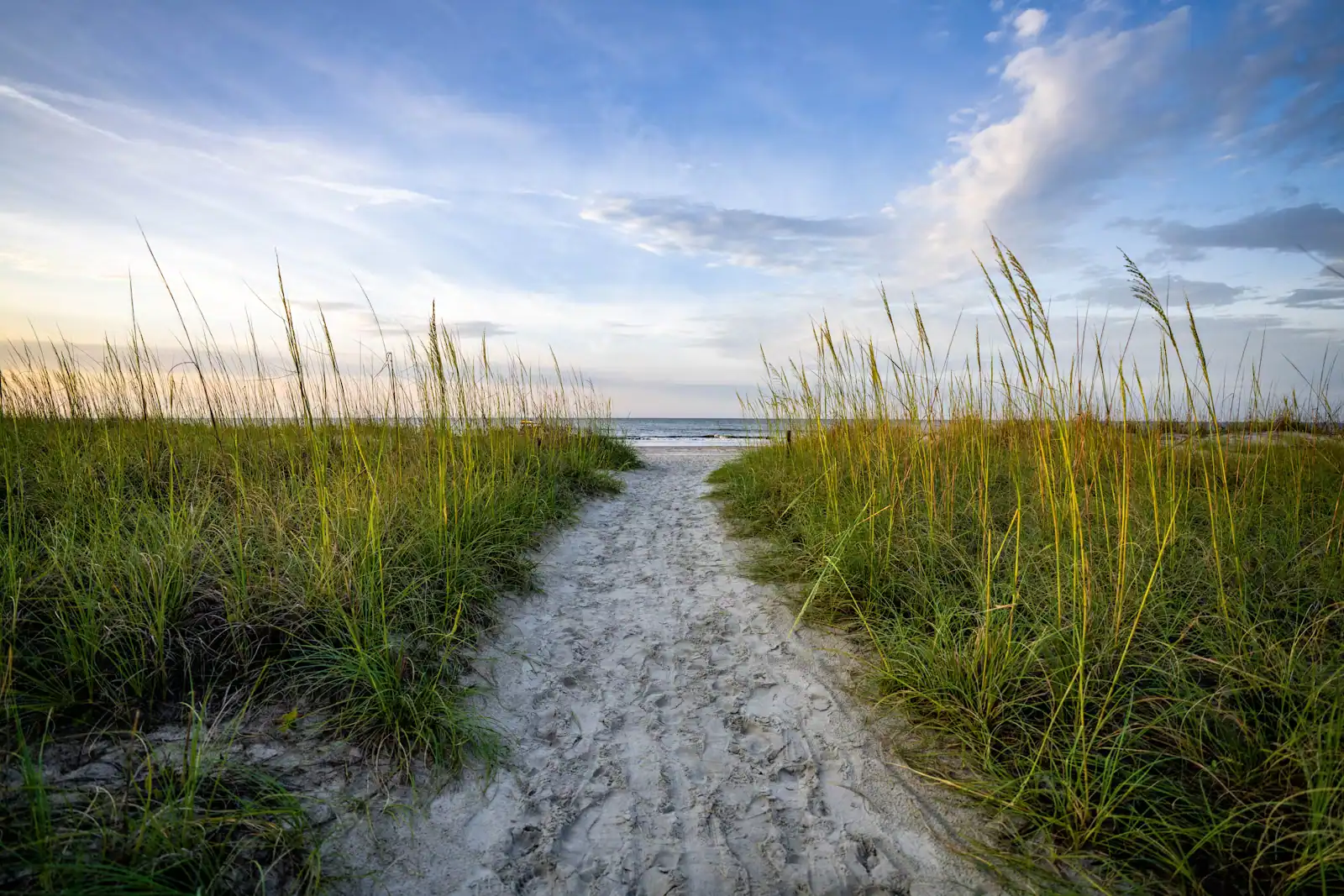
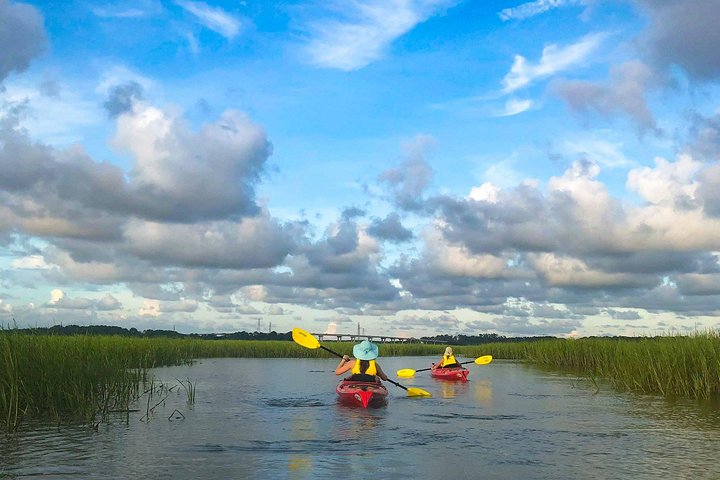
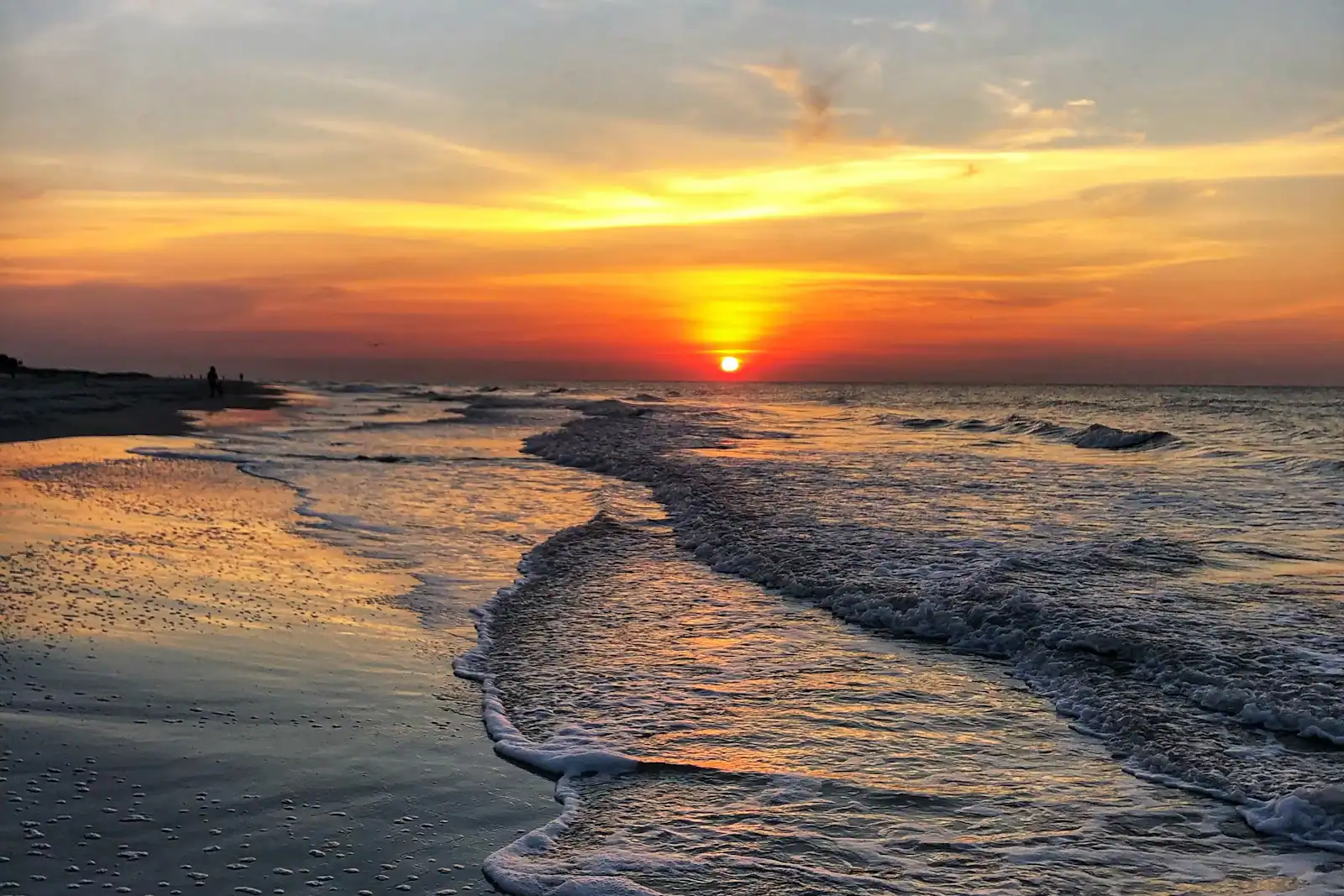
The north end of Hilton Head does not face the open Atlantic. Fish Haul Creek Park and Mitchelville Beach look out onto Port Royal Sound, which means calmer water, a huge exposed flat at low tide, and live oyster beds working right up to the sand. It also means the shelling here is not like the shelling in front of Coligny.
Timing beats luck
Two conditions stack. The first is tide: you want the hour either side of a low, and preferably a spring low around a new or full moon, when the flats run out furthest. The second is weather: a winter nor'easter or a hard onshore blow churns the bottom and leaves a fresh line of material along the wrack when it passes. Go the morning after the wind drops, not during it.
What comes up is whelk and moon snail, oyster and ark, the occasional knobbed whelk egg case that looks like a plastic spine, fossilised shark teeth in the coarse gravel patches, and sand dollars on the flats.
What you have to leave behind
South Carolina does not allow you to take live shellfish or live sea creatures off the beach, and the fines are not nominal. A live sand dollar is brown or purplish and fuzzy with moving cilia; the white, smooth, gift-shop version has been dead for a while. A whelk or conch with the animal still in it goes back in the water, right way up. The same applies to starfish and to anything scuttling. If you have to ask, put it back.
Practical notes
Wear closed shoes. The oyster beds out on the flat will open a bare foot without much effort, and that is a genuinely nasty cut in warm brackish water. Bring a mesh bag rather than a bucket so the sand drains. There is very little in the way of facilities at the north-end parks — plan accordingly.
Fish Haul Creek Park sits immediately beside Historic Mitchelville Freedom Park, the site of the first self-governed town of formerly enslaved people in the United States, established in 1862. Give the two of them a morning together. The beach is the lighter half of that visit by some distance.