Parasailing
Parasailing Flight over Hilton Head Island (opens in a new tab)
Four hundred feet up, dry feet the whole way, and the entire boot-shaped island laid out beneath you.
1 hour
Saved listing — live prices unavailablePrices checked
We earn a commission if you book through this link. You pay the same price.
Water feature
Last updated
One of the deepest natural sounds on the East Coast, off the island's north end, where strand feeding and big inshore fish are real.
Photo: Bobby McCabeCC BY 4.0
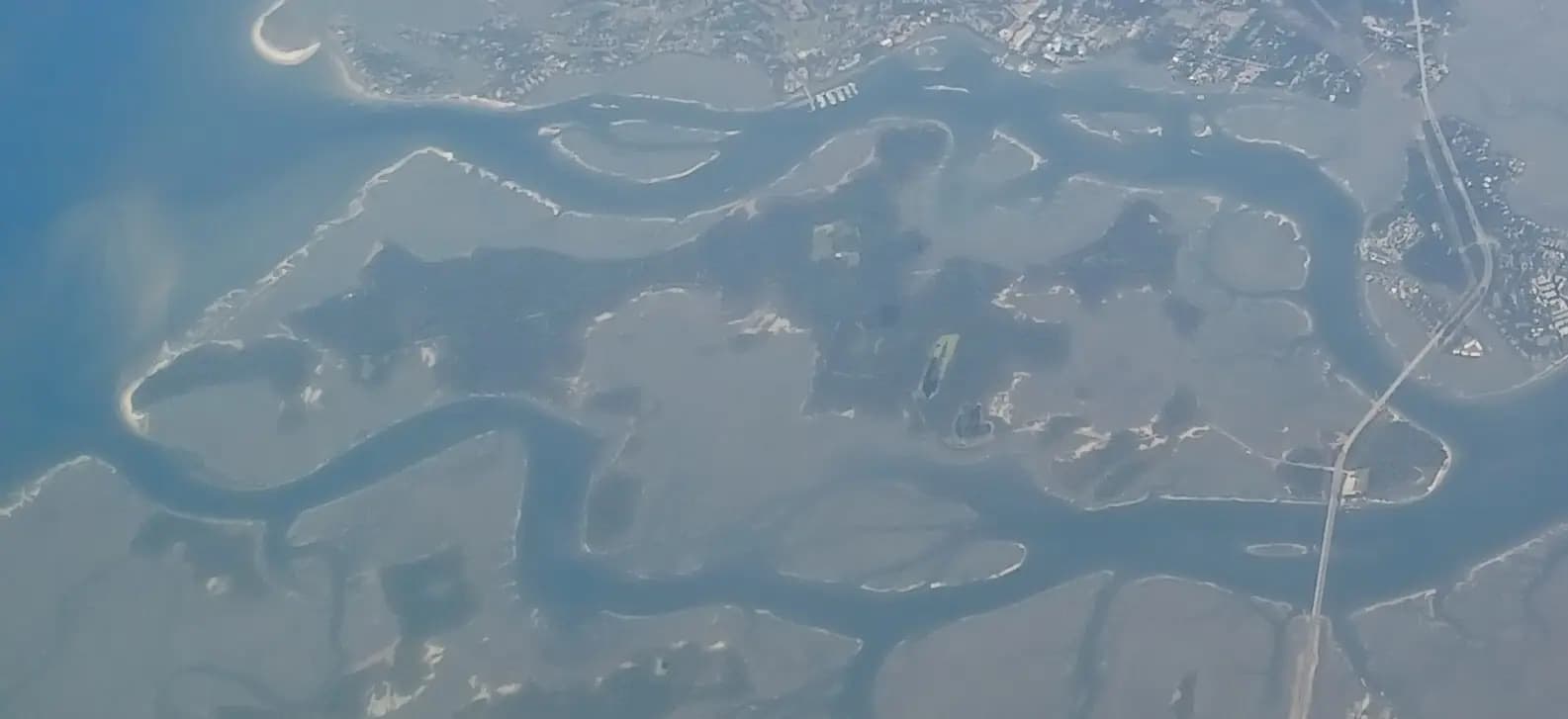
Port Royal Sound is the large body of open water off Hilton Head's northern shore, between the island and Parris Island, St. Helena and Bay Point to the north and west. It is by a wide margin the biggest and deepest water on this coast, and it behaves nothing like Broad Creek or Skull Creek.
The number people quote is the depth. The Sound's channel runs well past sixty feet in places and deeper again in the scour holes, which makes it one of the deepest natural sounds on the entire East Coast and the reason the Navy once looked hard at Port Royal as a deep-water base. Four rivers — the Broad, Chechessee, Colleton and Beaufort — feed into it, but none of them drains a large inland watershed, so remarkably little fresh water comes down. The result is an estuary with near-ocean salinity, and that single fact explains most of what happens here.
High salinity plus deep water means oceanic animals come a long way inside. Cobia spawn in the Broad River arm in late spring. Tarpon push in during the hottest months. Bull redfish school in the channel edges in autumn. Sharks of several species are constant, and white sharks tagged offshore ping in and around the Sound through the winter. Manatees turn up in summer. None of that is true of the creeks.
It is also where the tide does its heaviest work. The range runs to seven or eight feet, among the largest on the south-eastern seaboard, and it moves a great deal of water through a narrow mouth twice a day. Current in the Sound is strong, and with three to four miles of open water for wind to cross, a breeze against an outgoing tide raises a steep chop in under an hour.
From land, the Sound is free and easy to reach. The island's north-end parks — Fish Haul Creek Park, Mitchelville Beach and Islanders Beach Park — all look straight out at it.
The Sound is open water; what you drive to is the island's north shore.
Fish Haul Creek Park is the main public viewpoint. From US-278 (William Hilton Parkway) at the north end, turn onto Beach City Road, follow it roughly two miles to the four-way stop, then continue to the park entrance on Mitchelville Road. There is a paid car park at the park and a free overflow lot at Barker Field further along Mitchelville Road. From Coligny allow about 30 minutes; from the Cross Island Parkway, about 20.
Mitchelville Beach and Islanders Beach Park are on the same stretch of shoreline and reached from the same roads, with their own parking arrangements — Islanders is oriented toward residents, so check before relying on it.
Historic Mitchelville Freedom Park, a few minutes inland, has free parking and pairs naturally with any of them.
To get on the water, charters leave from the north end, from the Skull Creek marinas off Squire Pope Road and from Bluffton on the mainland. There is no scheduled passenger service across the Sound.
The north end sits outside the densest part of the island's leisure-trail network, so cycling here is a longer, less shaded ride than to the mid-island beaches. Most visitors drive.
Strand feeding is the behaviour people come to this region hoping to see: a small group of bottlenose dolphins working together to drive a school of mullet up onto a mud bank, then throwing themselves half out of the water after the fish and sliding back on the next wash. It is learned rather than instinctive, it is passed between related animals, and it is practised by only a few populations anywhere in the world. The Lowcountry is the reliable place for it.
The realistic conditions are specific:
Two rules matter if you find it. Stay well back and do not approach the bank on foot or by boat, because a disturbed group will abandon the run and the behaviour is genuinely fragile. And do not stand on the bank they are using.
No operator can promise it. Book a tour that names strand feeding and works this water on an ebb, and treat a sighting as the good day it is.
If you are on Hilton Head to fish for something large without running offshore, this is where you go.
Cobia aggregate to spawn in the Broad River arm of the Sound in late spring, which is one of very few places on the East Coast where the fish come this far inside. The fishery is managed tightly for that reason, with seasonal rules and limits set by the state and revised from time to time. Check the current South Carolina regulations before you book, and use a charter that knows them.
Bull redfish school along the channel edges and around the Sound's structure in autumn, running far bigger than the slot-size fish caught in the creeks.
Tarpon move in during the hottest part of the summer, generally late July through September, and are fished on live bait near the mouth.
Sharks are present all year and in numbers: blacktip, bonnethead, Atlantic sharpnose, spinner and bigger. Winter brings white sharks tagged by offshore research programmes pinging in and near the Sound, which is a scientific curiosity rather than a swimming concern, because nobody swims here.
Charters leave from Hilton Head's north end, from Skull Creek and from Bluffton. Inshore trips run four to six hours. A morning departure is flatter and more comfortable than an afternoon one in any month.
Port Royal Sound deserves more respect than the rest of the island's water, and small-craft visitors underestimate it every season.
The fetch. Three to four miles of open water in most directions means wind has room to build waves. A fifteen-knot breeze produces a short, steep chop out here while Skull Creek stays glassy.
Wind against tide. The Sound empties through a comparatively narrow mouth with a seven-to-eight-foot range behind it, so the current is fast. When the wind blows against that current the sea state roughly doubles in an hour. The winter north-easterly against an ebb is the worst version.
The bar. Shoals and breaking water at the Sound's mouth are dangerous in swell and on an outgoing tide, and are not a place for anyone without local knowledge.
What that means for a visitor:
The whole northern shore of Hilton Head looks out at the Sound, and the town parks along it are the cheapest way to spend time on this water.
Fish Haul Creek Park is the best of them. It sits on the corner where the island's north end meets the Sound, with a short wooded boardwalk out to a beach of shell hash and wide, hard low-tide flats. It is the island's best shelling beach and its best north-end birding, and there is a paid car park with a free overflow lot nearby.
Mitchelville Beach and Islanders Beach Park give the same water with different parking arrangements, and Historic Mitchelville Freedom Park is a few minutes inland from both.
At low tide these flats run out a long way, and that is when it is worth being here: waders working the shallows, skimmers along the edge, and dolphins visible offshore. Shell collecting is good, with the standing rule that anything still alive stays where it is, sand dollars and conch included.
Off the island, the Port Royal Sound Foundation Maritime Center at Okatie, roughly half an hour away via US-278 and SC-170, has tanks and touch tanks explaining the Sound's ecology. It is a good rainy hour and admission has generally been free or donation-based; confirm before driving.
Operators run these trips past Port Royal Sound, or stop there as part of a longer route. We list what the booking data supports — not everything that mentions the name.
Some links below go to Viator, our booking partner. We earn a commission on bookings made through them — at no extra cost to you, and with no influence on what we recommend.
Parasailing
Four hundred feet up, dry feet the whole way, and the entire boot-shaped island laid out beneath you.
1 hour
Saved listing — live prices unavailablePrices checked
Dolphin & Whale Watching
The whole boat, your own schedule: two hours with a private captain working Skull Creek and Port Royal Sound.
2 hours
Saved listing — live prices unavailablePrices checked
Sunset Cruises
Just the two of you and a captain who knows exactly where to be when the light goes gold.
2 hours
Saved listing — live prices unavailablePrices checked
Day Trips & Excursions
Up to six guests, your own driver-guide, and an itinerary you can rewrite at lunchtime.
Full day
Saved listing — live prices unavailablePrices checked
Straight-line distances, so allow more on the road — the island is long and has one main parkway.

Beach
North-end park on Port Royal Sound: marsh boardwalk, huge low-tide flats, the island's best shorebirds and almost no swimming.
1.5–3.5 hoursBeach and park access are free; the main lot is charged by the hour in season.0.8 mi away

Beach
North-end sand on Port Royal Sound, thick with shells and driftwood, behind the first self-governed town of freed people in America.
1.5–4 hoursFree. Parking is free at Historic Mitchelville Freedom Park and paid seasonally at Fish Haul Beach Park.0.9 mi away

Beach
The residents' beach, closed until June 2027 while the Town rebuilds the lot, playground and paths. Use Folly Field or Driessen meanwhile.
1.5–4 hoursBeach access is free. Most of the car park is reserved for resident permit holders.3.2 mi away

Historic site
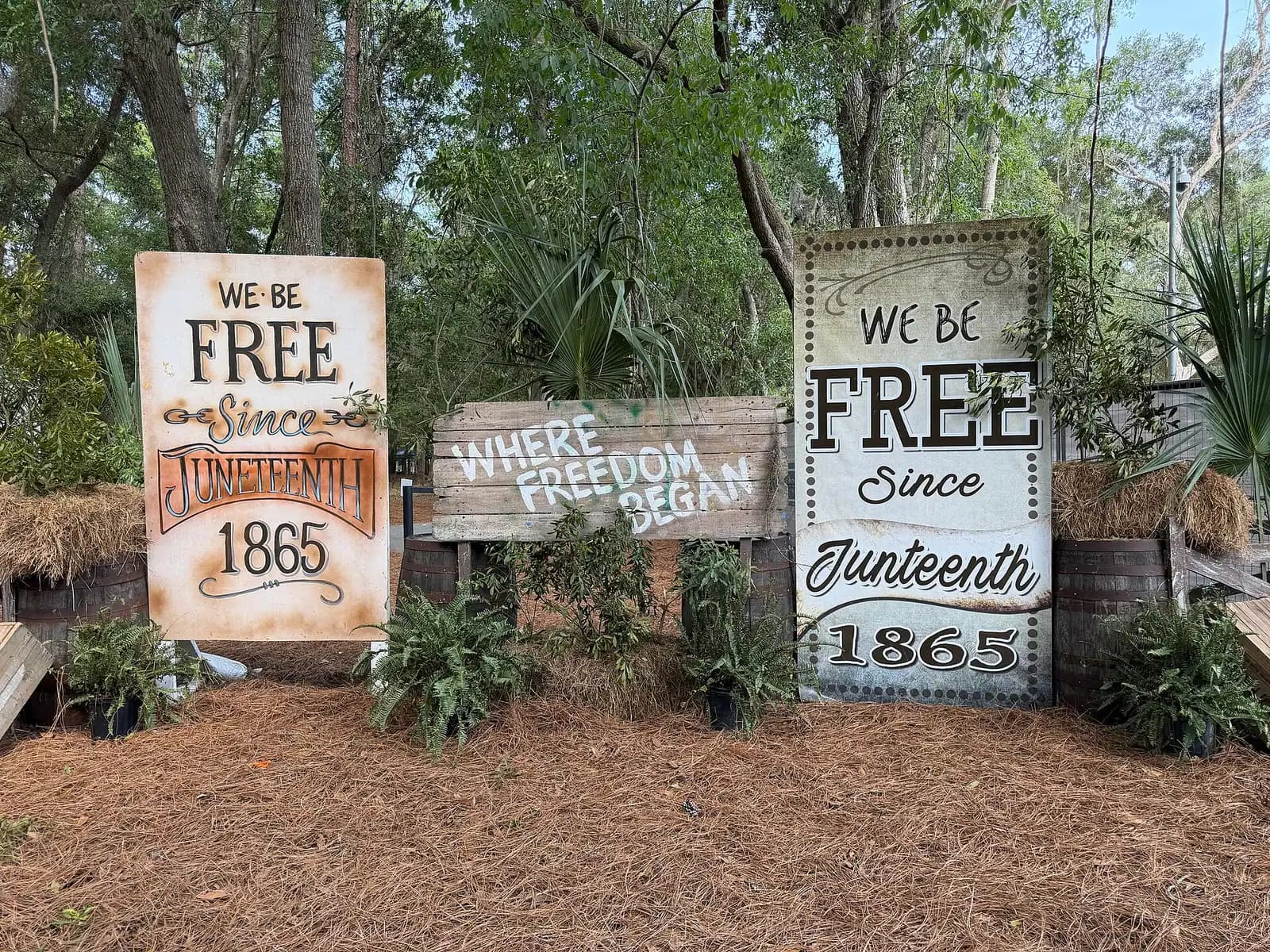
In 1862, formerly enslaved people founded a town here and governed it themselves. Free to enter, and the most important hour on the island.
1–2 hoursFree. Donations support preservation, interpretation and the ongoing archaeology.1.7 mi away
Where this place fits into a day, and the pages that plan one.

Budget
Hilton Head is an expensive place to stay and a surprisingly cheap place to spend a day, provided you understand one distinction that most lists…

Things to do
Hilton Head is a barrier island that was developed with an unusual instruction: keep the trees. The building-height and sign ordinances that stop…

Things to do
Dolphin watching is the island's biggest tour category, and the reason is geography rather than marketing. Hilton Head sits inside a working…

Things to do
Hilton Head is a real island, not a spit joined to the mainland, and the quickest way to understand it is to get off it. Calibogue Sound runs along…

Things to do
Three completely different days get sold on this island under the same two words. Knowing which one you are buying is most of the job. Inshore is…

Guide
The dolphins here are residents, not migrants, which changes how you plan a sighting. What the tide has to do with it, what a fair price looks like, and where to watch from shore for nothing.
10 min readTom Brantley

Guide
Hilton Head's beaches face east. The ocean side gets the sunrise, and the sunset belongs to the creeks, the sounds and the marsh on the other side of the island. That one fact changes where you should be standing at seven o'clock.
9 min readTom Brantley

Guide
The island is twelve miles long, gated in places, and deliberately hard to read from the road. Here is how it is organised, what you will actually be charged for, and where to base yourself.
10 min readMarisa Delgado
On the mud banks of Port Royal Sound's tributary creeks and the May River near Bluffton, rather than in the middle of the Sound or off the island's south end. It happens on a falling tide, usually the last two hours of the ebb, when a gently sloping mud bank is just emerging. Book a tour that names strand feeding and works this water on an ebb, and treat a sighting as luck rather than a guarantee.
The main channel runs well past sixty feet in places, with deeper scour holes, which makes it one of the deepest natural sounds on the East Coast. That depth, combined with very little fresh water coming down its four feeder rivers, keeps salinity close to ocean levels. It is why cobia, tarpon, big sharks and the occasional manatee come this far inside, and why none of the island's creeks behave the same way.
You should not. The Sound has three to four miles of open water for wind to build across, a tidal range of seven to eight feet driving a fast current, and shoals with breaking water at its mouth. Conditions change inside an hour when wind turns against the tide. Paddle Skull Creek, Broad Creek or the Palmetto Dunes lagoon system instead, all of which are sheltered and have proper launch points.
The north-end beaches are open to the public, but the corner where the Atlantic meets the Sound is not a swimming spot. The current runs hard there, the bottom drops off, and there is no lifeguard cover. Use the north-end parks for shelling, walking and birding at low tide, and swim at Coligny, Driessen or Folly Field where there are designated swimming areas and seasonal lifeguards.
Cobia in the Broad River arm in late spring, under state-managed seasonal rules that change and should be checked before you book. Tarpon in the hottest months, roughly late July through September. Bull redfish schooling on the channel edges in autumn. Speckled trout and flounder year-round in the creeks feeding it, and sharks of several species constantly. Charters leave from the island's north end, Skull Creek and Bluffton.